Cart is empty
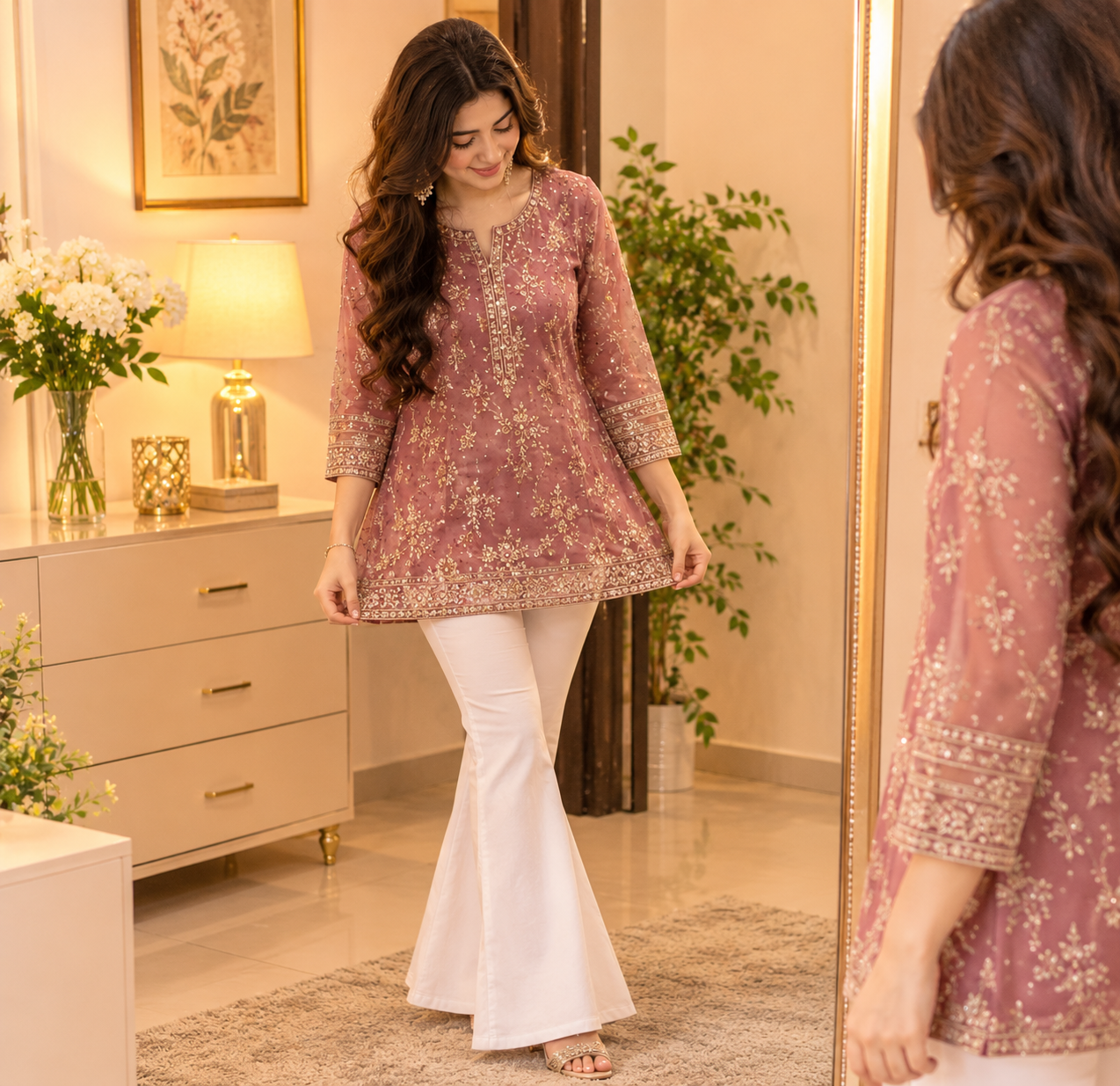
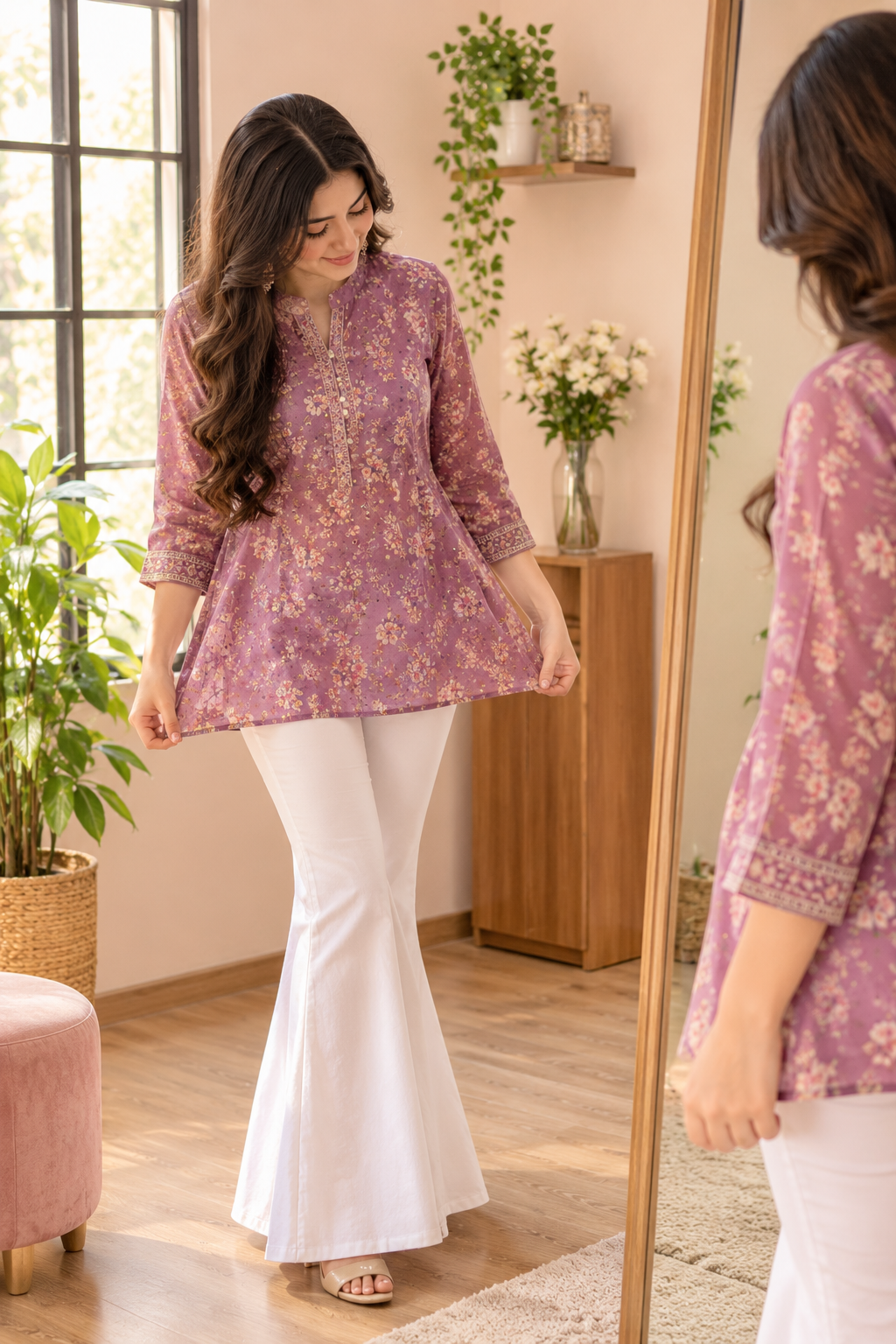
Most formal dresses in Pakistan are designed to cover the legs completely. That is why a floor-length maxi or full anarkali almost never works with bell bottom pants. The flare disappears. The five formal tops below are different. They stop high enough for the fitted thigh and the flare from the knee to stay visible, and they still read as proper formal wear for a dawat or reception.
Why most formal dresses hide the bell bottom (and the ones that don’t)
Our rule for formal looks is the same as for everyday shirts: the top must end at the hip or higher, or at most mid-thigh if it has side slits. Anything longer turns the bell bottom into an ordinary wide pant. Stand in the shoes you will wear, put the formal top on, and check whether the knee break is still clear. If the fabric covers it, choose a different top or a different bottom.
Floor-length maxis, full anarkalis and long kalidars are beautiful, but they are not the partners for a bell bottom. Save those for gharara or sharara sets. The tops that work are short formal kameezes, structured peplums, soft formal blouses and collared formal shirts with light work.
Five formal tops that keep the flare visible
In every look, dye means starting from a white bell bottom. Results depend on the dyer, the dye and the fabric. Always ask for a swatch test first, and judge the colour only when the swatch is dry, in daylight and under warm indoor light.
1. Short embroidered formal kameez – Match
A hip-length or slightly longer formal kameez with embroidery around the neckline and cuffs is the most reliable formal partner. Dye the white bell bottom to the main colour of the kameez so the outfit feels intentional. Keep the embroidery denser on the top and quieter on the bottom. This works for family dawats and evening receptions where you want formal polish without a full set. Add block heels or low platforms so the hem sits cleanly.
2. Structured peplum formal – Contrast
A peplum that flares just at the waist creates a second soft volume above the knee. Dye the bell bottom a clear contrast shade (deep navy with soft gold, teal with blush, maroon with ivory). The two shapes balance each other and the contrast keeps the look lively under evening light. This is a strong choice when the invitation is formal but not bridal.
3. Soft organza or chiffon formal blouse – Deepen
A soft formal blouse in organza or chiffon with light work benefits from a deeper shade on the bottom. Dye the white bell bottom two or three tones deeper than the blouse. The darker flare anchors the light fabric and stops the outfit from floating. Pair with simple jewellery and a light dupatta if needed. The look stays formal yet comfortable for a long evening.
4. Collar formal shirt with light work – Wear white or deepen
A structured collared formal shirt with restrained embroidery or gota works well left white or deepened. Leave the bell bottom white for a clean modern formal look, or deepen it to a soft grey, sage or dusty rose so the shirt stays the lighter piece. The collar and clean lines feel polished for office-adjacent formal dinners or smaller family gatherings.
5. Knee-length formal with side slits – Match
A knee-length formal top with side slits shows the flare while still covering enough for formal settings. Dye the bell bottom to the dominant colour of the top. The slits let the movement of the flare appear when you walk, which photographs well. This is useful when you want a little more coverage than a pure hip-length kameez but still want the cut of the pants to show.
Dyeing the white bell bottom for a formal look
Start with the white pair. Take it and your formal top to a local rangrez. Ask for a swatch test on a small piece of the same fabric and thread. Let the swatch dry fully, then check it in daylight and again under the warm lights you will wear it under. Only then dye the full piece.
Dyeing usually costs around Rs. 300. The rate can change with the dyer and the width of the fabric. At the listed price of Rs. 1,500 for the White Bell Bottom Pants, a dyed pair comes to around Rs. 1,800. Always check the product page for the current price.
Results depend on the dyer, the dye and the fabric. Never expect an exact screen match. For the full process see how to dye a white shalwar, shalwar dyeing cost and how to wash dyed bottoms.
Mistakes that turn a formal outfit ordinary
- Choosing a floor-length maxi or full anarkali. The flare is completely hidden.
- Dyeing before you try the pair on with the formal top and the shoes. Cotton can shift slightly after washing.
- Matching a heavily embroidered top with an equally busy bottom. Keep one quieter.
- Skipping the swatch test and judging wet colour under shop lights.
- Letting the hem drag on the floor or sit too high so the flare looks cut off.
Tailor tip: if the formal top has heavy work at the hem, ask your tailor to check the side seams of the pants after dyeing so the flare still moves freely. A small adjustment keeps the silhouette balanced.
Shop white dyeable bottoms for formal evenings
Every piece arrives plain white with dyeable fabric and dyeable stitching thread.
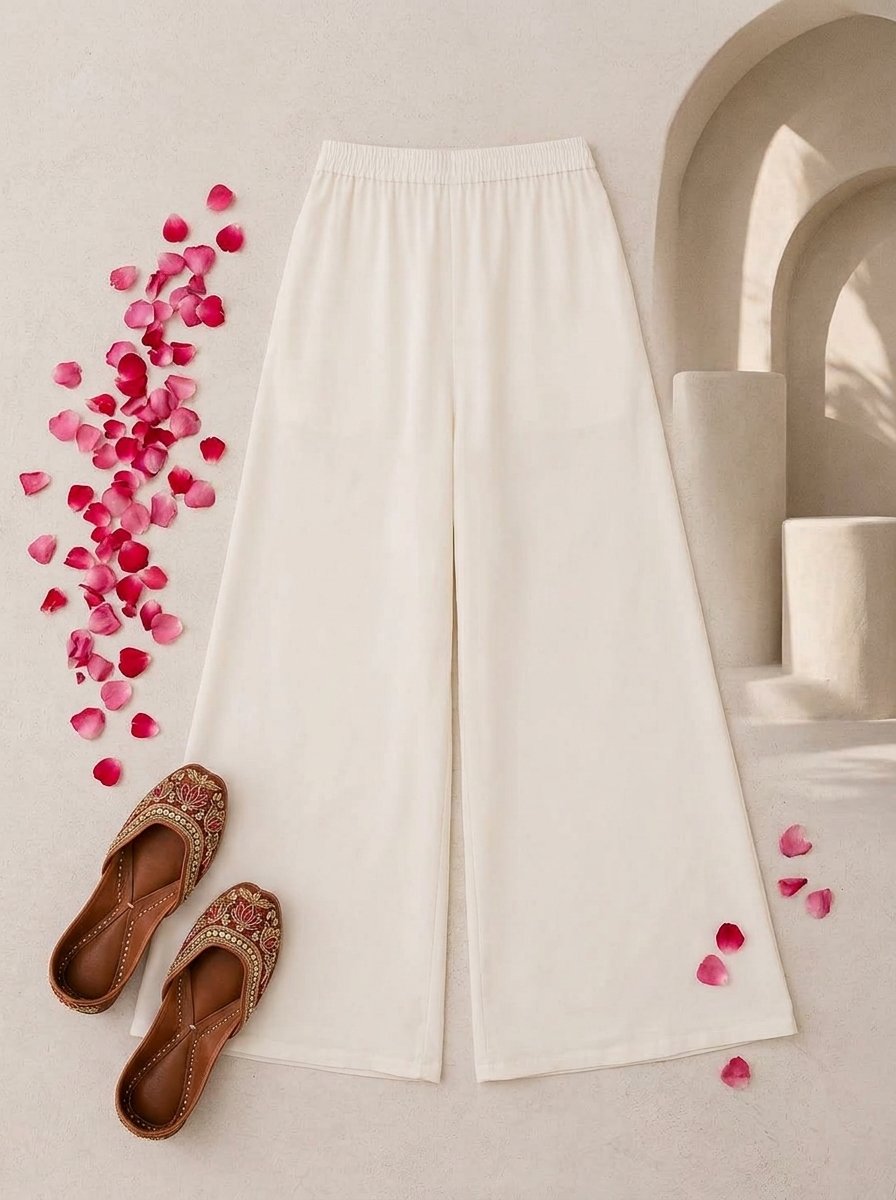
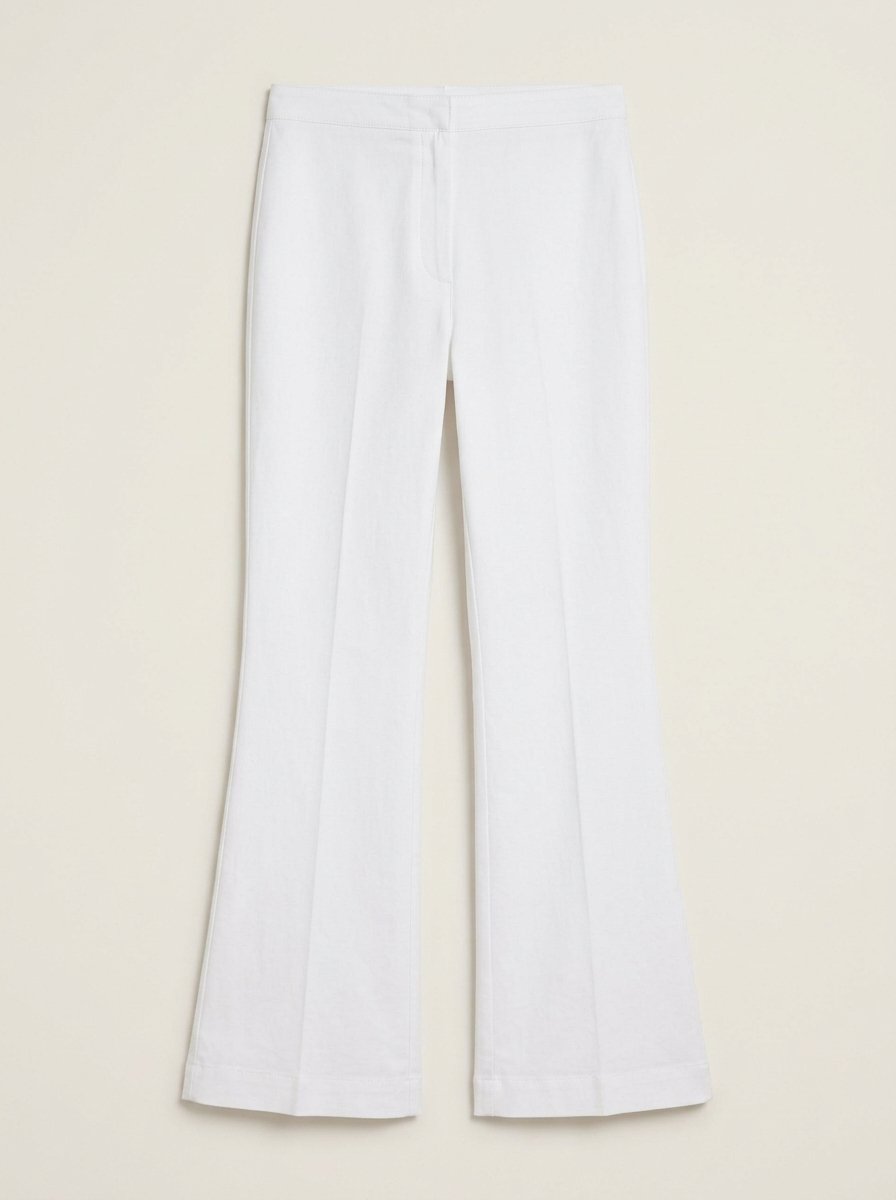
White Bell Bottom Pants
Fitted through the hips and thighs, then flared from the knee. The base for every formal top idea above.
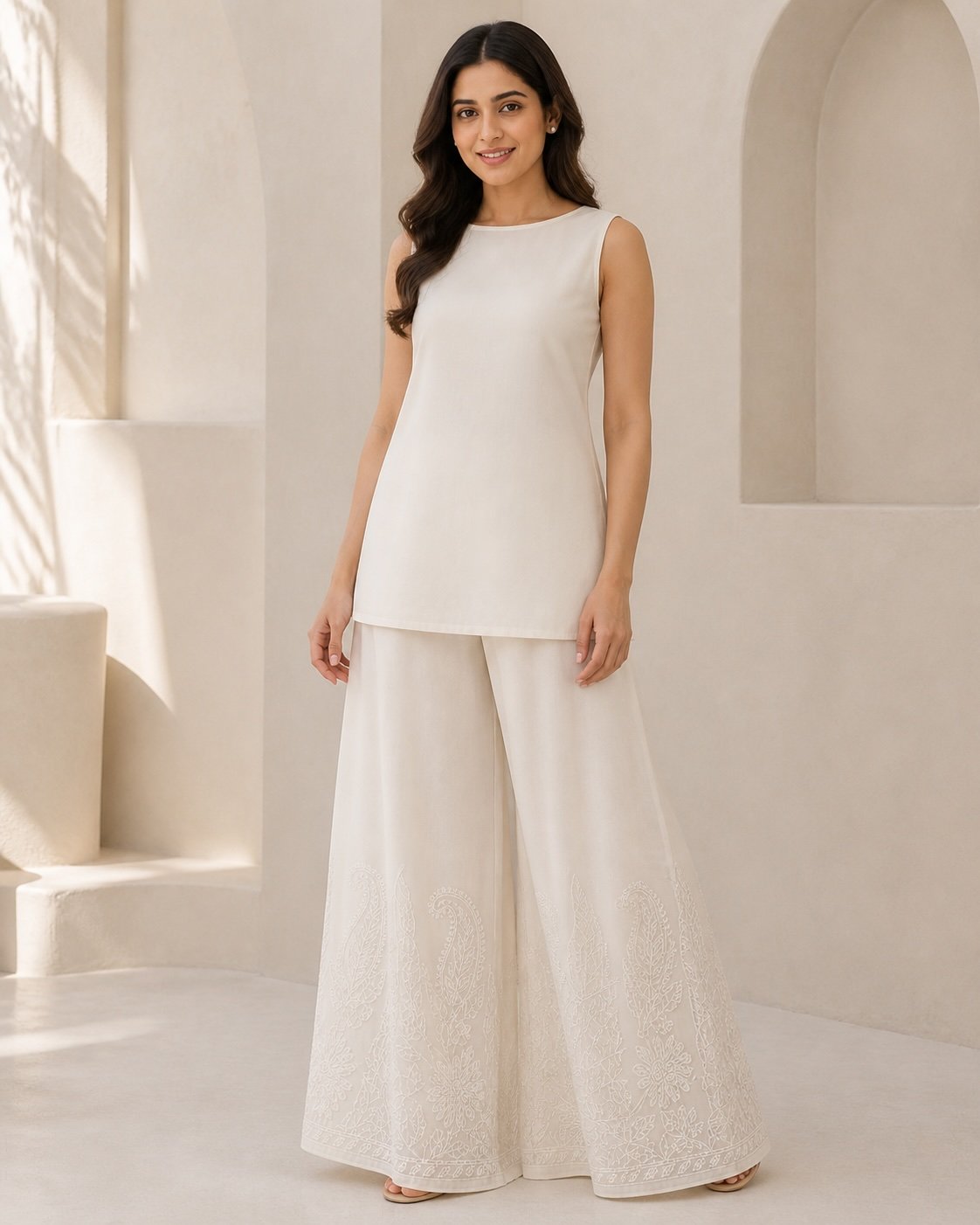
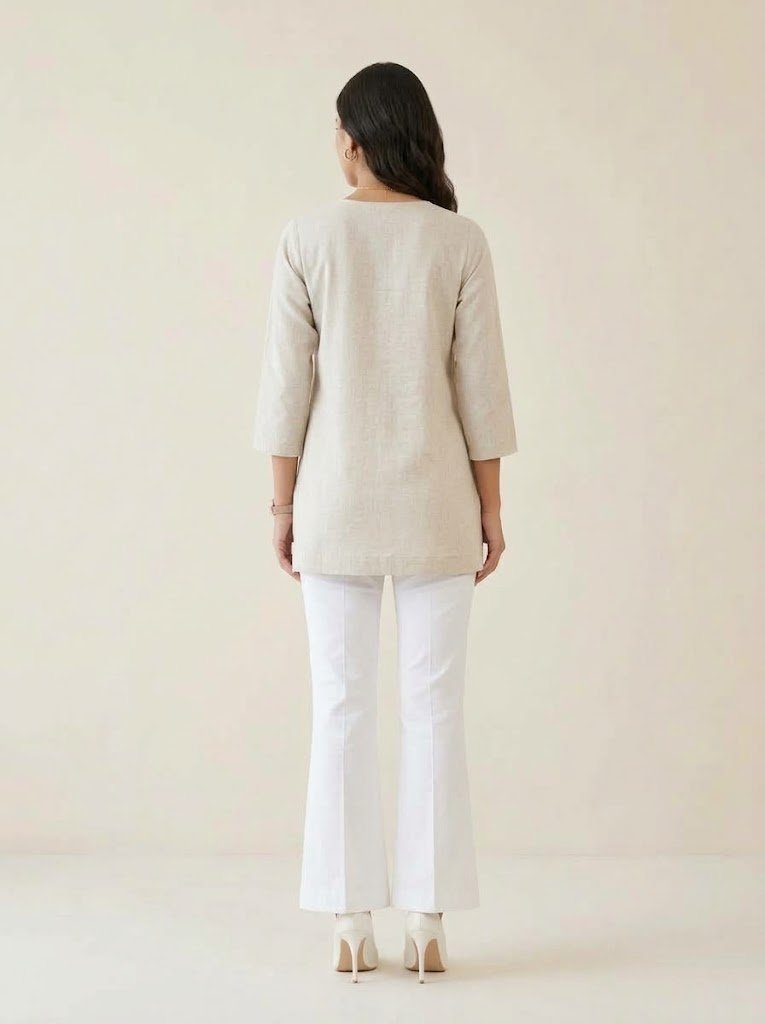
White Sharara Pants
Flare from the waist with no knee seam. Useful when you want more volume for a formal short kameez.
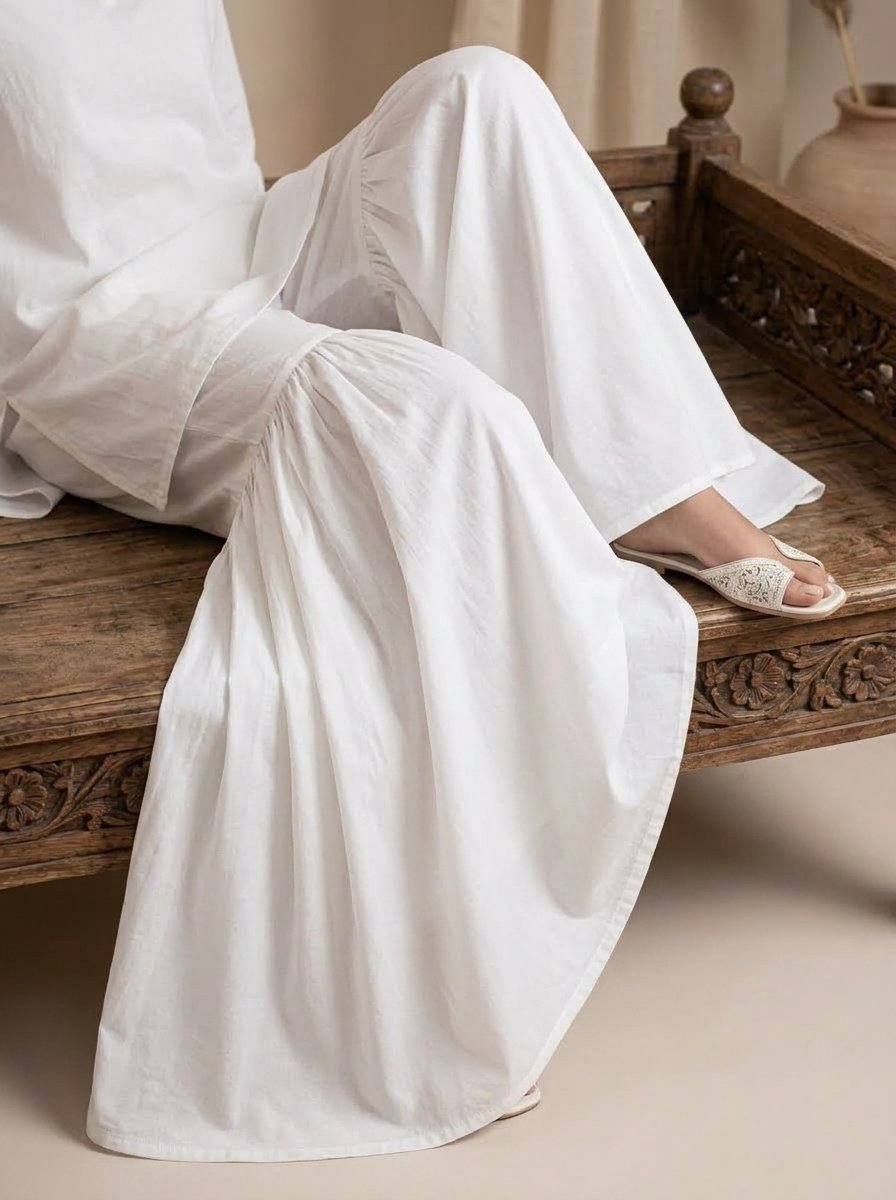
White Gharara Pants
Fitted to the knee, then a wide gathered flare. A traditional formal option if the top is short enough to show the break.
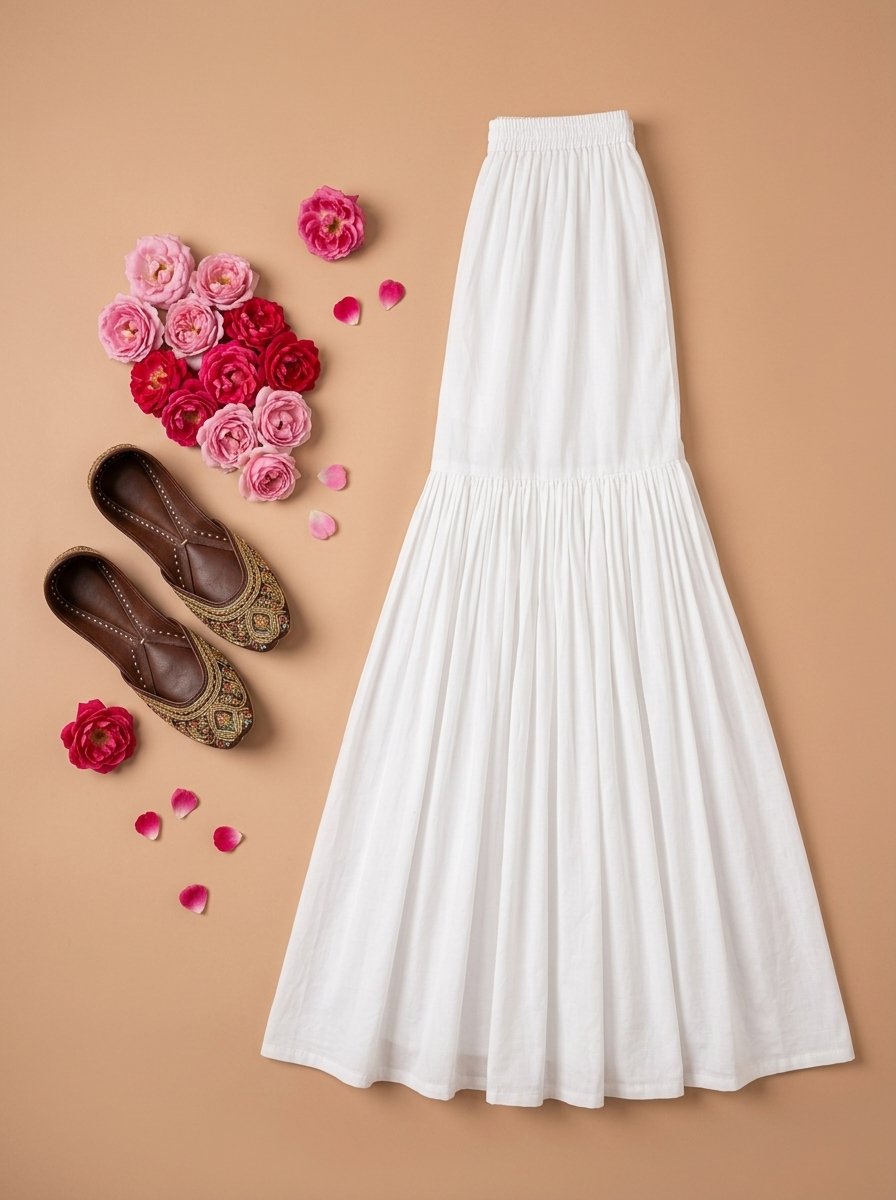
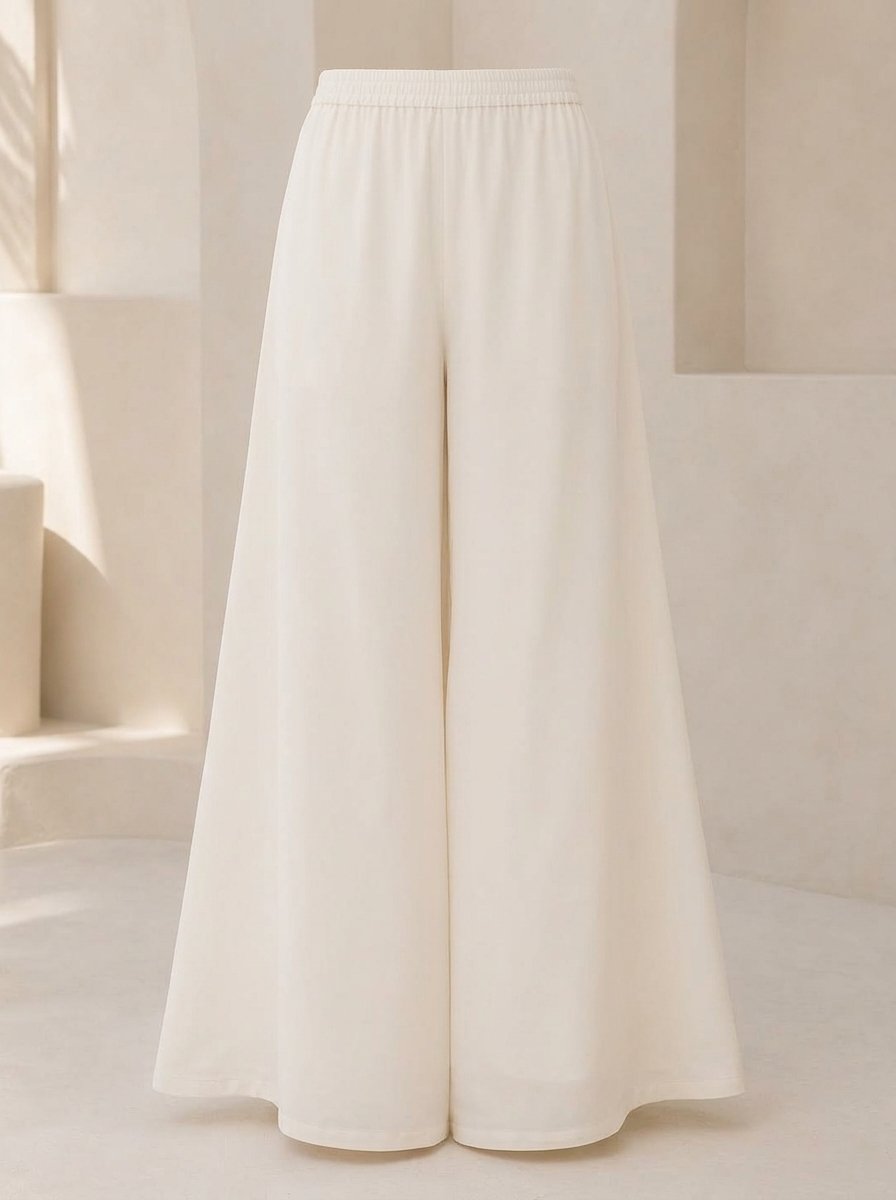
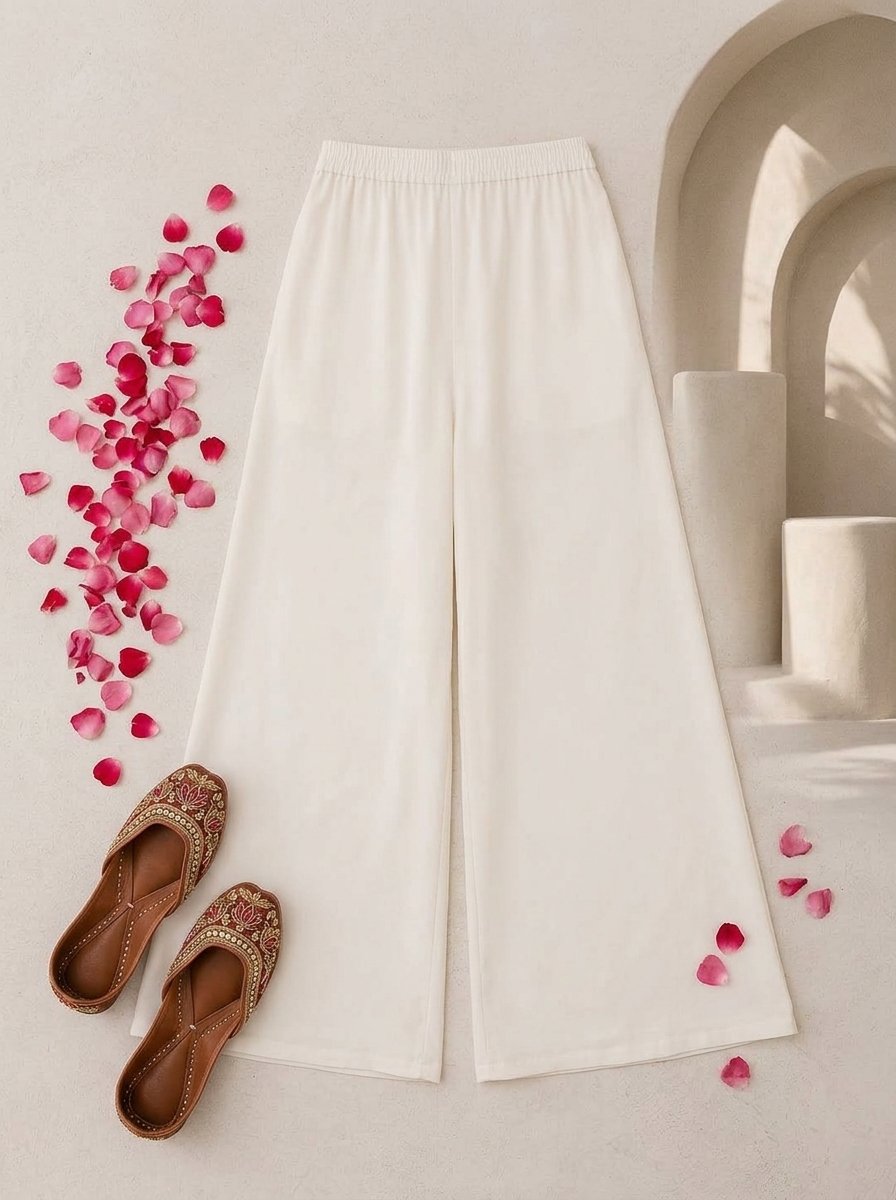
Browse the full Western Bottoms collection for more dye-ready options.
FAQ: Formal tops and bell bottoms
Can I wear a full maxi dress with bell bottom pants?
No. A floor-length maxi or full anarkali covers the flare completely. Choose a short formal kameez, peplum or formal blouse instead.
What length of formal top works best?
Hip-length or slightly longer with side slits. The knee break of the bell bottom must stay visible.
How do I match a formal embroidered top to the pants?
Take both to a rangrez, ask for a dry swatch test, and check the colour in daylight and warm indoor light. Aim to match closely rather than exactly.
Is dyeing expensive for formal colours?
Usually around Rs. 300. Deeper or richer shades may cost a little more depending on the dyer. Confirm the rate before you start.
Do I need special shoes for a formal look?
A small heel, block heel or platform helps the flare fall cleanly and keeps the formal top looking balanced. Avoid flat juttis unless the hem is adjusted.
Where can I read more about the cut itself?
Our earlier guide on bell bottom trouser design explains the difference between bell bottom, bootcut and palazzo and gives more styling ideas.
Planning a formal look this season?
Message us on WhatsApp with a photo of your formal top and your height. We will help you decide Match, Contrast or Wear white. You can also browse the shop, visit the contact page or read why we only sell dyeable white bottoms.