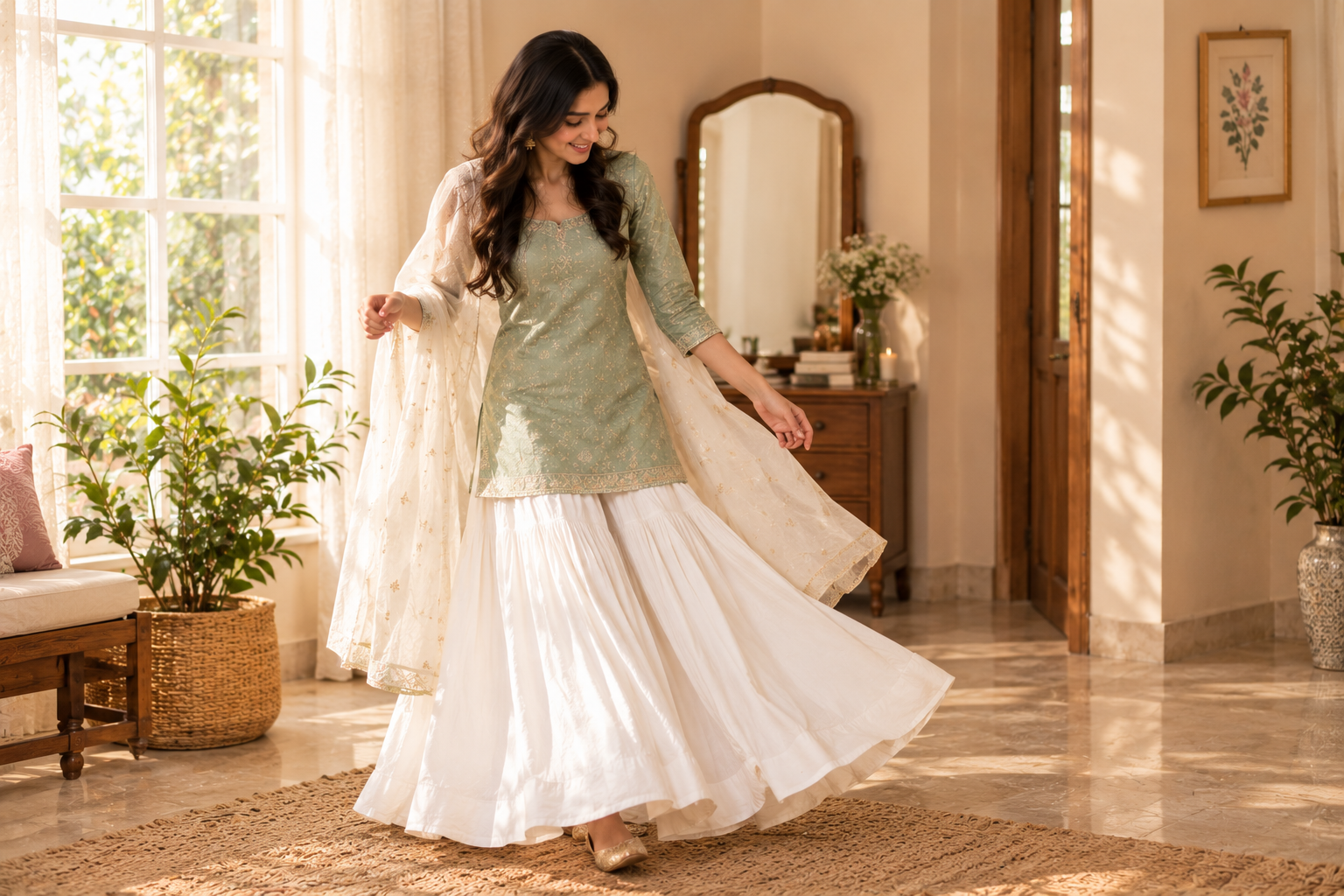
Girl twirling in a white farshi shalwar with a sage short kameez, a farshi shalwar design

Farshi Shalwar Design for Girls: Hem Details, Short Kameez Looks and How to Dye It

Farshi shalwar design starts with one simple fact: the bottom is the star, so the top has to behave.

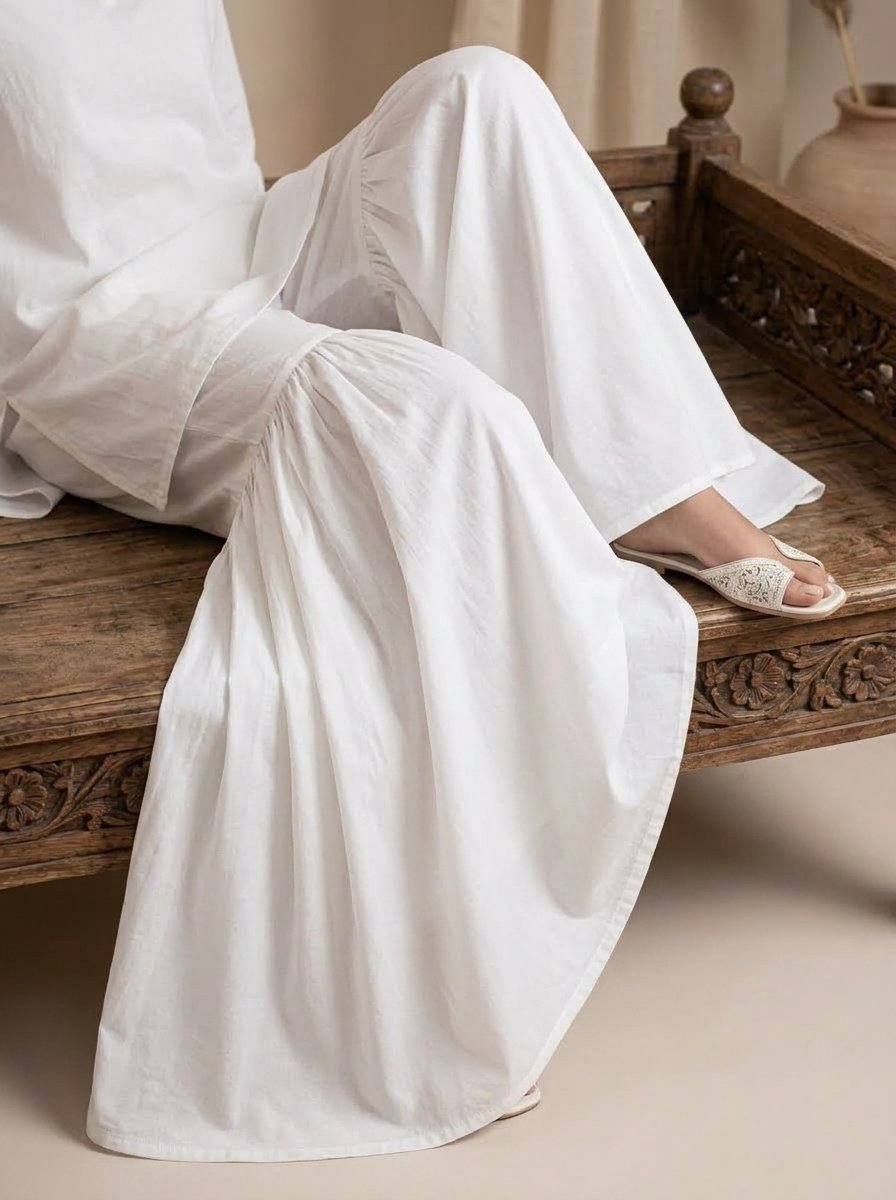
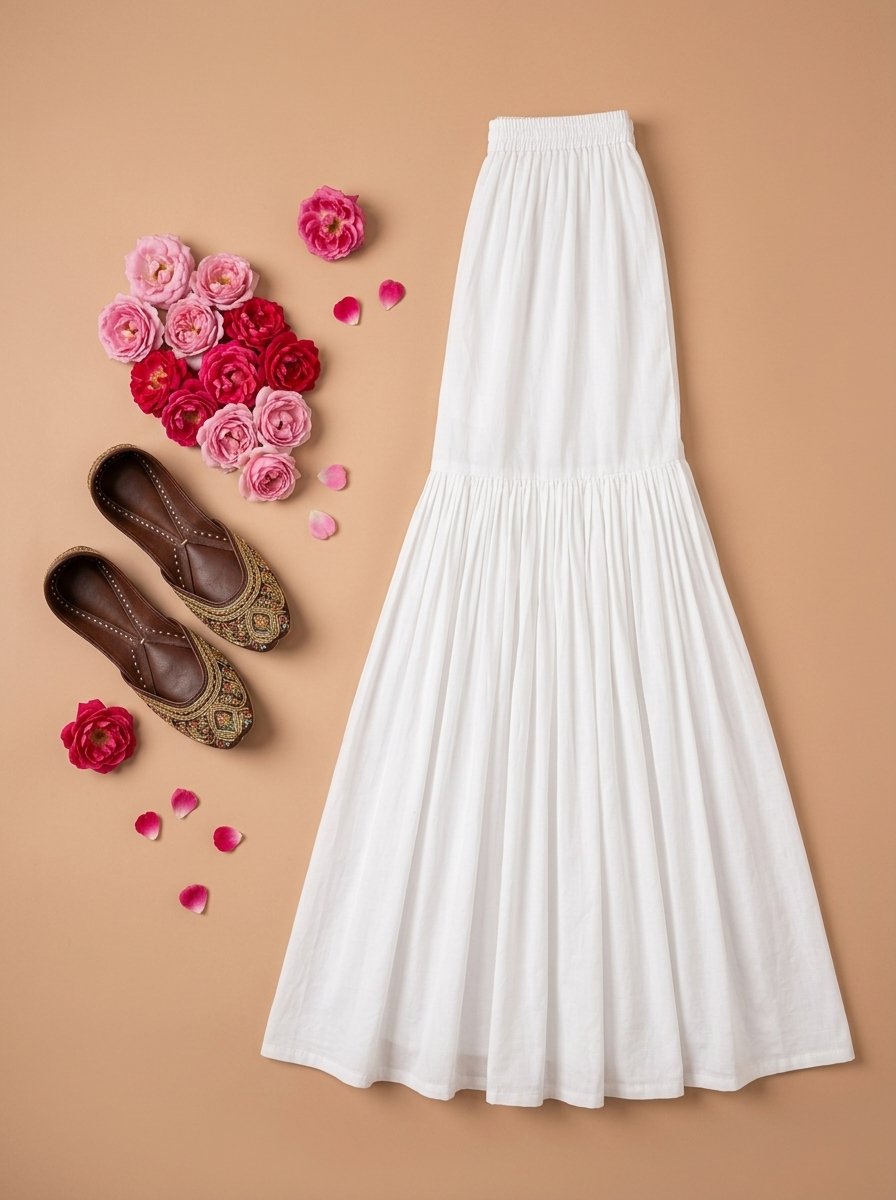
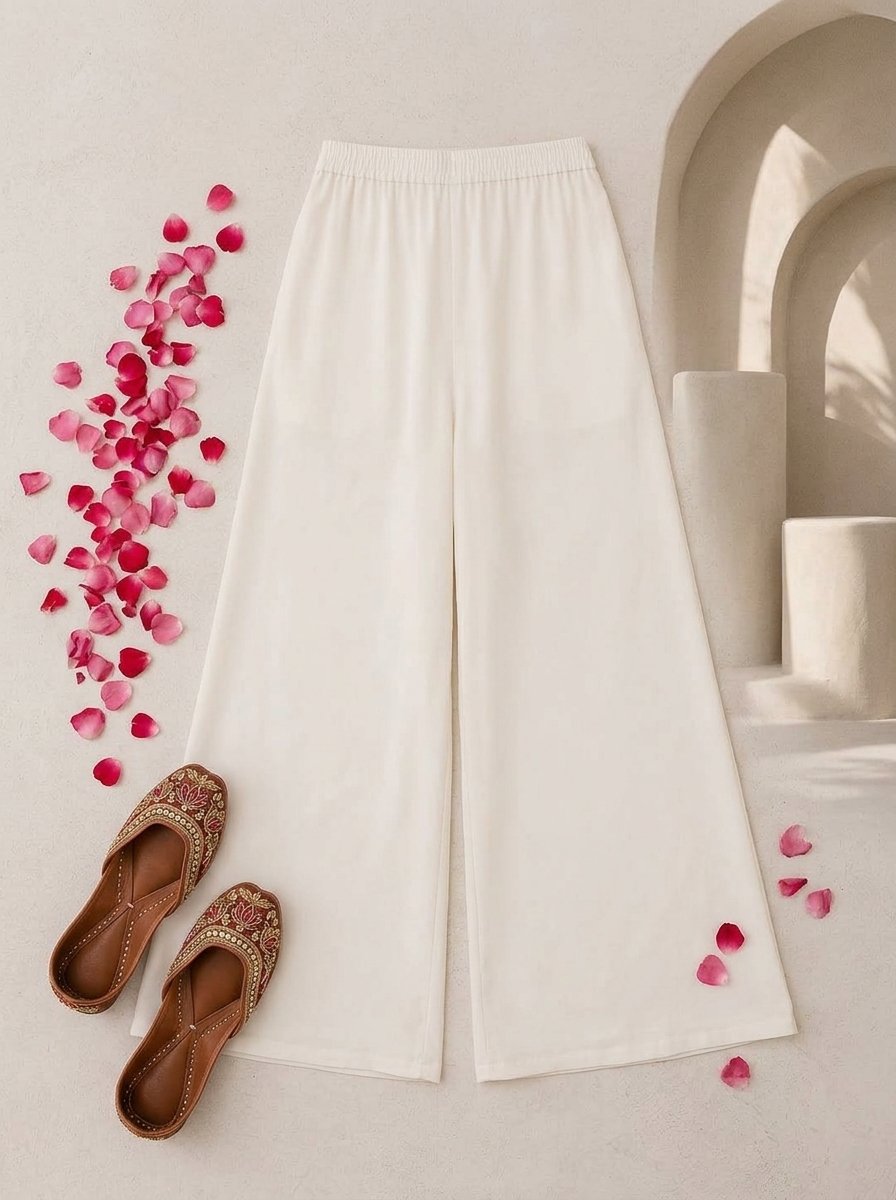
A farshi is wide, pleated and floor-length. Zeen Woman explains that the name comes from “farsh”, meaning floor, and that the shalwar flows like a skirt. That drama is why the short kameez has become its favourite partner. This guide breaks a farshi into five parts, gives you eight short kameez ideas and shows what happens to lace and embroidery when you dye.

What Are the Five Parts of a Farshi Shalwar Design?

Every farshi design comes down to five choices.

  1. Waist. It may be elastic, a drawstring or a belt. Ask which one you are getting.
  2. Pleats. Zeen Woman lists layered or pleated cuts, with deeper pleats giving more volume.
  3. Length. A farshi is floor-length, so it skims or lightly pools at your feet.
  4. Hem, or poncha. It can be plain, lace-trimmed or embroidered.
  5. Fabric. Marketplace listings show silk, jamawar and cotton lawn.

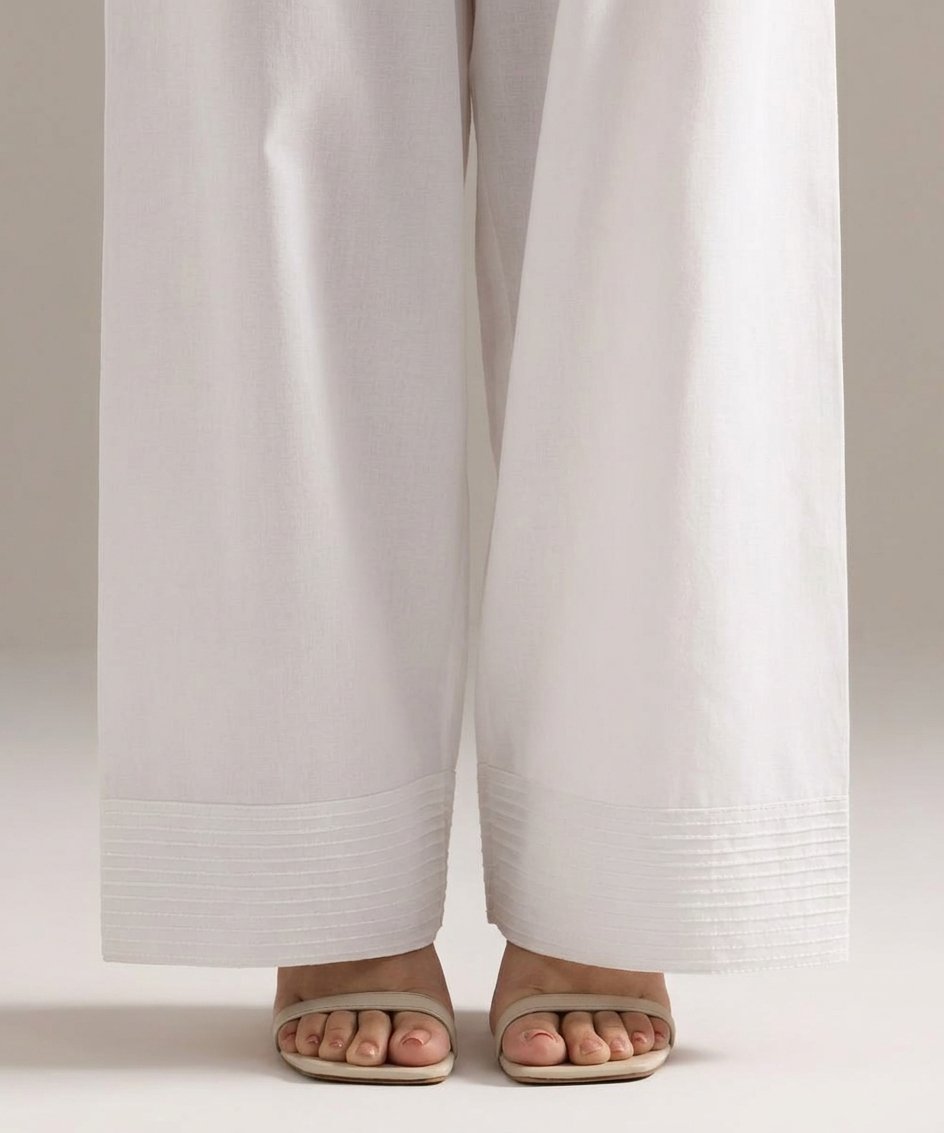
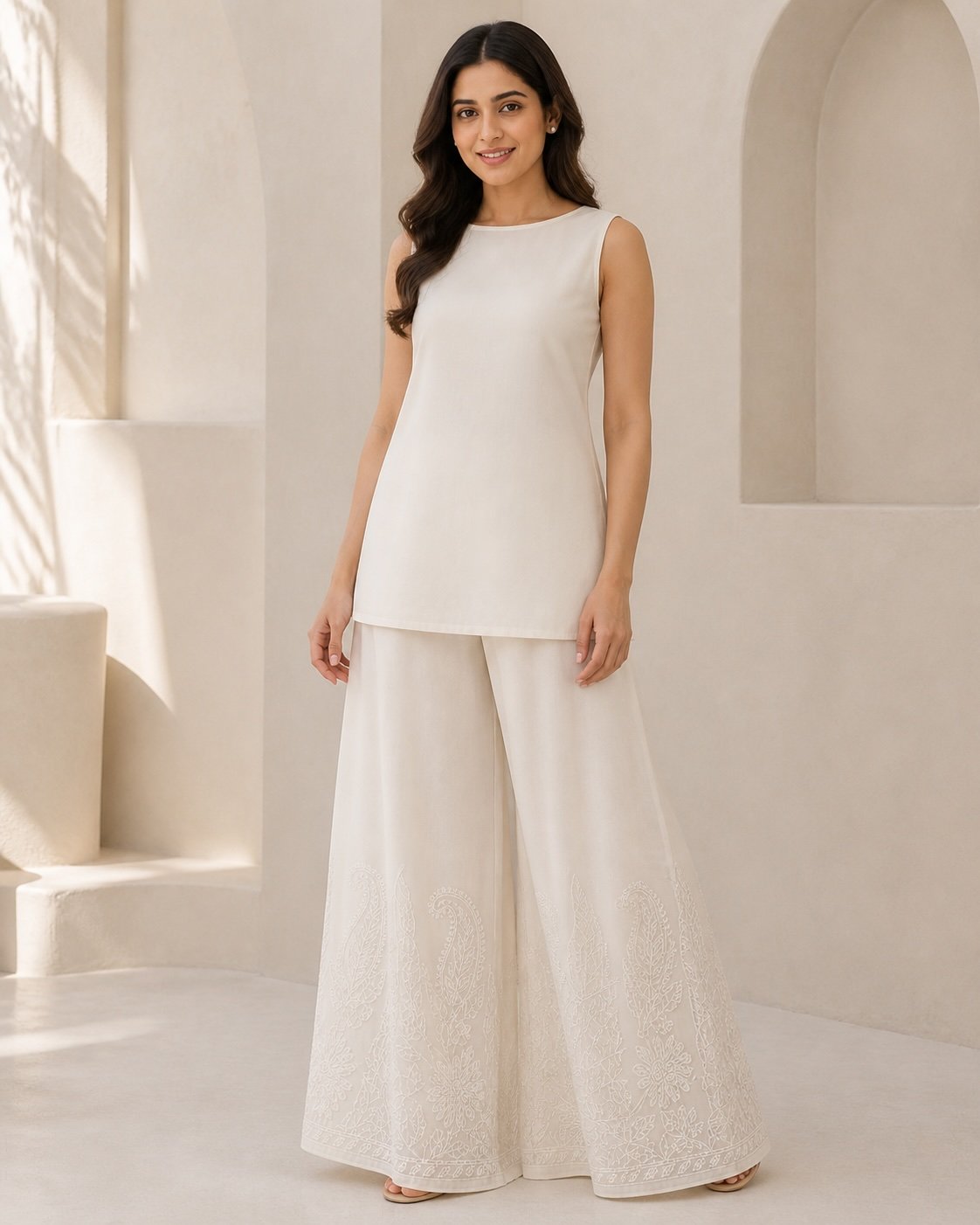
Designs run from simple to fancy. Studio by TCS notes that you can find simple styles and fancy, embroidered outfits. Our White Farshi Shalwar sits at the simple end: wide, pleated and floor-length, ready for your colour.

Which Farshi Shalwar Designs Are Popular in Pakistan Now?

Three trends show up across Pakistani shop pages and listings. They are brand and seller views, so treat them as direction.

  • Colour. Zeen Woman lists classic black, pastels, jewel tones and soft metallics for 2026.
  • The short shirt. Marketplace listings often pair a farshi with a short shirt. Some call the loose bottom a “khulli shalwar”.
  • Trim. Many listings add a lace trim or an embroidered hem.

Why Does a Short Kameez Suit a Farshi Shalwar Design?

Because the bottom is voluminous, it needs a slightly fitted top. Laam’s farshi guide says exactly that: a voluminous bottom pairs best with a slightly fitted or tailored kameez. It also suggests pairing a heavily embroidered farshi with a plain kameez for contrast.

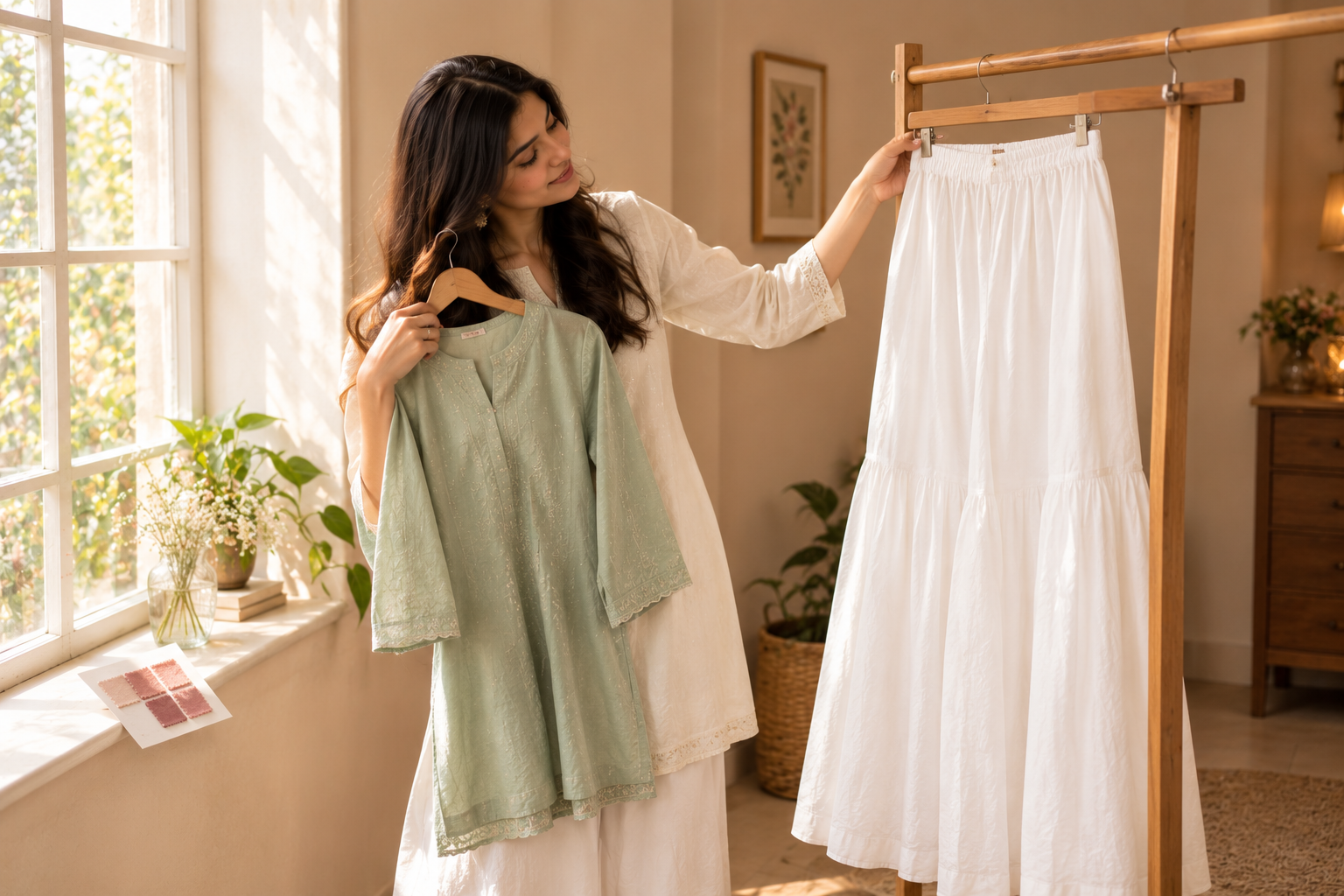
We flip that rule for a plain farshi. Keep the farshi calm and dyed, and let the short kameez carry the embroidery. For help with length, read Which Bottoms Suit Your Height?.

Eight Farshi Shalwar Design Ideas With a Short Kameez

In every look, “dye” means starting from a white farshi.

Look 1: Sage on sage (Match)

Wear a fitted sage short kameez with a farshi dyed the same sage. Add an ivory dupatta for a calm daytime look.

Look 2: Ivory and champagne (Tonal)

Pair an ivory short kameez with gold embroidery and a farshi dyed pale champagne. It suits a nikkah or walima.

Look 3: Embroidered kameez, calm navy farshi (Contrast)

Dye the farshi deep navy, and wear it with a heavily embroidered short kameez. The calm bottom lets the embroidery lead.

Look 4: Printed kameez, quiet farshi

Take a printed short kameez, and dye the farshi to the print’s quietest colour. The print stays the star.

Look 5: Lilac over white (Wear white)

Pair a fitted lilac short kameez with a plain white farshi and a lilac dupatta. It needs no dyeing, which suits an easy Eid morning.

Look 6: Mustard and deep green (Contrast)

Wear a mustard short kameez with a farshi dyed deep green. Add an ivory dupatta. It is a festive pair for mehndi or Eid.

Look 7: Dusty rose and soft grey (Contrast)

Pair a dusty rose short kameez with a farshi dyed soft grey. A light gold dupatta adds warmth.

Look 8: Teal for the evening (Match)

Dye the farshi teal to match a short teal kameez. Add a dupatta with a gota border. It is a rich option for an evening event.

Can You Add Lace or Embroidery and Still Dye It?

Only if the trim is dyeable too. Thread, lace and embroidery take dye only when the material allows it. Our farshi uses dyeable thread, but a lace you add later may not. A trim that does not take dye stays white and shows as a contrast line.

You have two safe routes.

  • Dye first, trim later. Dye the plain farshi, then add a coloured lace in a matching shade. This is the easier route.
  • Trim first, test a scrap. Ask your tailor or lace seller whether the trim is dyeable. Dye a scrap of the trim along with a scrap of the fabric before you commit.

How Do You Describe a Farshi Design to Your Tailor?

Names fail, but a brief does not. Give your tailor these five lines.

  1. Is the waist elastic, a drawstring or a belt?
  2. How deep are the pleats?
  3. What is the length from waist to floor, in your shoes?
  4. How wide is the poncha, the hem opening?
  5. Is there a trim, and is it dyeable?

Our guide Trouser Design for Girls in Pakistan explains the other names you may hear.

How Do You Dye a White Farshi Shalwar?

Take your kameez and the white farshi to a dyer. Ask for a swatch test, let it dry, and check it in daylight. Dyeing usually costs around Rs. 300, and wide pieces may be priced differently, so ask first. At the listed price, the farshi costs Rs. 1,500, so a dyed pair comes to around Rs. 1,800. Check the product page for the current price.

Results depend on the dyer, so we never promise an exact shade. These guides cover each step: How to Dye a White Shalwar to Match Your Shirt, How Much Does It Cost to Dye a Shalwar in Pakistan? and Wash Dyed Bottoms Without Fading.

Which Mistakes Spoil a Farshi Design?

  • A voluminous kameez over a voluminous farshi. Keep the top fitted.
  • The wrong length for your shoes. Measure waist to floor in the shoes you will wear.
  • A non-dyeable trim. It stays white after dyeing.
  • A near-miss colour. Match closely or contrast clearly, but never in between.
  • Skipping the swatch test. A small test shows the real shade before the whole piece goes in.

Shop the Look: Start With a White Farshi

Every piece below arrives in plain white and is dyeable.

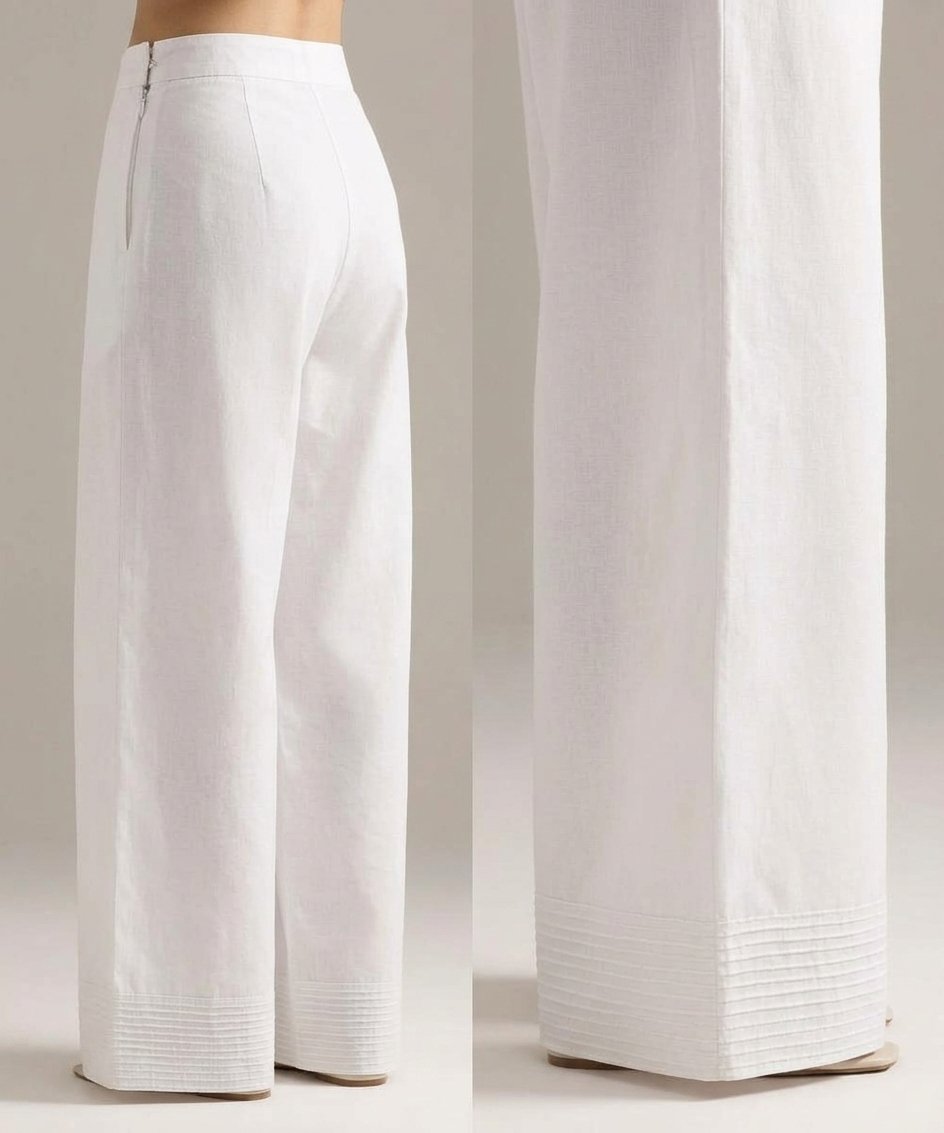
White Farshi Shalwar

Wide, pleated and floor-length. The base for every look in this guide.

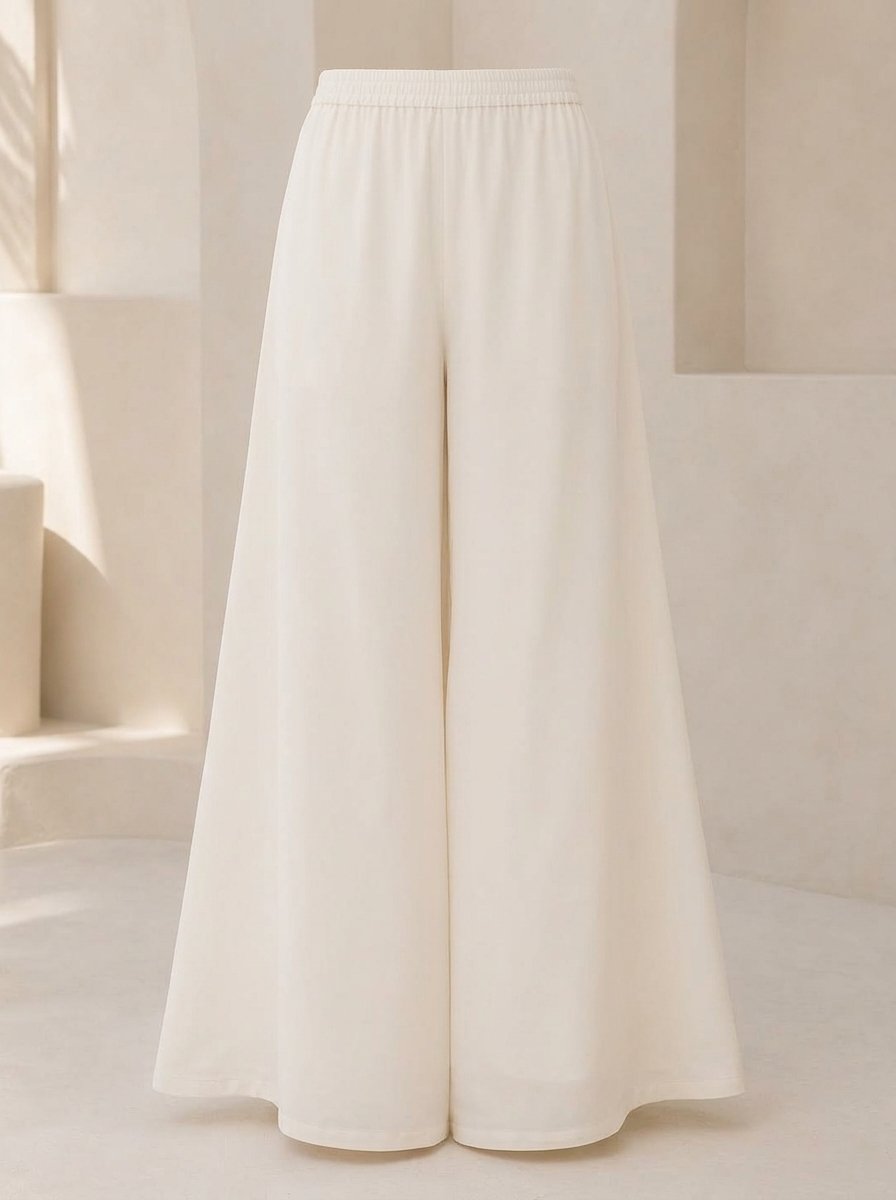
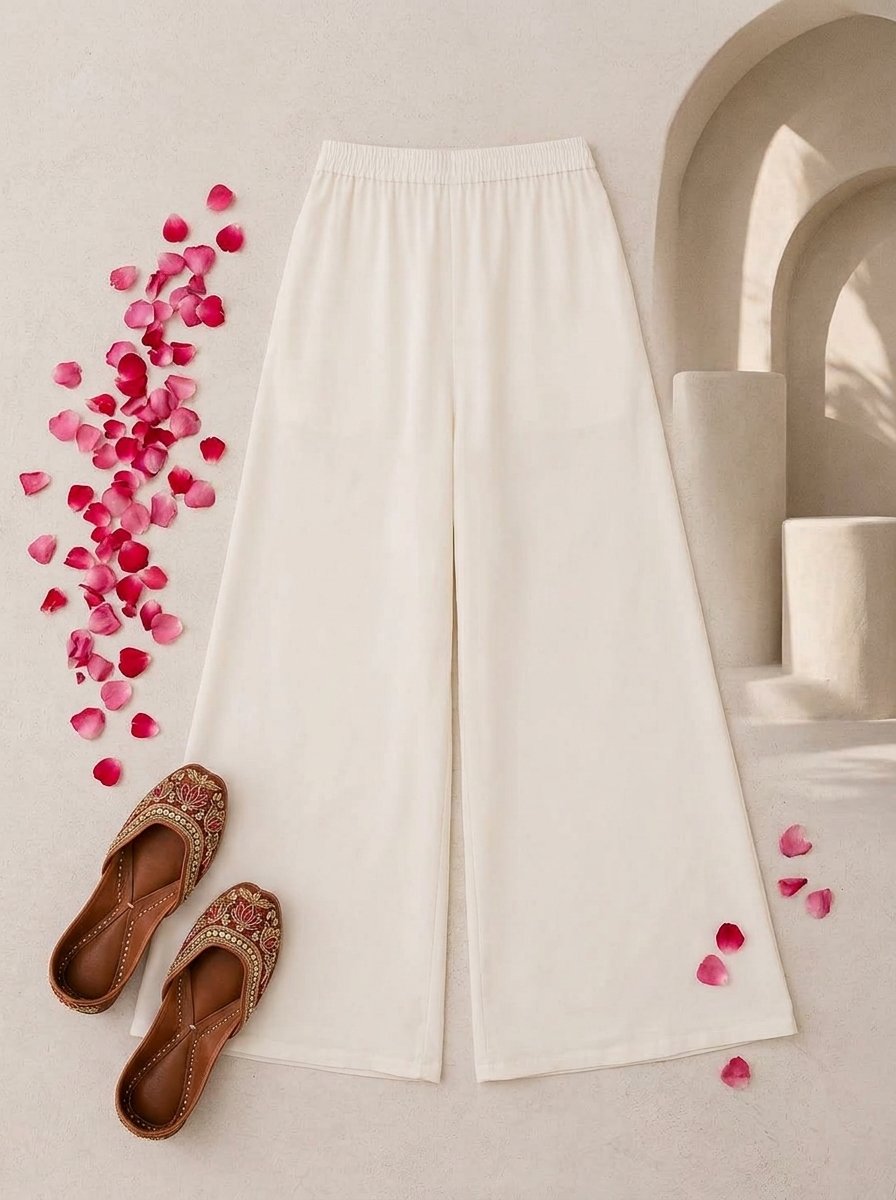
White Sharara Pants

A flare from the waist with no knee seam. Easier to dance in.

White Gharara Pants

Fitted to the knee, then a wide gathered flare. See Pakistani Wedding Outfit Ideas for more.
Shop Eastern Bottoms

FAQ: Farshi Shalwar Design

What is a farshi shalwar design?

A farshi is a wide, pleated, floor-length shalwar. The name comes from “farsh”, meaning floor. Designs range from plain pleats to lace-trimmed or embroidered hems.

What kameez goes with a farshi shalwar?

A slightly fitted or tailored kameez balances the volume, according to Laam. Short kameez are especially popular, and a long kameez also works.

Which farshi shalwar colours are popular?

Zeen Woman lists classic black, pastels, jewel tones and soft metallics for 2026. Choose one hero colour and let the rest support it.

Can I add lace to a farshi shalwar I plan to dye?

Yes, but ask whether the lace is dyeable. A trim that does not take dye stays white. You can also dye first and add a coloured lace later.

How long should a farshi shalwar be?

It should be floor-length, so it skims or lightly pools at your feet. Measure from your waist to the floor in the shoes you will wear, and compare it with the product length.

Can I dye a white farshi to match my kameez?

Yes, if the fabric and thread are dyeable, as ours are. Take both to a dyer, ask for a swatch test and compare in daylight. Dyeing usually costs around Rs. 300, and results depend on the dyer.

Planning Your Farshi Look?

Send us your kameez colour and the occasion on WhatsApp: 03394011360, and we will help you choose a shade. You can also visit our contact page, browse the shop or read our story.
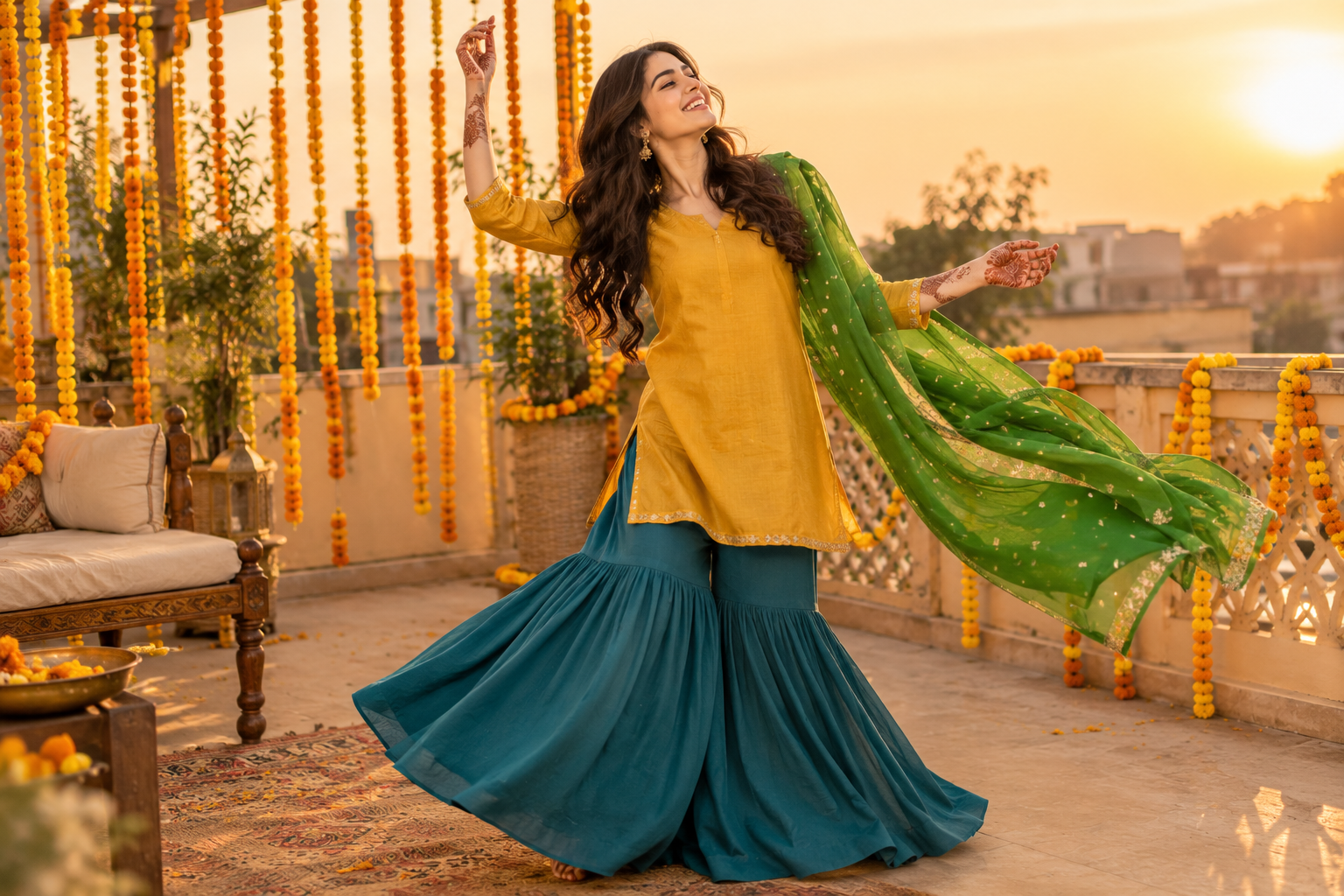
Girl dancing in a teal sharara with henna on her hands, a mehndi dress for girls

Mehndi Dresses for Girls: 8 Sharara and Gharara Looks (With the Colors to Wear)

Mehndi dresses for girls have one job before they look good: let you sit on the floor, dance all night and still enjoy the evening.

The 2026 guides agree on the shape. RJ’s Pret calls the sharara set 2026’s defining mehndi silhouette, and says it is far more comfortable for sitting cross-legged, dancing and applying henna. So we built this guide around the sharara and the gharara. We also add a twist most guides skip. A plain white sharara is not a mehndi dress yet. It becomes one when you dye it.

What Makes a Mehndi Dress Work?

Think comfort, colour and courtesy, in that order.

  • Comfort. Rangreza’s 2026 mehndi guide recommends sharara and gharara sets for bridesmaids and guests who want to stay active. It says light fabrics suit daytime mehndi functions.
  • Light work. Vanya’s bridesmaid guide notes that bridesmaids often prefer lighter work, and that mirror work and gota dominate mehndi outfits.
  • Colour. The next section covers it.
  • Courtesy. Dress for the event, and do not upstage the bride.

Which Colours Suit Mehndi Dresses for Girls?

Mehndi is the colourful function, so bright shades are welcome.

  • Bright and festive: yellow, green, orange, coral, fuchsia, teal and multicolour combinations, according to RJ’s Pret.
  • Soft for bridesmaids: peach, mint and lavender, according to Rangreza.
  • Courtesy: if you know the bride’s colour, RJ’s Pret says it is courteous to choose a slightly different shade.

Some colours need care. Faisal Silk says black and pure white are usually avoided for mehndi in most Pakistani traditions. RJ’s Pret adds that guests should avoid white, which is associated with mourning, and red, which is reserved for the bride at the baraat. Libayah notes that none of these is an absolute ban everywhere, so ask the family if you are unsure.

Why Should You Dye a White Sharara Before a Mehndi?

Because white is the colour most guides tell guests to avoid at a mehndi. So a white sharara is a base, not a finished outfit. That is exactly why ours arrive white and dyeable: you choose the festive shade.

Take your kurti and the white sharara to a dyer, ask for a swatch test, and check it in daylight. Dyeing usually costs around Rs. 300, and wide pieces may be priced differently, so ask first. At the listed price, the White Sharara Pants cost Rs. 2,500, so a dyed pair comes to around Rs. 2,800. Check the product page for the current price.

Results depend on the dyer, so we never promise an exact shade. For the steps, read How to Dye a White Shalwar to Match Your Shirt and How Much Does It Cost to Dye a Shalwar in Pakistan?.

[INSERT: a real customer’s mehndi look, with the shade she dyed to and what her dyer quoted, with permission.]

Eight Mehndi Dresses for Girls to Try

In every look, “dye” means starting from a white sharara or gharara.

Look 1: Marigold and deep green (Contrast)

Wear a marigold kurti with a sharara dyed deep green. Add an ivory dupatta and embellished juttis. The green grounds the bright kurti.

Look 2: Fuchsia and lime (Contrast)

Pair a fuchsia kurti with a sharara dyed lime green. Choose a yellow dupatta with gota. This is a loud, joyful green mehndi dress.

Look 3: Coral and teal (Contrast)

Wear a coral kurti with a sharara dyed teal. Add a light gold dupatta. Teal is a bold shade that suits mehndi.

Look 4: Yellow and mint (Contrast)

Wear a sunshine yellow kurti with a gharara dyed pale mint. Add a mint organza dupatta for a soft, modern yellow mehndi dress.

Look 5: Teal on teal (Match)

Dye the sharara to match a teal kurti. Add a dupatta with mirror work or gota, so the sparkle carries the outfit.

Look 6: Peach and lavender (Soft)

Pair a peach kurti with a sharara dyed lavender. It is a gentle, simple mehndi dress that suits a daytime function.

Look 7: A busy print, one calm bottom

Take a multicolour kurti, and dye the sharara to the print’s quietest colour. RJ’s Pret says multicolour and neutral combinations work for guests.

Look 8: Coordinated sisters

Buy the same white sharara for three sisters, and dye them mint, peach and lavender with matching kurtis. Waqas Shah’s wedding guide lists coordinated sisters for mehndi.

How Do You Avoid Clashing With the Bride and Family?

Send three messages, and you avoid most awkward photos.

  1. Ask the bride’s sister or a cousin for the colour theme.
  2. Tell your own sisters or friends your shade.
  3. Confirm that your shade is slightly different from the bride’s.

The Waqas Shah guide gives the rule in one line: match the event, not the bride.

Does Your Mehndi Dress Pass the Sit-and-Dance Test?

Mehndi means sitting on the floor and dancing, so test before you commit. Run the dance test from our sharara outfit ideas guide. Then add one more check: sit cross-legged on the floor and stand up without help.

Choose footwear you can dance in. Embellished juttis, flats and khussa all work.

When Should You Dye for a Mehndi?

Work backwards from the event date.

  1. Choose your shade, and check it against the bride’s colour if you know it.
  2. Take the white sharara and your kurti to the dyer.
  3. Ask for a swatch test and a pickup date. Busy wedding weeks may change the date, so leave a buffer.
  4. Check the dry swatch in daylight and in warm light. Our guide Why Your Shalwar Never Matches Your Kameez (and the Fix) explains why.
  5. Wash the dyed piece separately for the first few washes, as in Wash Dyed Bottoms Without Fading.

Shop the Look: Start With a White Base for Mehndi

Every piece below arrives in plain white and is dyeable.

White Sharara Pants

A flare from the waist, with no knee seam. Easy to dance in.

White Gharara Pants

Fitted to the knee, then a wide gathered flare. A traditional mehndi silhouette.

White Culottes Pants

Wide, straight and cropped. A light pick for a dholki or a mayoun.

Shop Eastern Bottoms

FAQ: Mehndi Dresses for Girls

What colour dress should a girl wear to a mehndi?

Bright shades such as yellow, green, orange, coral, fuchsia and teal suit a mehndi. If you know the bride’s colour, choose a slightly different shade.

Can I wear white or black to a mehndi?

Many Pakistani guides advise against both. Faisal Silk says black and pure white are usually avoided for mehndi, and RJ’s Pret says white is associated with mourning. Customs vary, so ask the family.

What is the best silhouette for a mehndi dress?

A sharara set is the most popular and practical, because it is comfortable for sitting, dancing and applying henna. A gharara is another traditional choice.

What should the sister of the bride wear to the mehndi?

Follow the family’s colour scheme, often in matching or complementary sets. Peach, mint and lavender are popular bridesmaid shades. Ask for the theme early.

Can I dye a white sharara for a mehndi?

Yes, if the fabric and thread are dyeable, as ours are. Take your kurti and the white sharara to a dyer, ask for a swatch test and compare in daylight. Dyeing usually costs around Rs. 300, and results depend on the dyer.

What shoes suit a mehndi dress?

Comfortable flats, khussa or embellished juttis suit a mehndi, because you will dance and sit for hours. Choose the pair you can keep on all night.

Choosing Your Mehndi Shade?

Tell us the bride’s colour and your kurti shade on WhatsApp: 03394011360, and we will help you choose a dye shade that does not clash. You can also read about the formal function in Baraat Dresses for Girls, browse the shop or visit our contact page.

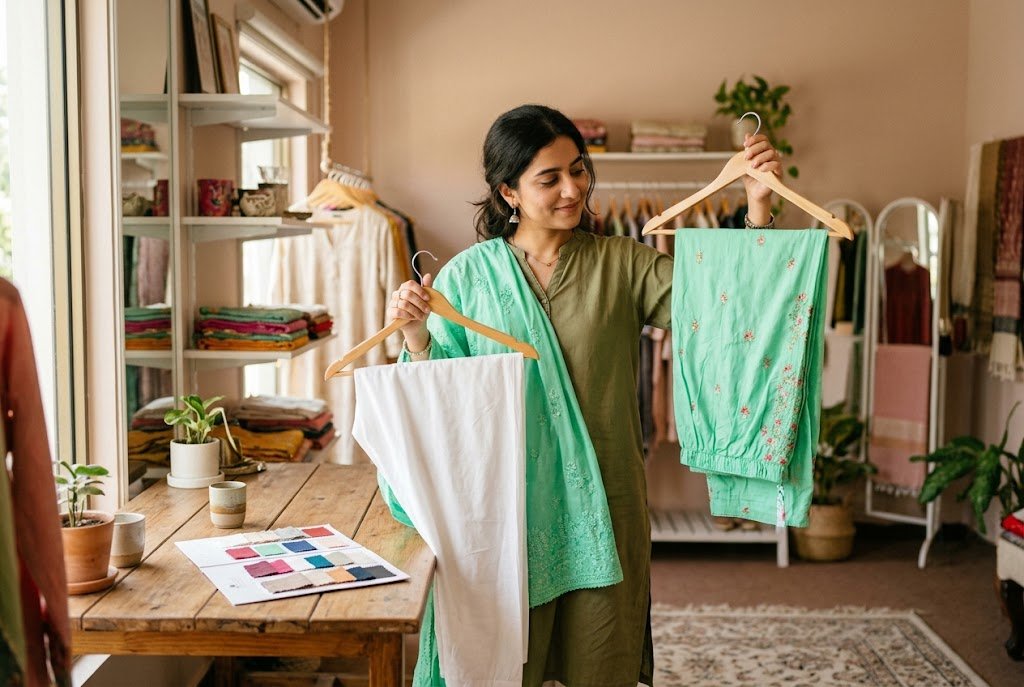
Woman deciding on a white trouser design by holding a sage kurti against white bottoms

White Trouser Design for Girls: 8 Ideas to Wear and Dye in Pakistan

White trouser design gives you two options in one purchase: wear it white, or dye it.

Most trousers force the choice at the shop. A white pair lets you decide at home, with your kameez or kurti in your hand. This guide gives you eight ideas, a simple rule for choosing between white and dyed, and a cost table so you know what each path costs.

Why Is White Trouser Design Getting Attention in 2026?

Pantone named Cloud Dancer, a soft white, its Colour of the Year for 2026, the first white it has ever chosen. Gul Ahmed’s trouser design guide also lists “white trouser design 2026” among its related ideas. Fashion pages are not proof of demand, but they point the same way.

What Is the White-First Rule?

Wear the white pair with your kurti before you dye anything. This is the habit we suggest to every customer.

  1. Put the white bottom with your kurti, and take a photo in daylight.
  2. Ask one question: does the kurti carry the outfit?
  3. If yes, keep the bottom white.
  4. If the outfit looks flat, or you want a tonal look, choose a dye shade.

Our stance: keep at least one white pair in your wardrobe. A calm piece lets everything else lead.

Eight White Trouser Design Ideas to Wear or Dye

Each idea says “wear white” or “dye”, and names the bottom it uses.

1. White farshi with a sage kurti (wear white)

Pair a white farshi shalwar with a sage kurti and a soft ivory dupatta. The white farshi design lets the sage kurti stay the star.

2. White sharara with a bright kurti for mehndi (wear white)

Wear a white sharara with a marigold or fuchsia short kurti. The white calms the colour.

3. White culottes with a printed kurti for university (wear white)

Pair white culottes with a printed short kurti. A white bottom keeps a busy print from fighting.

4. White bell bottom with a fitted kurti (wear white)

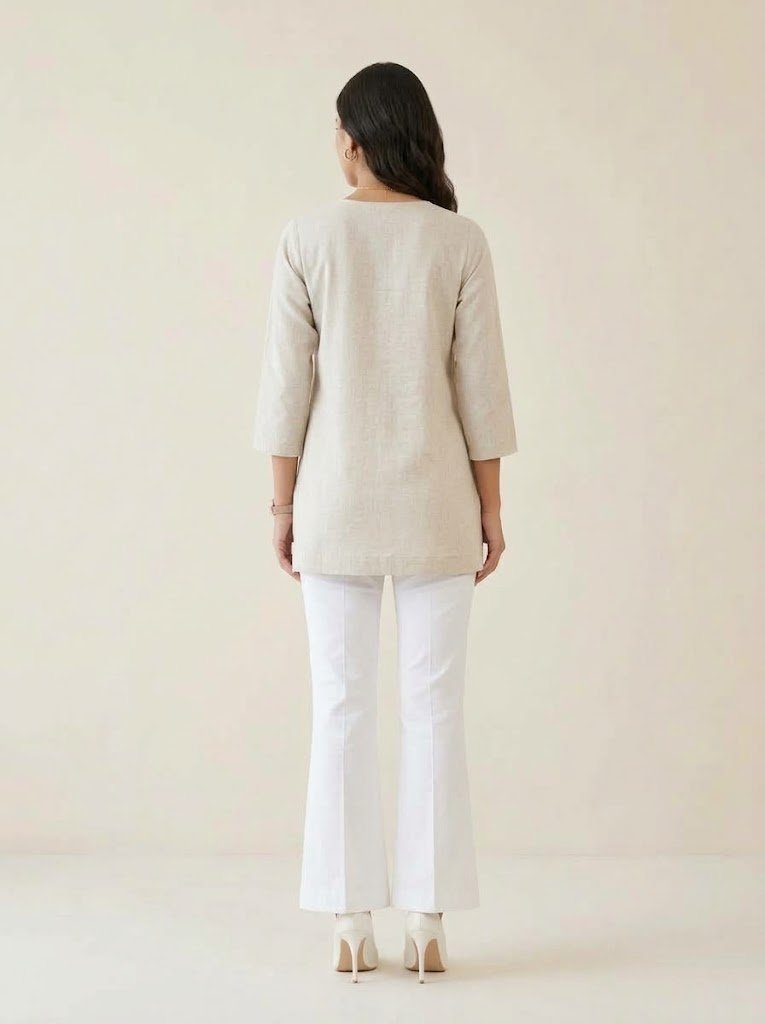
Wear white bell bottom pants with a short, fitted kurti in one clear colour.

5. White gharara dyed to match a maroon kurti (dye)

Dye a white gharara one shade deeper than a maroon kurti. Add a gold dupatta for a rich, formal evening look.

6. White sharara dyed teal with marigold (dye)

Dye the sharara teal, and pair it with a marigold kurti. This is a bold, festive contrast.

7. White farshi dyed champagne with ivory (dye)

Dye the farshi a pale champagne, and wear it with an ivory kurti. The look stays soft for a nikkah or walima.

8. White culottes dyed dusty rose for work (dye)

Dye the culottes a soft dusty rose, and pair them with a cream short kurti. It is a quiet office look.

How Do You Style a White Trouser Design Without It Looking Flat?

White can look flat when everything around it is flat too. Try these four moves.

  • Add one accent. A coloured dupatta or jutti gives the eye somewhere to land.
  • Keep one piece calm. Chic Ophicial advises against pairing a voluminous top with an equally voluminous bottom. A structured angrakha with straight, wide-leg trousers balances the look.
  • Mix textures. A matte bottom with a textured kurti looks richer than two flat pieces.
  • Choose a simple trouser design for daily wear. Save the dramatic flare for events.

How Do You Keep a White Trouser Design Looking White?

Sort your washing by colour. Iowa State Extension says washing like colours is the way to prevent colour transfer. So wash your white bottoms with other light pieces, not with dark or new dyed clothes.

If you plan to dye later, keep the piece clean. Dharma Trading’s dyeing guide says dirt, oils and even fingerprints can cause uneven dyeing. After you dye, follow our guide Wash Dyed Bottoms Without Fading.

What Does White Cost Compared With Dyed?

Here are the prices listed on our site today. Check each product page for the current price. Dyeing usually costs around Rs. 300, and wide pieces may be priced differently.

BottomWear whiteDyed (about)
White Farshi ShalwarRs. 1,500Rs. 1,800
White Culottes PantsRs. 1,500Rs. 1,800
White Bell Bottom PantsRs. 1,500Rs. 1,800
White Sharara PantsRs. 2,500Rs. 2,800
White Gharara PantsRs. 2,500Rs. 2,800

Results depend on the dyer, so we never promise an exact shade. For the full process, read How to Dye a White Shalwar to Match Your Shirt and How Much Does It Cost to Dye a Shalwar in Pakistan?.

Which Mistakes Spoil a White Look?

  • White on white with no texture. The outfit looks flat.
  • Two voluminous pieces. Keep either the top or the bottom calm.
  • Dyeing before you test white. You may not need the dye at all.
  • Letting stains sit. Wash early, and keep whites with whites.
  • A near-miss dye shade. Match closely or contrast clearly, but never in between.

Shop the Look: Five White Bases to Wear or Dye

Every piece below arrives in plain white and is dyeable.

White Farshi Shalwar

Wide, pleated and floor-length. See Eid 2027 Outfit Ideas.

White Sharara Pants

A flare from the waist with no knee seam.

White Gharara Pants

Fitted to the knee, then a wide gathered flare. See Pakistani Wedding Outfit Ideas.

White Culottes Pants

Wide, straight and cropped.

White Bell Bottom Pants

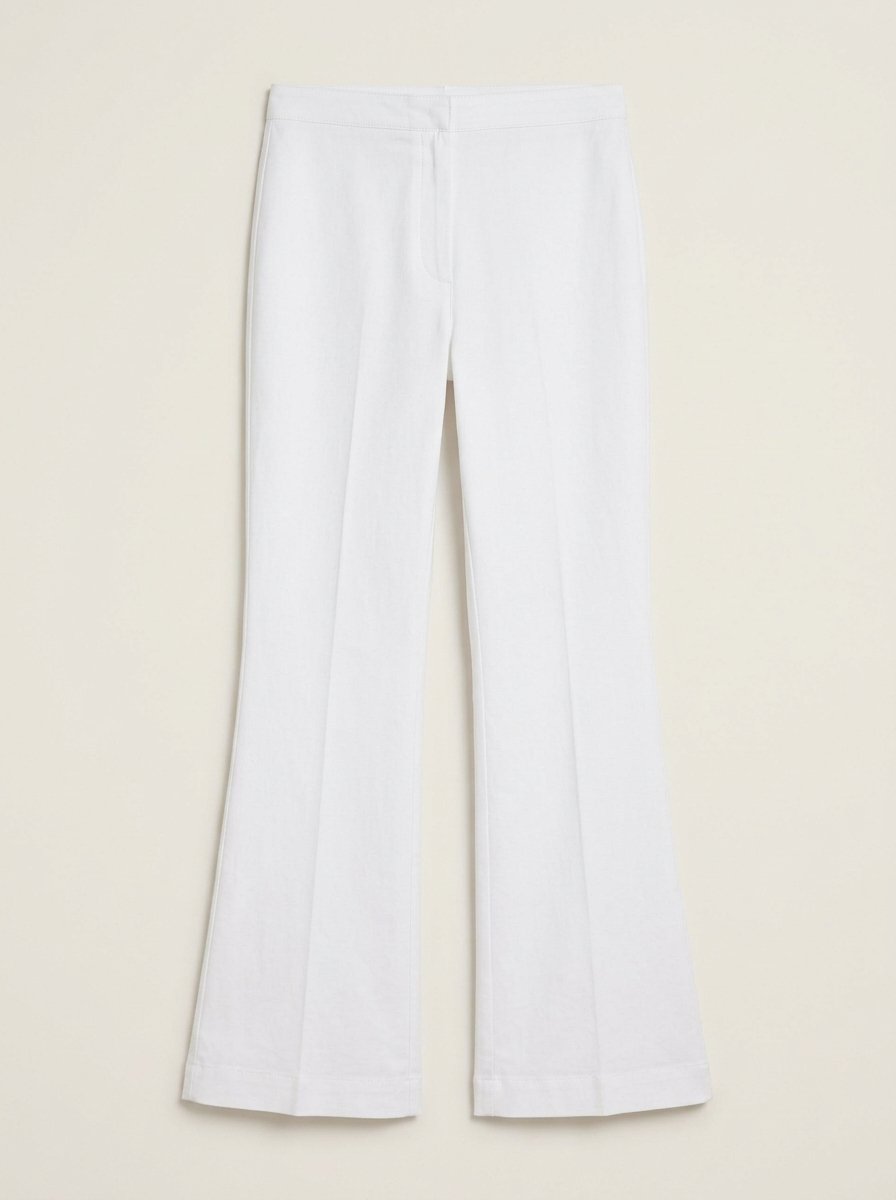
Fitted through the hips and thighs, then flared from the knee.

Shop Eastern Bottoms or Shop Western Bottoms

FAQ: White Trouser Design for Girls

What is the best white trouser design for girls?

It depends on the occasion. A farshi suits formal days, a sharara suits festive events, and culottes suit university and work.

What colour kurti goes with a white trouser?

Most colours work, including pastels and jewel tones. Choose one hero colour for the kurti, and let the white bottom and the dupatta support it.

Can I dye a white trouser to match my kurti?

Yes, if the fabric and thread are dyeable, as ours are. Take both to a dyer, ask for a swatch test and compare in daylight. Dyeing usually costs around Rs. 300, and results depend on the dyer.

How do I keep a white trouser white?

Wash it with other light pieces, not with dark or newly dyed clothes. Iowa State Extension says washing like colours is the way to prevent colour transfer.

Is white trouser design in fashion in 2026?

Pantone named a soft white, Cloud Dancer, its 2026 Colour of the Year, and white trouser designs appear in Pakistani fashion guides such as Gul Ahmed’s.

Should I keep my white trouser white or dye it?

Keep it white if the kurti carries the outfit. Dye it if you want a tonal look. Try the white pair with your kurti first, and decide after you see it.

Wear It White or Dye It?

Send us a photo of your kurti on WhatsApp: 03394011360, and tell us the occasion. We will help you decide. You can also visit our contact page, browse the shop or read our story.
Woman showing how to measure yourself for bottoms with a soft tape and a notebook

Measure Yourself for Bottoms: A Style-by-Style Guide

Measure yourself for bottoms before you order, because a size chart is useless without your own numbers.

A label such as “medium” means different things at different shops. Your tape does not change. So take five measurements once, write them down, and use them every time you shop online. It takes about ten minutes, and it saves you a return.

What Do You Need Before You Start?

Gather four things.

  • A soft tape measure, not a metal one.
  • A notebook or a notes app on your phone.
  • Light, close-fitting clothes, so you measure your body and not your outfit.
  • A friend, for the length measurements that are hard to take alone.

Stand straight and relax. Do not pull the tape tight, and do not hold your breath.

How Do You Measure Yourself for Bottoms?

Follow the points in New Mexico State University Extension’s pants guide. It lists the measurements below.

  1. Waist. Measure the smallest part of your waist. NMSU suggests leaving the tape tied snugly there while you take other measurements.
  2. Hip. Measure around the fullest part of your hips and seat. Keep the tape level.
  3. Thigh. Wrap the tape around your thigh, just below the crotch. This matters for fitted styles.
  4. Length. Measure from your waist down the side of the leg to the length you want.
  5. Your event shoes. Wear the shoes you will wear with the outfit when you measure length, because heels and flats change the hem you need. Our guide Which Bottoms Suit Your Height? explains why.

Take every number twice. If the two do not match, take a third.

Which Measurements Matter for Each Style?

This is the part most size guides skip. Different silhouettes need different numbers. The table is our guidance, so check each product page for its own measurements.

StyleMeasure theseWhy
FarshiWaist, hip, waist to floorA floor-length hem needs an exact length
ShararaWaist, hip, waist to floorA flare from the waist needs the right hem
GhararaWaist, hip, waist to knee, waist to floorThe knee joint should sit at your knee
CulottesWaist, hip, waist to where you want the cropThe crop point decides the look
Bell bottomWaist, hip, thigh, waist to floorThe cut is fitted to the knee, so thigh matters

Why Should You Measure a Pair That Already Fits?

It is the easiest check of all. Size.ly’s pants guide describes it. Lay a pair you love flat and fastened. Measure across the waist, hip and thigh, then double those numbers to get a body circumference. Leave the length as a single run.

Then compare these numbers with the seller’s chart. If the chart’s waist, hip and length are close to your trusted pair, you can order with more confidence.

One nuance applies to shalwars. If the waist has elastic or a drawstring, it can stretch or tighten, so ask the seller which waist measurement the chart shows. Check the product page, or ask us.

What If You Are Between Sizes?

Start with your hip. Made by Rae’s pants guide says to choose the size from the hip measurement, then check your waist. If your waist puts you in a larger size, use the larger one.

Then check the length. A size that fits your hip but ends too short is still the wrong size.

[INSERT: your real garment measurements for each product and size, including waist, hip, length and hem width.]

What Should You Ask a Seller Before You Order?

A size label is not enough. Ask these seven questions.

  • What are the garment measurements for each size?
  • Is the waist elastic or a drawstring?
  • What is the full length from waist to hem?
  • How wide is the hem?
  • Is the fabric pre-shrunk, and may it shrink after dyeing and washing?
  • Which measurement does the chart show, waist stretched or relaxed?
  • Can I send my numbers and ask which size you suggest?

If you plan to dye, remember that dyeing involves washing. Our guide Wash Dyed Bottoms Without Fading explains the first washes, and How to Dye a White Shalwar to Match Your Shirt covers the dye day.

[INSERT PHOTO: a real photo of a customer or team member measuring with a soft tape.]

Which Mistakes Ruin a Measurement?

  • Measuring over thick clothes. You measure the clothes, not you.
  • Pulling the tape tight. A tight tape gives numbers that are too small.
  • Measuring the hip too high. Find the fullest part of your hips and seat.
  • Using the wrong shoes for length. Wear your event shoes.
  • Ordering by the label alone. Always compare garment measurements.
  • Forgetting to write the numbers down. Keep them in your phone for the next order.

Shop With Your Numbers

Every piece below arrives in plain white and is dyeable. Check each product page for its measurements.

White Farshi Shalwar

Wide, pleated and floor-length. Compare your waist-to-floor number.

White Sharara Pants

A flare from the waist with no knee seam.

White Gharara Pants

Fitted to the knee, then a wide gathered flare. Compare your waist-to-knee number.

White Culottes Pants

Wide, straight and cropped. Choose where the crop lands.

White Bell Bottom Pants

Fitted through the hips and thighs, then flared from the knee.

Shop Eastern Bottoms or Shop Western Bottoms

FAQ: Measure Yourself for Bottoms

How do I measure myself for bottoms?

Use a soft tape and light clothes. Measure your waist at its smallest part, your hips at their fullest part, your thigh just below the crotch, and the length from your waist to where you want the hem. Write each number down.

Where do I measure my waist for bottoms?

Measure the smallest part of your waist, which is your natural waistline. Keep the tape level and snug, but do not pull it tight.

Which measurement matters most for bottoms?

Many fitting guides choose the size from the hip measurement, then check the waist. Length also matters for long styles such as a farshi or sharara.

How do I choose between two sizes?

Start with your hip. If your waist suggests a larger size than your hip does, use the larger size, then check that the length suits you.

How do I measure the length for a farshi or sharara?

Wear your event shoes, and measure from your natural waist down to the floor. Compare that number with the product’s length.

Should I measure a pair that already fits?

Yes. Lay it flat and fastened, measure across the waist, hip and thigh, and double those numbers. Then compare them with the seller’s chart.

Not Sure About a Number?

Message us on WhatsApp: 03394011360 and ask. You can also visit our contact page or browse the shop.

Woman comparing a ready-made mint shalwar with a white dyeable shalwar: dyeable vs ready-made

Dyeable vs Ready-Made Shalwar: Which Should You Buy?

Dyeable vs ready-made shalwar is not a contest with one winner. We sell dyeable ones, and we still say dyeing is not always the smarter move.

Picture the scene. You hold a mint kurta in a shop, and the nearest mint shalwar is one shade too blue. You can buy it and hope, or you can start from white and make the shade yourself. Both choices are fair. The right one depends on a few questions, and we will give you the test below.

What Is the Real Difference Between Dyeable and Ready-Made Shalwar?

A ready-made shalwar arrives in a fixed colour, chosen by the brand. A dyeable shalwar arrives in plain white, with dye-friendly fabric and thread, and you choose the colour afterwards.

The idea is not unique to us. Pakistani label Generation lists a Dyeables Shalwar, described as made with dye-friendly fabric and thread, so you can wear it as is or dye it to match an outfit. Its dyeables line also includes straight-fit pants and undershirts. We focus on the silhouettes people ask for in festive and wedding season: farshi, gharara, sharara, culottes and bell bottom.

Dyeable vs Ready-Made Shalwar: Where Does Each Win?

FactorReady-madeDyeable
Colour choiceA fixed paletteAny shade your dyer can make
See the final colour firstYes, before you payOnly after a swatch test
TimeSame dayYour dyer’s turnaround
CostThe price tagThe price tag plus around Rs. 300
Match riskShades can shift between batches and lightingDepends on the dyer, so test first
First washesMay bleed too, so follow the tagWash separately at first
Best forCommon shades and tight deadlinesExact or unusual shades

A few notes on the table.

  • Batches. Small differences in temperature and dyeing time can create different shades of the same colour between dye lots, according to Apparel Search. So two “same colour” pieces from different batches may not match.
  • Light. Colours that match under one light can fail under another. RMIT’s colour theory course calls this metamerism. It affects both options.
  • Bleeding. Iowa State Extension says garments tagged “wash separately” will bleed. That applies to ready-made pieces too.

The Five-Question Test: Should You Dye It?

Answer yes or no. This is our judgement, not a formula.

  1. Do you have the exact kurta with you?
  2. Is the shade unusual or hard to find?
  3. Is the event more than a couple of weeks away?
  4. Do you have a dyer you trust?
  5. Will you wear the outfit more than once?

Our stance: four or five yeses mean dye it. Two or fewer mean buy ready-made, and be glad. Three yeses mean either choice works, so decide by cost and time.

What Does Each Option Really Cost?

Ready-made costs the price tag. It also costs the time you spend hunting across shops, and the price of “close enough” when you settle. Dyeable costs the listed price, plus around Rs. 300 for dyeing, plus a trip to the dyer.

Here are the sums at the prices listed on our site today. Check each product page for the current price.

Now compare that total with the ready-made price of the shade you actually want. If you cannot find that shade, the comparison ends there. Dyer rates vary, and wide pieces may be priced differently.

When Should You Skip Dyeing?

Dyeing is not always right. Skip it in these cases.

  • You need the outfit tomorrow. A dyer needs time.
  • The shade is common and easy to find. Buy it and save the trip.
  • You cannot reach a trusted dyer. An untested dyer is a risk.
  • You want to see the final colour before you pay. Ready-made shows you first.
  • You want a very deep shade. Ask a dyer first, because results depend on the dye.

Which Mistakes Spoil Either Choice?

Results depend on the dyer, so we never promise an exact shade.

Shop the Look: Start With a White Base

Every piece below arrives in plain white and is dyeable.

White Farshi Shalwar

Wide, pleated and floor-length.

White Sharara Pants

A flare from the waist with no knee seam.

White Gharara Pants

Fitted to the knee, then a wide gathered flare.

White Culottes Pants

Wide, straight and cropped.

Shop Eastern Bottoms

FAQ: Dyeable vs Ready-Made Shalwar

What is the difference between dyeable and ready-made shalwar?

A ready-made shalwar arrives in a fixed colour. A dyeable shalwar arrives in plain white, made with dye-friendly fabric and thread, so you choose the colour afterwards.

Is a dyeable shalwar cheaper than a ready-made one?

It depends. A dyeable shalwar costs its listed price plus dyeing, which usually costs around Rs. 300. Compare that total with the ready-made price of the shade you actually want.

Is a dyed shalwar as colourfast as a ready-made one?

Both can bleed in early washes. Iowa State Extension says garments tagged “wash separately” will bleed. A freshly dyed piece needs the same care, so wash it alone in cold water at first.

Can a dyer match my kurta exactly?

A good dyer can match closely, but results depend on the dyer, the dye and the fabric. We never promise an exact shade, so test a swatch first.

When should I buy ready-made instead of dyeing?

Buy ready-made when you need the outfit quickly, the shade is common, or you want to see the final colour before you pay.

Do other Pakistani brands sell dyeable shalwars?

Yes. Generation lists a Dyeables Shalwar and straight pants made with dye-friendly fabric and thread. Shalwar & Co focuses on farshi, gharara, sharara, culottes and bell bottom in white.

Not Sure Which Side You Are On?

Send us your kurta colour and your event date on WhatsApp: 03394011360, and we will tell you honestly whether dyeing makes sense for you. You can also visit our contact page or read our story.

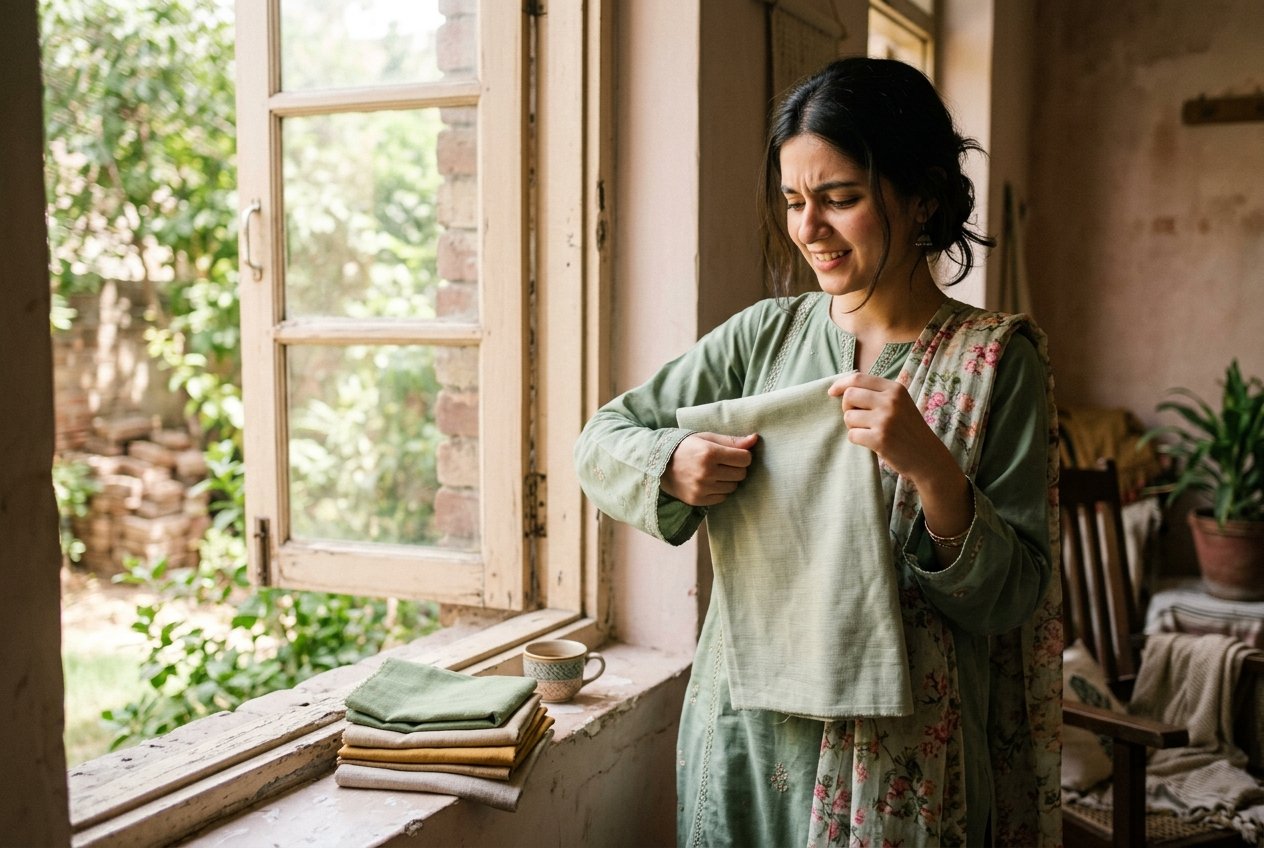
Woman comparing a kameez and shalwar fabric in daylight to check shalwar colour matching

Why Your Shalwar Never Matches Your Kameez (and the Fix)

Shalwar colour matching fails for four main reasons. Fabrics take dye differently, dye batches shift the shade, light changes how colours look, and screens misreport colour. The fix is to match in daylight with the real shirt, or to dye a white shalwar to your kameez.

You bought the perfect kameez, then spent days hunting for a shalwar that matches. Every shade looked close, but none looked right. That is not bad luck. It is how fabric, dye and light work, and once you understand it, you can fix it.

Your shirt. Your shade.

Here is the science in one line: colours can match under one light and fail under another. Colour experts call this metamerism, and RMIT’s colour theory course explains how it catches people out with clothes, buttons and thread. A match that looks perfect in the shop can clash in daylight. That is why we never judge a colour with one look.

Why Does Shalwar Colour Matching Go Wrong?

Five things usually sit behind a mismatch. Most shoppers meet at least two of them at once.

1. Fabrics take dye differently

A cambric shalwar and a lawn kameez can carry the same dye colour and still look different. Fibre, weave and finish change how a colour appears. For example, a smooth fabric reflects light differently from a rough one, so the same shade can look lighter or deeper.

2. Dye batches shift the shade

Mills dye fabric in batches. Small differences in temperature and dyeing time can create different shades of the same colour between batches, according to Apparel Search’s guide to shade lots. So “sage green” from two brands, or two seasons, rarely matches.

3. Light changes colour

Two fabrics can match under shop lights and clash outside. The Society of Dyers and Colourists (SDC) demonstrates this effect with artificial daylight, fluorescent store light and tungsten light, as Fibre2Fashion reports. Your dawat hall has its own lighting too. So check a colour in more than one light before you commit.

4. Screens change colour

Every phone and monitor shows colour differently. Brightness, camera settings and photo editing also change how a product looks. As a result, a shade that looked right online may arrive looking different. That is why we recommend matching against your real shirt, not a photo.

5. Prints and colour names confuse the match

A printed kameez holds many colours, so “match the main colour” becomes guesswork. Colour names do not help either, because brands name shades differently. Always match to the fabric itself.

Which Reason Is Hurting Your Match?

Use this quick diagnosis before you spend more on shalwar colour matching.

  • It matched in the shop but not outside. Light is the culprit. Check the colour in daylight next time.
  • Two items sold as the same colour look different. Blame fabric or dye batch. Skip the colour label and compare the fabrics side by side.
  • It matched online but not in person. Screens and photo editing caused it. Match against the real shirt.
  • Your kameez is printed. Pick one colour from the print, or choose a deliberate contrast instead.

How Do You Fix Shalwar Colour Matching?

You have three realistic options. Each suits a different situation.

Option 1: Match in daylight with the real shirt

Good shalwar colour matching starts with the real kameez in your hand. Hold both fabrics side by side near a window or outside. Then step back to arm’s length, because people see your outfit from a distance. Skip anything that only matches under the shop lights.

Option 2: Dye a white shalwar to your kameez

Instead of searching for a ready-made match, start with plain white and add the colour yourself. You take the white shalwar and your kameez to a dyer, and the dyer matches the shade. Dyeing usually costs around Rs. 300, and the rate varies by dyer and by style. Results depend on the dyer, so we never promise an exact shade. We do recommend a swatch test first.

Our guides cover each step: How to Dye a White Shalwar to Match Your Shirt, Dye to Match Shalwar: How It Works, Step by Step and How Much Does It Cost to Dye a Shalwar in Pakistan?

Option 3: Go deliberately different

Sometimes shalwar colour matching just will not work. In that case, stop chasing a match. A near miss looks like a mistake, while a clear contrast looks like a choice. Try white, ivory or a shade clearly deeper than your kameez.

Our Shade-Match Checklist

Use this list whichever option you choose.

Before you shop or dye

  • Bring the real kameez, not a photo.
  • Check it in daylight first.
  • Pick one colour if your kameez is printed.

At the counter or the dyer

  • Hold the swatch beside your kameez near a window.
  • Let a dyed swatch dry fully, because fabric looks darker when wet.
  • Check it again in the light you will wear the outfit in.

Before you pay

  • Step back to arm’s length.
  • Say what you want in plain words, such as “a shade deeper” or “slightly lighter”.

Shop the Look: Start With a White Base

Every piece below arrives in plain white and is dyeable. Dye it to match your kameez, or wear it white.

White Farshi Shalwar

A wide, floor-length classic. Its simple shape is easy to explain to a dyer.

White Sharara Pants

One continuous flare from the waist. It looks striking when you dye it close to your kameez.

White Bell Bottom Pants

Fitted through the hips and thighs, then flared from the knee. Ask your dyer for a swatch test first, as with every style.

White Culottes Pants

Wide, straight and cropped. A light, everyday shape for university and work.

Shop Eastern Bottoms or Shop Western Bottoms

FAQ: Shalwar Colour Matching

Why does my shalwar never match my kameez?

Fabrics take dye differently, dye batches shift the shade, light changes how colours look, and screens misreport colour. Even two items sold as the same colour can look different side by side.

What is metamerism in clothing?

Metamerism is when two colours match under one light but look different under another. A shalwar and kameez can match under shop lights and clash in daylight.

Does colour look different in daylight and indoor light?

Yes, it can. Check the colour in daylight and in the light you will wear the outfit under, such as an indoor event hall, before you decide.

Why does a shalwar bought online look different on arrival?

Screen settings, photo lighting and editing change how colours appear online, so a photo cannot show the true shade. That is why we recommend matching against your real shirt in daylight.

Can I match my shalwar to my kameez exactly?

You can get a close match, but nobody can promise an exact one. Results depend on the dyer, the dye and the fabric. Dye a white shalwar, ask for a swatch test, let it dry, and compare it with your kameez in daylight.

What if my kameez is printed?

Pick one colour from the print, ideally the one you want to highlight, and bring the kameez so the dyer can see it. Alternatively, choose a deliberate contrast such as white or ivory.

Ready to Match Your Shade?

The simplest way to stop chasing a match is to start with plain white. Browse Shalwar & Co’s white bottoms and choose the shape that fits your outfit. Prefer to ask first? Message us on WhatsApp: 03394011360 or visit our contact page. Curious how it started? Read our story.

Your shirt. Your shade.

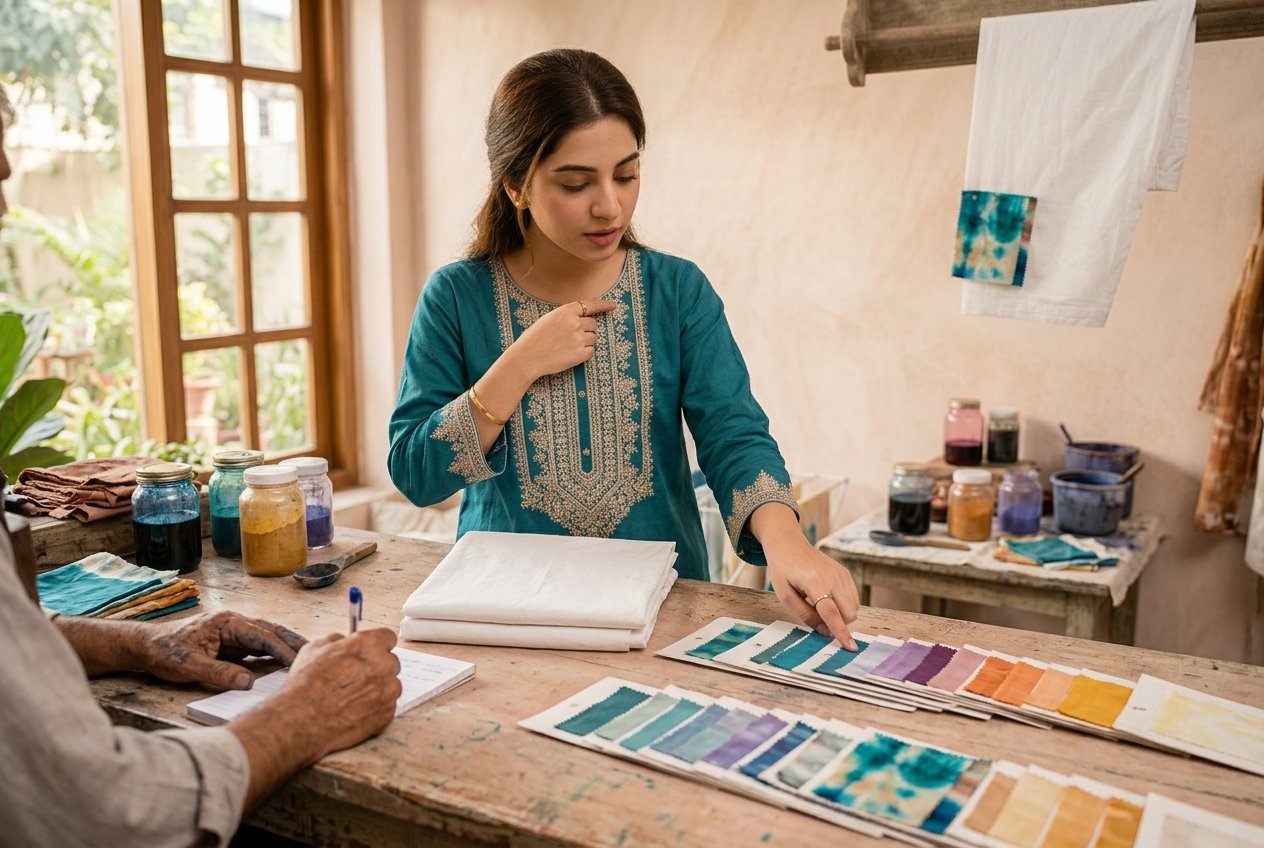
Woman checking shalwar dyeing cost at a dyer's counter with a white shalwar and teal kurta

How Much Does It Cost to Dye a Shalwar in Pakistan?

Shalwar dyeing cost in Pakistan usually comes to around Rs. 300. However, the rate varies by dyer and by style. A wide piece such as a gharara or sharara may be priced differently from a slim one. Ask for the price and the pickup date before you hand the shalwar over.

You found a kurta you love, and you want the shalwar to match it. Dyeing makes that possible, but you should know the price before you start. This guide explains what shapes the cost, what to ask your dyer and how to avoid paying twice.

Your shirt. Your shade.

Why do dyers quote different prices? Industry cost sheets, such as Textile Trainer’s dyeing cost guide, add up dyes, chemicals, labour and overheads. A neighbourhood dyer faces the same costs on a smaller scale. That is why one shop may quote Rs. 300 and another may quote more.

What Is the Shalwar Dyeing Cost in Pakistan?

Dyeing usually costs around Rs. 300. Treat that as a reference point, not a fixed price. Dyers set their own rates, so we cannot publish one price list for everyone.

The bottoms dyeing cost also depends on what you hand over. A slim pair of culottes and a wide farshi shalwar are not the same job. For that reason, always ask for a quote for your exact style.

What Changes the Shalwar Dyeing Cost?

Four things usually shape the quote. Ask about each one before you agree.

  1. The dyer’s own rate

Dyers price differently. If you can, compare two quotes before you decide.

  1. The style and the amount of fabric

A wide gharara or sharara holds more fabric than slim culottes. Some dyers may price wide pieces differently, so ask for a quote for your style.

  1. The shade

Deep or bright shades may be priced differently from light ones. Ask whether your shade changes the quote.

  1. The timing

A rush job or a busy festive week may change the price or the pickup date. Ask for both.

How Much Will a Dye-to-Match Shalwar Cost in Total?

Your trouser dyeing cost is only one part of the total. Add the price of the white shalwar to the dyeing charge. At the prices listed on our site today, the sums look like this. Check each product page for the current price.

White Farshi Shalwar: Rs. 1,500 + around Rs. 300 for dyeing = around Rs. 1,800
White Culottes Pants: Rs. 1,500 + around Rs. 300 for dyeing = around Rs. 1,800
White Gharara Pants: Rs. 2,500 + around Rs. 300 for dyeing = around Rs. 2,800
White Sharara Pants: Rs. 2,500 + around Rs. 300 for dyeing = around Rs. 2,800

These totals use the Rs. 300 reference. Wide pieces may land higher if your dyer prices them differently. That is why your dyer’s quote matters more than any average.

What Should You Ask Your Dyer About the Price?

A clear question at the counter saves an argument at pickup. Use this checklist.

Before you hand it over

What will this cost for this style?
Does the quote include a swatch test?
Will my shade change the price?
When will it be ready?
Can you confirm the price and the date on WhatsApp?

At pickup

Check the dry shade in daylight, beside your shirt, before you pay.
Ask how to wash it for the first few times.

How Do You Avoid Paying for Dyeing Twice?

The cheapest dye job is the one you only do once. Re-dyeing doubles your shalwar dyeing cost, and these mistakes lead to it.

Skipping the swatch test. A small test shows the real shade before the whole piece goes in. Our guide How to Dye a White Shalwar to Match Your Shirt shows the steps.
Judging the colour while wet. Fabric looks darker when wet and dries lighter, as Rit’s immersion dyeing guide explains.
Handing over a dirty shalwar. Dharma Trading’s dyeing guide recommends washing first, because dirt, oils and even fingerprints can cause uneven dyeing.
Matching from a phone photo. Screens change colour, so bring the real shirt.
Giving vague instructions. Say “a shade deeper” or “slightly lighter” instead of “a bit different”. Our guide Dye to Match Shalwar: How It Works, Step by Step explains how to describe a shade.

Is Dyeing Worth It Compared With a Ready-Made Match?

We think the real value is not the Rs. 300. It is getting the shade you chose. However, dyeing is not always the smart move, so weigh the shalwar dyeing cost against what you need.

Dye it when

You have the exact shirt in hand.
Want a tone that ready-made shalwars do not offer.
Plan to wear the outfit often.

Skip dyeing when

You want one neutral that goes with many outfits. White already does that.
You cannot get the shirt to the dyer in time.

Our rule is simple: dye for your hero outfit, not for every outfit.

Shop the Look: Choose Your White Base to Dye

Every piece below arrives in plain white and is dyeable.

White Farshi Shalwar

A wide, floor-length classic with soft pleats. The shape is easy to explain to a dyer, so it makes a good first project.

White Culottes Pants

Wide, straight and cropped. The shorter legs use less fabric than a floor-length style, so ask your dyer whether that changes the quote.

White Gharara Pants

Fitted to the knee, then a wide gathered flare. Ask for a quote for the full flare before you dye.

White Sharara Pants

One continuous flare from the waist. It is a wide piece, so confirm the price first.

Shop Eastern Bottoms or Shop Western Bottoms

FAQ: Shalwar Dyeing Cost in Pakistan

What is the average shalwar dyeing cost in Pakistan?

Dyeing usually costs around Rs. 300, but the rate varies by dyer and by style. Ask for a quote for your exact style before you hand the shalwar over.

Why do dyers charge different prices?

Dyers set their own rates. Dyeing involves dye, chemicals, labour and overheads, and the style, shade and timing can also change the quote.

Does the swatch test cost extra?

It depends on the dyer. Ask whether the quote includes a swatch test, and ask for the price in writing or on WhatsApp.

Does a gharara or sharara cost more to dye than culottes?

It may. Wide styles hold more fabric than slim ones, so some dyers price them differently. Ask for a quote for your exact style.

How much does a dye-to-match shalwar cost in total?

Add the white shalwar’s price to the dyeing charge. For example, a farshi shalwar listed at Rs. 1,500 plus dyeing of around Rs. 300 comes to around Rs. 1,800.

Can I dye a shalwar at home to save money?

You can try, but results depend on the dye, the fabric and your method. Dye supplier Dharma Trading stresses washing the fabric first and giving it enough water to move freely, or the colour can turn out uneven. We recommend a dyer and a swatch test for the closest match.

Ready to Match Your Shade?

The easiest way to avoid a costly mismatch is to start with a plain white base. Browse Shalwar & Co’s white bottoms and choose the shape that fits your outfit. Prefer to ask first? Message us on WhatsApp: 03394011360 or visit our contact page. Curious how it started? Read our story.

Your shirt. Your shade.