 Cart is empty

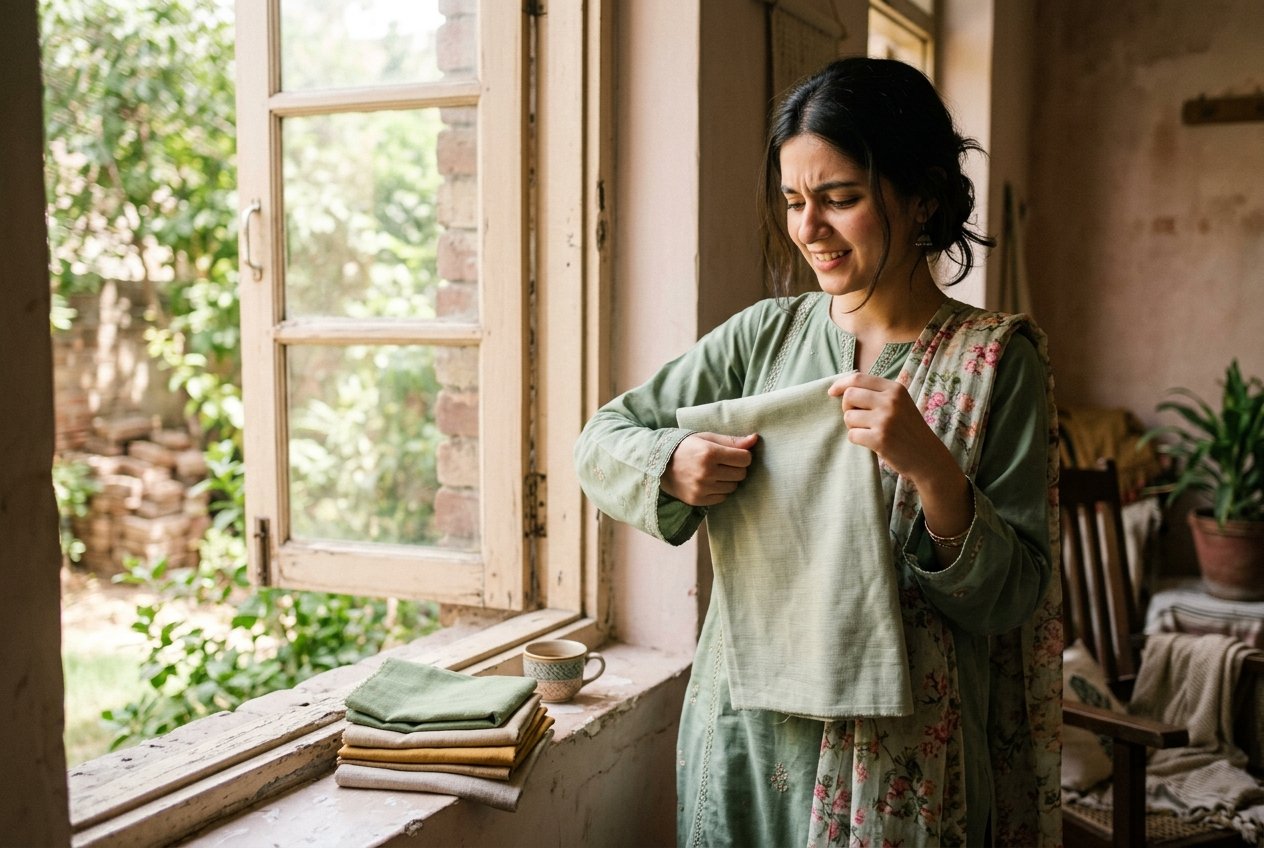
Shalwar colour matching fails for four main reasons. Fabrics take dye differently, dye batches shift the shade, light changes how colours look, and screens misreport colour. The fix is to match in daylight with the real shirt, or to dye a white shalwar to your kameez.
You bought the perfect kameez, then spent days hunting for a shalwar that matches. Every shade looked close, but none looked right. That is not bad luck. It is how fabric, dye and light work, and once you understand it, you can fix it.
Your shirt. Your shade.
Here is the science in one line: colours can match under one light and fail under another. Colour experts call this metamerism, and RMIT’s colour theory course explains how it catches people out with clothes, buttons and thread. A match that looks perfect in the shop can clash in daylight. That is why we never judge a colour with one look.
Why Does Shalwar Colour Matching Go Wrong?
Five things usually sit behind a mismatch. Most shoppers meet at least two of them at once.
1. Fabrics take dye differently
A cambric shalwar and a lawn kameez can carry the same dye colour and still look different. Fibre, weave and finish change how a colour appears. For example, a smooth fabric reflects light differently from a rough one, so the same shade can look lighter or deeper.
2. Dye batches shift the shade
Mills dye fabric in batches. Small differences in temperature and dyeing time can create different shades of the same colour between batches, according to Apparel Search’s guide to shade lots. So “sage green” from two brands, or two seasons, rarely matches.
3. Light changes colour
Two fabrics can match under shop lights and clash outside. The Society of Dyers and Colourists (SDC) demonstrates this effect with artificial daylight, fluorescent store light and tungsten light, as Fibre2Fashion reports. Your dawat hall has its own lighting too. So check a colour in more than one light before you commit.
4. Screens change colour
Every phone and monitor shows colour differently. Brightness, camera settings and photo editing also change how a product looks. As a result, a shade that looked right online may arrive looking different. That is why we recommend matching against your real shirt, not a photo.
5. Prints and colour names confuse the match
A printed kameez holds many colours, so “match the main colour” becomes guesswork. Colour names do not help either, because brands name shades differently. Always match to the fabric itself.
Which Reason Is Hurting Your Match?
Use this quick diagnosis before you spend more on shalwar colour matching.
- It matched in the shop but not outside. Light is the culprit. Check the colour in daylight next time.
- Two items sold as the same colour look different. Blame fabric or dye batch. Skip the colour label and compare the fabrics side by side.
- It matched online but not in person. Screens and photo editing caused it. Match against the real shirt.
- Your kameez is printed. Pick one colour from the print, or choose a deliberate contrast instead.
How Do You Fix Shalwar Colour Matching?
You have three realistic options. Each suits a different situation.
Option 1: Match in daylight with the real shirt
Good shalwar colour matching starts with the real kameez in your hand. Hold both fabrics side by side near a window or outside. Then step back to arm’s length, because people see your outfit from a distance. Skip anything that only matches under the shop lights.
Option 2: Dye a white shalwar to your kameez
Instead of searching for a ready-made match, start with plain white and add the colour yourself. You take the white shalwar and your kameez to a dyer, and the dyer matches the shade. Dyeing usually costs around Rs. 300, and the rate varies by dyer and by style. Results depend on the dyer, so we never promise an exact shade. We do recommend a swatch test first.
Our guides cover each step: How to Dye a White Shalwar to Match Your Shirt, Dye to Match Shalwar: How It Works, Step by Step and How Much Does It Cost to Dye a Shalwar in Pakistan?
Option 3: Go deliberately different
Sometimes shalwar colour matching just will not work. In that case, stop chasing a match. A near miss looks like a mistake, while a clear contrast looks like a choice. Try white, ivory or a shade clearly deeper than your kameez.
Our Shade-Match Checklist
Use this list whichever option you choose.
Before you shop or dye
- Bring the real kameez, not a photo.
- Check it in daylight first.
- Pick one colour if your kameez is printed.
At the counter or the dyer
- Hold the swatch beside your kameez near a window.
- Let a dyed swatch dry fully, because fabric looks darker when wet.
- Check it again in the light you will wear the outfit in.
Before you pay
- Step back to arm’s length.
- Say what you want in plain words, such as “a shade deeper” or “slightly lighter”.
Shop the Look: Start With a White Base
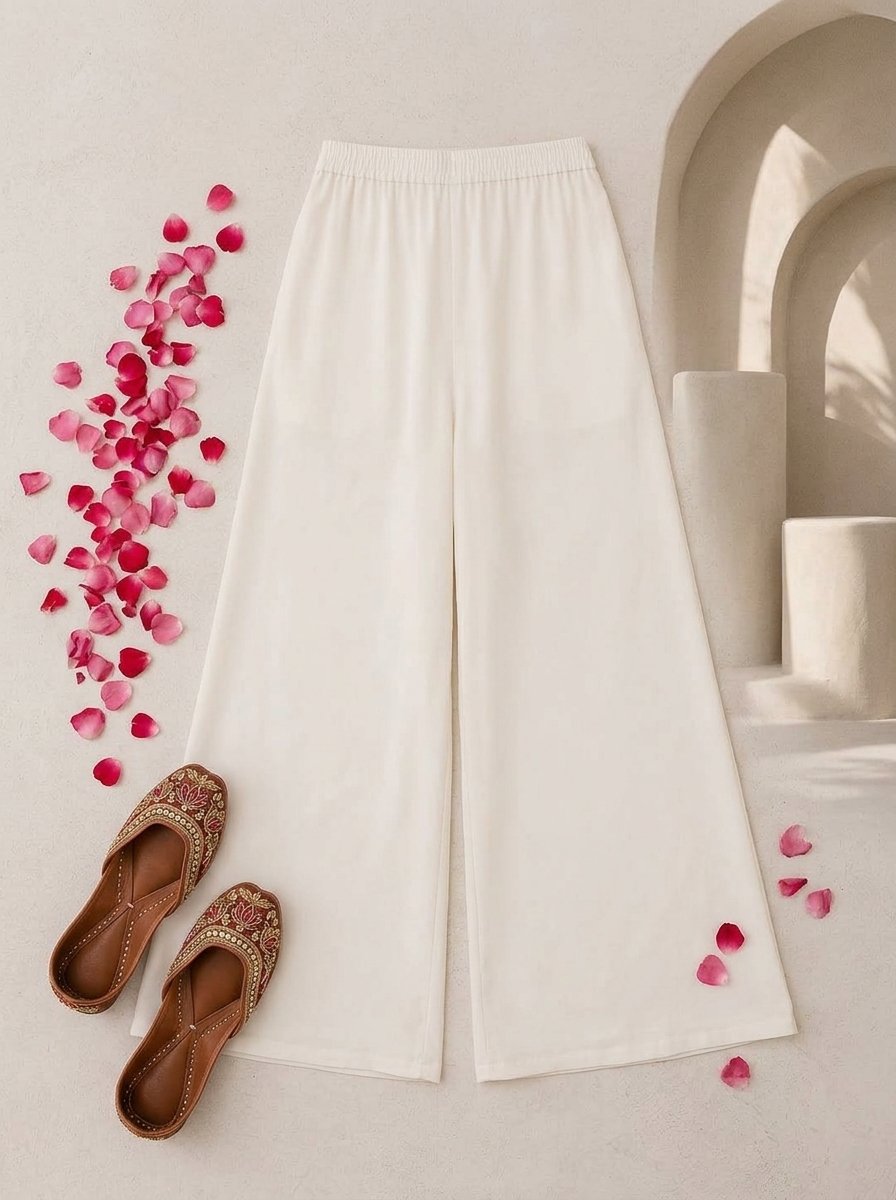
Every piece below arrives in plain white and is dyeable. Dye it to match your kameez, or wear it white.
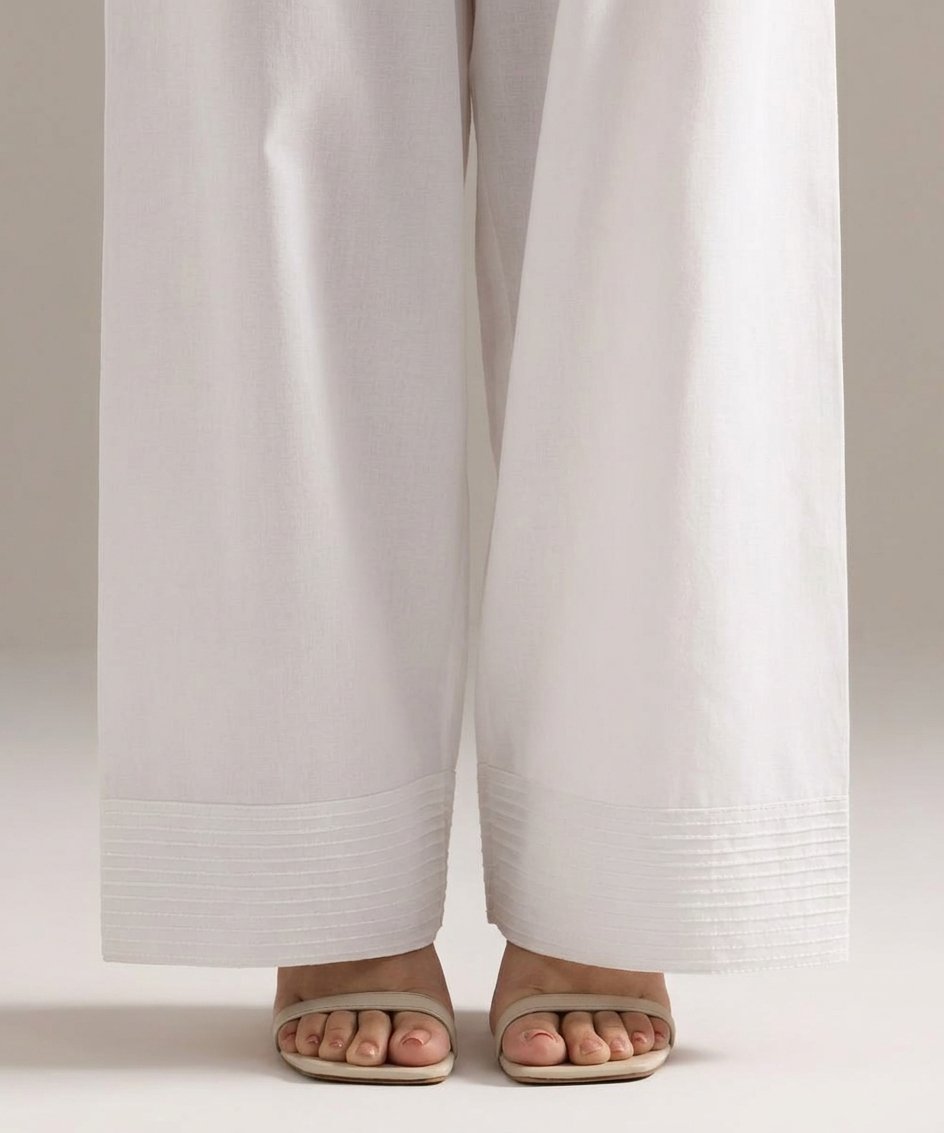
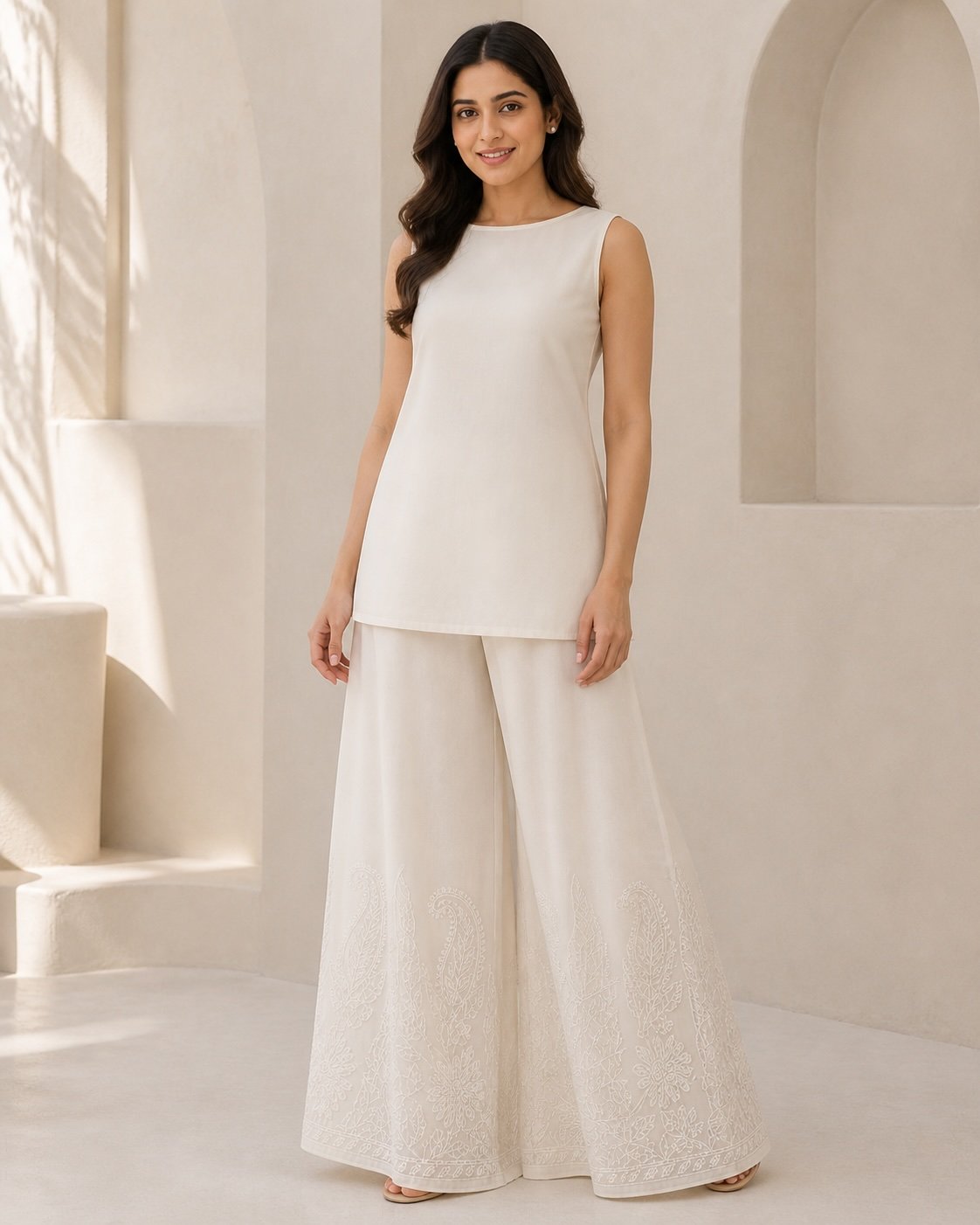
White Farshi Shalwar
A wide, floor-length classic. Its simple shape is easy to explain to a dyer.
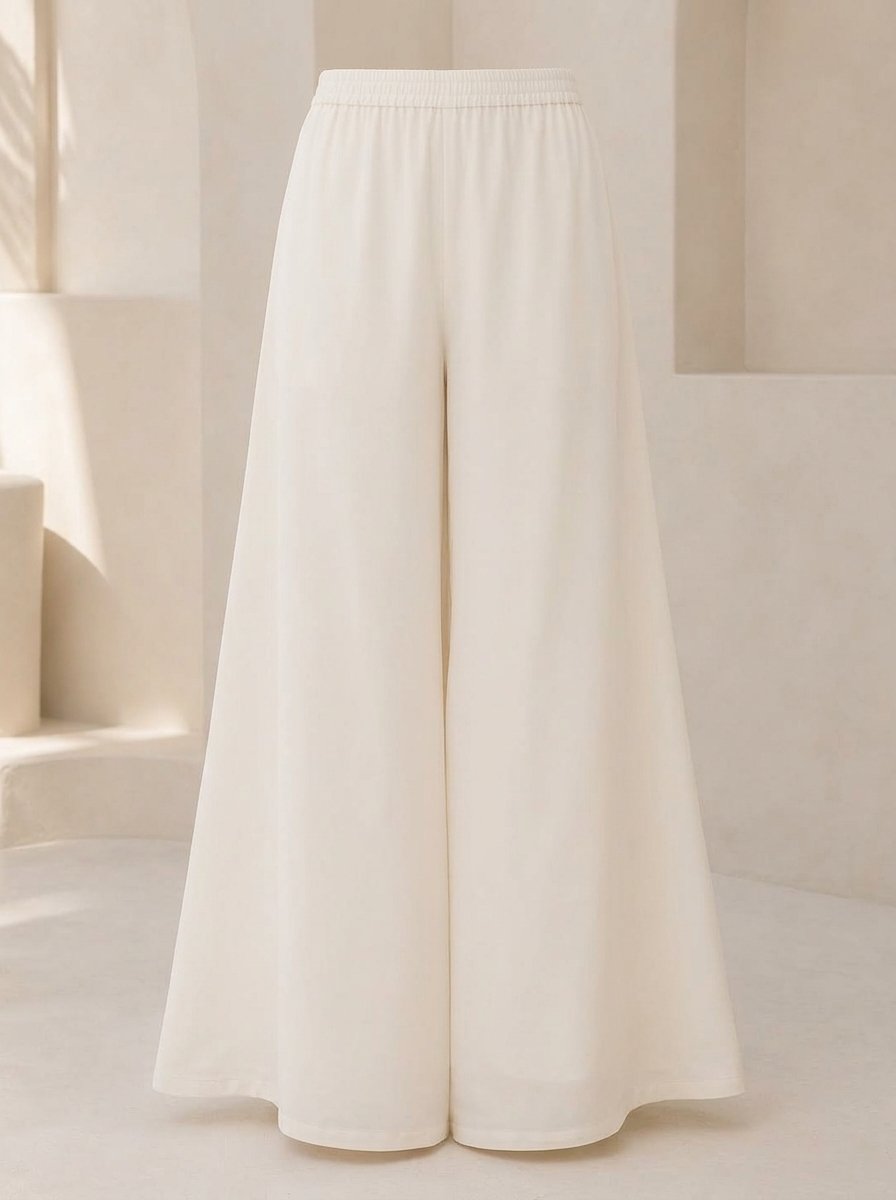
White Sharara Pants
One continuous flare from the waist. It looks striking when you dye it close to your kameez.
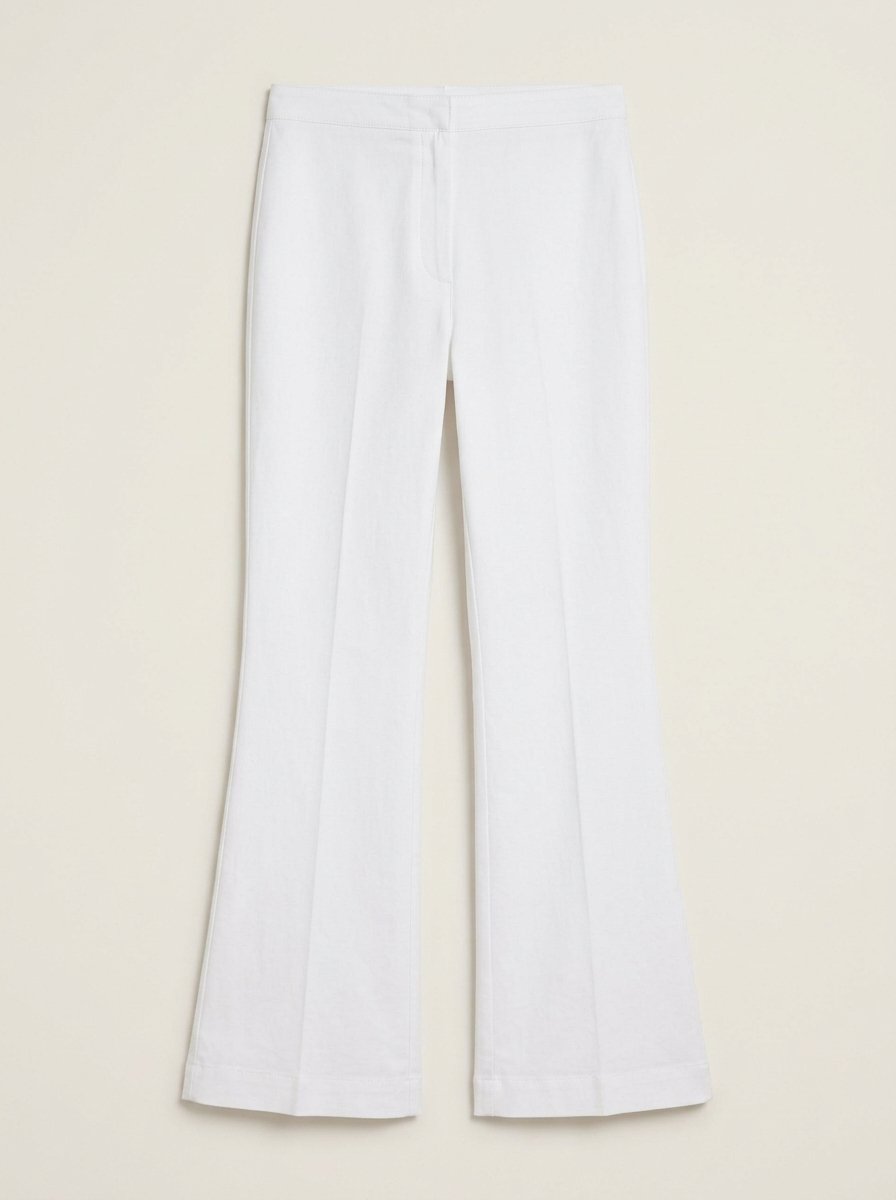
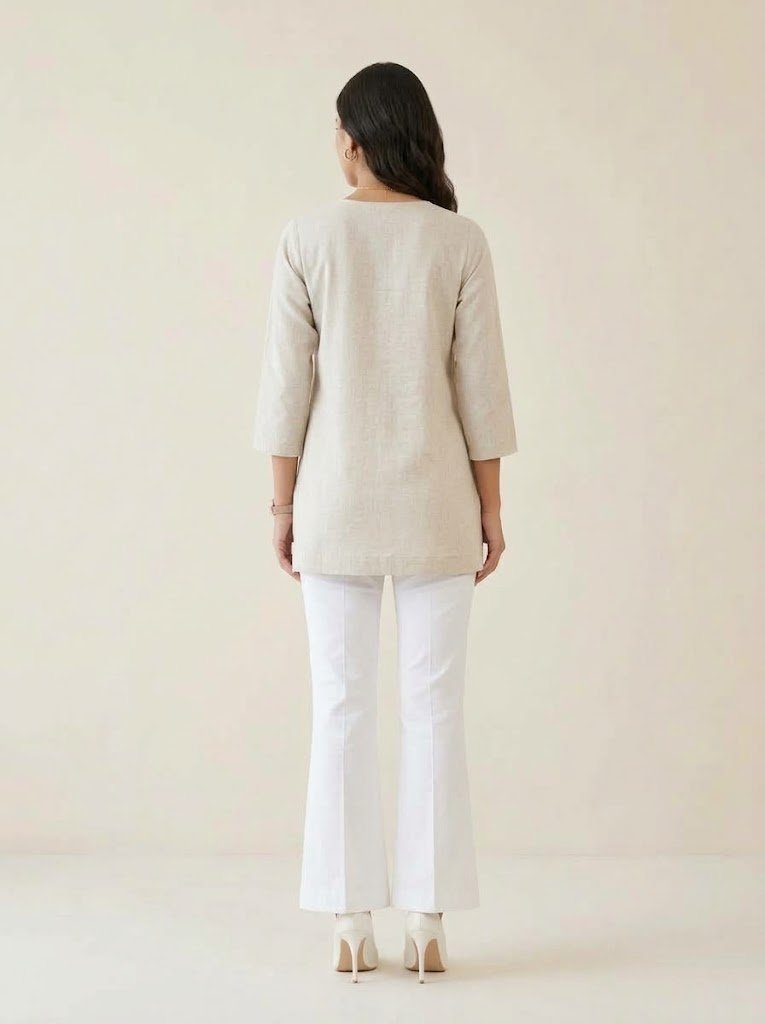
White Bell Bottom Pants
Fitted through the hips and thighs, then flared from the knee. Ask your dyer for a swatch test first, as with every style.
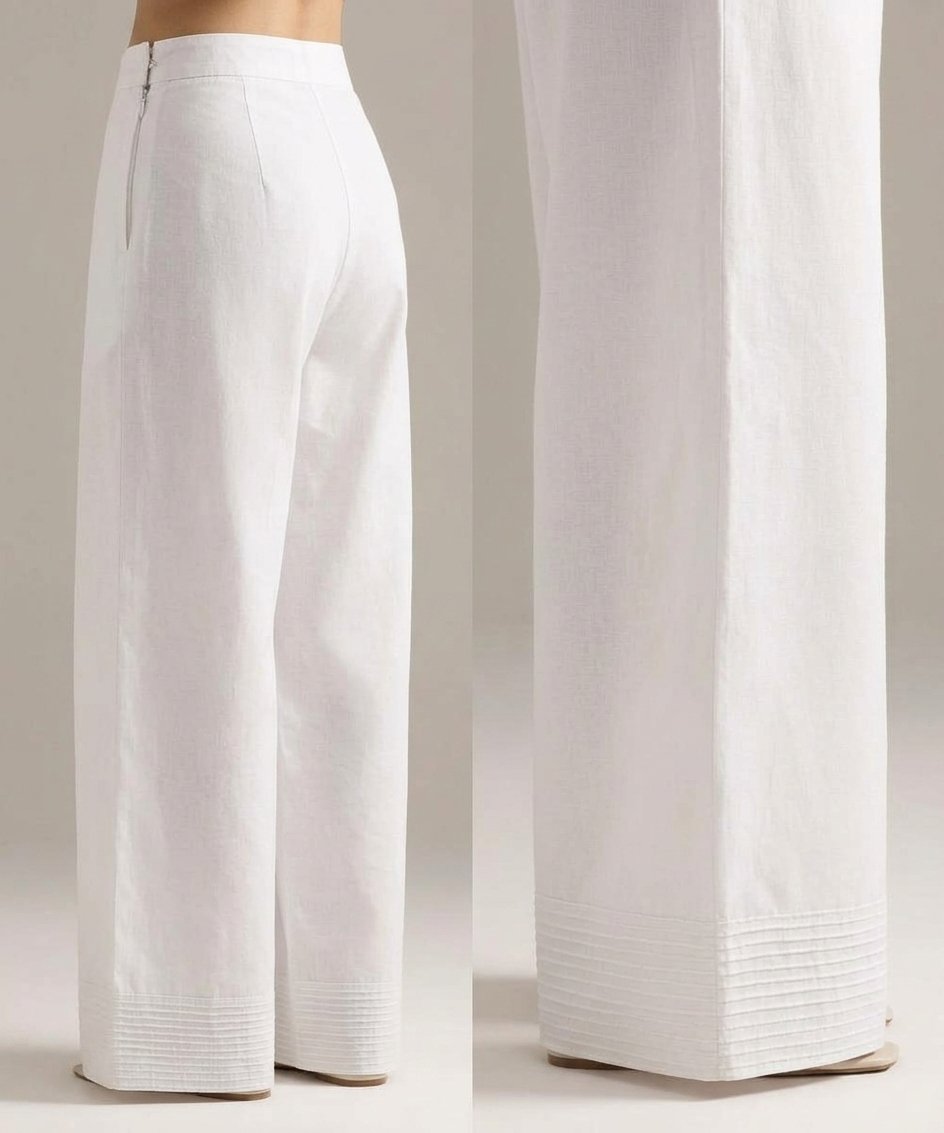
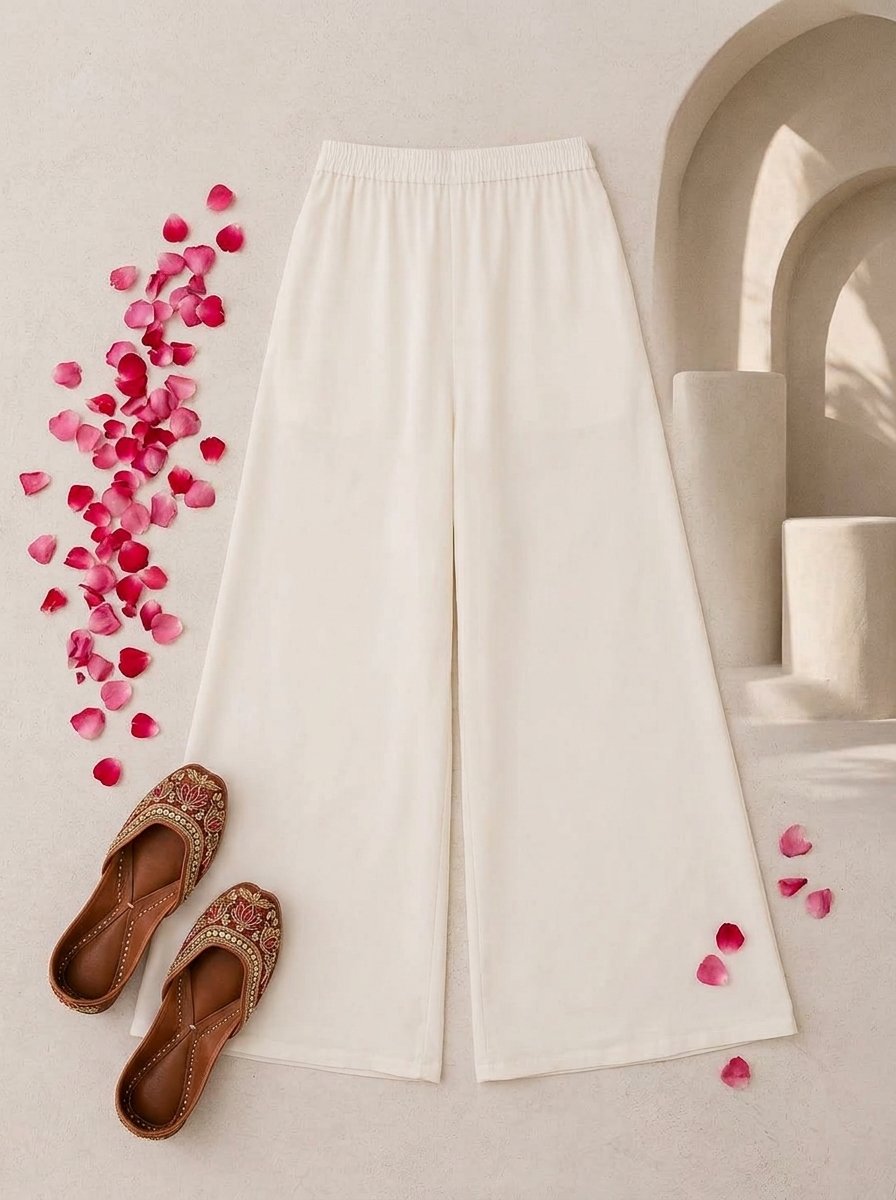
White Culottes Pants
Wide, straight and cropped. A light, everyday shape for university and work.
Shop Eastern Bottoms or Shop Western Bottoms
FAQ: Shalwar Colour Matching
Why does my shalwar never match my kameez?
Fabrics take dye differently, dye batches shift the shade, light changes how colours look, and screens misreport colour. Even two items sold as the same colour can look different side by side.
What is metamerism in clothing?
Metamerism is when two colours match under one light but look different under another. A shalwar and kameez can match under shop lights and clash in daylight.
Does colour look different in daylight and indoor light?
Yes, it can. Check the colour in daylight and in the light you will wear the outfit under, such as an indoor event hall, before you decide.
Why does a shalwar bought online look different on arrival?
Screen settings, photo lighting and editing change how colours appear online, so a photo cannot show the true shade. That is why we recommend matching against your real shirt in daylight.
Can I match my shalwar to my kameez exactly?
You can get a close match, but nobody can promise an exact one. Results depend on the dyer, the dye and the fabric. Dye a white shalwar, ask for a swatch test, let it dry, and compare it with your kameez in daylight.
What if my kameez is printed?
Pick one colour from the print, ideally the one you want to highlight, and bring the kameez so the dyer can see it. Alternatively, choose a deliberate contrast such as white or ivory.
Ready to Match Your Shade?
The simplest way to stop chasing a match is to start with plain white. Browse Shalwar & Co’s white bottoms and choose the shape that fits your outfit. Prefer to ask first? Message us on WhatsApp: 03394011360 or visit our contact page. Curious how it started? Read our story.
Your shirt. Your shade.
[…] Results depend on the dyer, so we never promise an exact shade. For deep colours, wash the piece separately for the first few washes. These guides cover every step: How to Dye a White Shalwar to Match Your Shirt, How Much Does It Cost to Dye a Shalwar in Pakistan? and Why Your Shalwar Never Matches Your Kameez (and the Fix). […]
[…] colour from a phone. Screens change colour, so compare with the real kurta. Our guide Why Your Shalwar Never Matches Your Kameez (and the Fix) explains […]
[…] start from the bottom, because that is the piece most likely to clash with everything, as our guide Why Your Shalwar Never Matches Your Kameez (and the Fix) […]