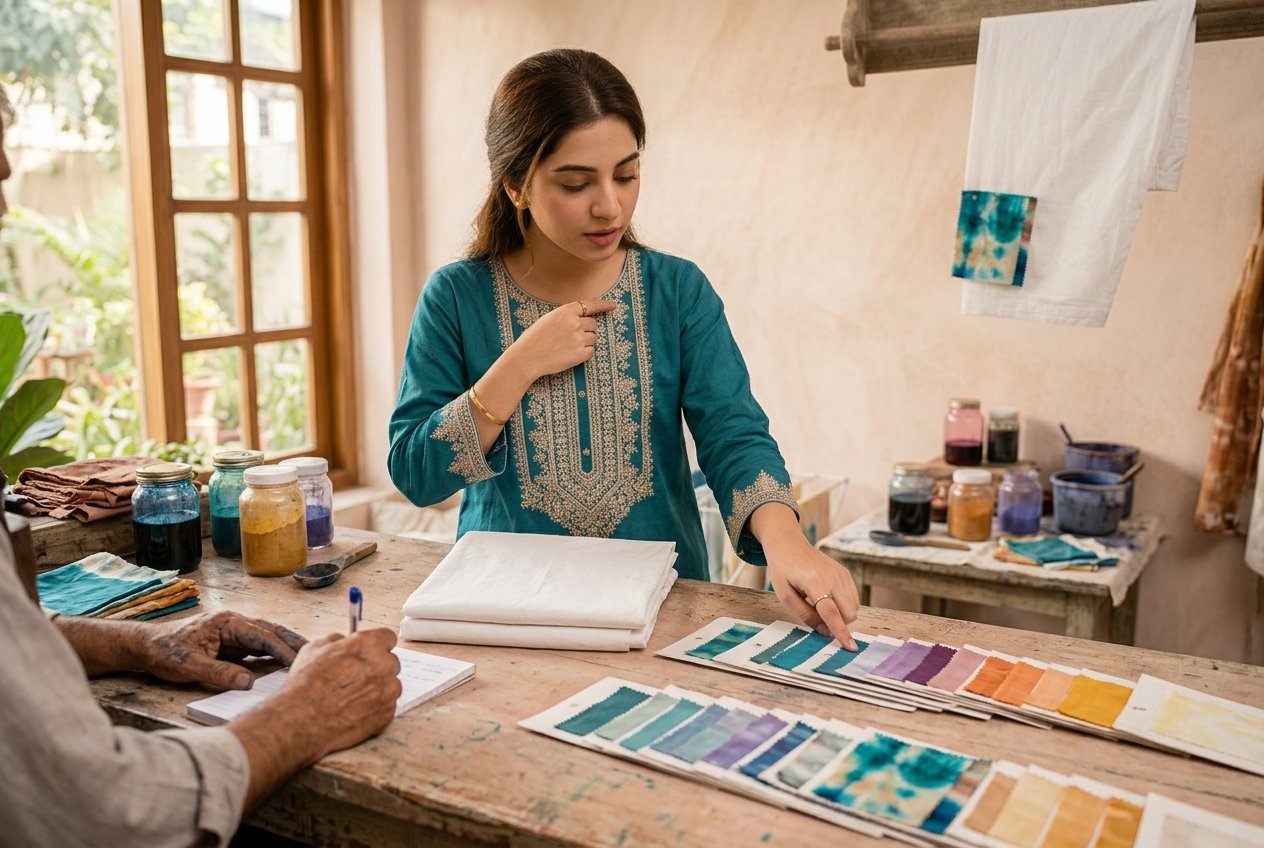
Woman holding an emerald dupatta against a white farshi to plan winter wedding shalwar colours

Winter Wedding Shalwar Colours 2026

Winter wedding shalwar colours split by time of day: deep jewel tones for evening events and soft pastels for daytime. Emerald, maroon and navy lead in 2026. Dye a white farshi, gharara or sharara to your kurta, and check the swatch under warm light.

Winter wedding season is close, and a plain white shalwar can become the exact colour your outfit needs. This guide shows which shades are trending, which suit each event, and how to dye one without a last-minute scramble.

Your shirt. Your shade.

For weddings, PAGE Magazine’s 2026 festive guide names farshi and dhoti shalwars, ghararas and rich jewel tones among the strongest picks. That is good news for a white base. You choose the jewel tone, and the silhouette is already right.

Which Winter Wedding Shalwar Colours Are Trending in 2026?

Three ideas keep showing up in this season’s guides.

Jewel tones for evening

Emerald, maroon, navy and deep purple lead winter palettes, according to Roznew’s winter and wedding guide. PAGE adds that jewel tones stay the safe choice for evening dawats and winter get-togethers. Roznew also advises deeper tones for the evening and softer tones for the day.

Soft pastels for daytime

Dusty pink, ice blue and soft lilac suit daytime events, as Roznew notes. PAGE agrees that pastels lead daytime festive dressing. That makes them a good fit for a nikkah or a daytime lunch.

One colour family

PAGE also highlights same-colour styling. Keep fabric, embroidery and accessories in one colour family, such as ivory with champagne or deep emerald with matching embroidery. A dyed shalwar makes that easy, because you match it to the kurta.

There is one more reason to plan carefully. Deep, saturated shades read as rich under the warm indoor lighting of winter venues, according to Libayah’s wedding guest guide. So always check your swatch in warm light too.

Which Winter Wedding Shalwar Suits Each Event?

Each function has its own mood. Use this table to match the shade and the silhouette.

EventMoodShalwar shadesSilhouette
MehndiBright and joyfulTeal, or leave it white under a marigold kurtaSharara
NikkahSoft and understatedDusty rose, ice blue, ivoryFarshi or sharara
BaraatRich and formalEmerald, plum, navy, deep maroonFarshi or gharara
WalimaRefined eveningIvory, champagne, deep jewel tonesFarshi or gharara

RJS Pret’s guest guide lists yellow, orange and teal as mehndi picks. It suggests pastels, soft jewel tones and conservative silhouettes for a nikkah.

Winter Wedding Shalwar: 8 Looks to Dye This Season

In every look, “dye” means starting from a white shalwar. Four looks suit the evening, and four suit the day.

Look 1: Emerald on emerald (Match)

Wear an emerald kurta with a farshi dyed to the same emerald. Add an ivory velvet dupatta for contrast and warmth. Keep the embroidery on the kurta, so the shalwar stays calm.

Look 2: Plum, one shade deeper (Deepen)

Pair a plum kurta with a gharara dyed one shade deeper. A gold dupatta lifts the richness without adding more colour.

Look 3: Navy with ivory and emerald (Neutral and accent)

Wear a navy kurta with a plain white sharara. Add an emerald velvet dupatta as your one bold accent.

Look 4: Burgundy and blush (Contrast)

Dye the farshi a soft blush and wear it with a burgundy kurta. A burgundy velvet dupatta ties the two together.

Look 5: Dusty rose on rose (Match)

Wear a dusty rose kurta with a sharara dyed the same rose. A soft ivory dupatta keeps it light for a nikkah.

Look 6: Lilac with white (Neutral and accent)

Pair a soft lilac kurta with a plain white gharara. A lilac organza dupatta completes the look.

Look 7: Ivory and champagne (Same family)

PAGE lists ivory with champagne as a same-colour pairing. Wear an ivory kurta with a farshi dyed pale champagne for a walima.

Look 8: Marigold and teal (Contrast)

Wear a marigold kurta with a sharara dyed teal for a mehndi. The bright pair photographs well and keeps the mood playful.

How Do You Dye a White Shalwar a Deep Winter Shade?

Take your kurta and the white shalwar to a dyer. Ask for a swatch test, let it dry, and check it in daylight and under warm indoor light. Dyeing usually costs around Rs. 300. However, deep shades and busy wedding weeks may change the quote and the pickup date, so ask for both early.

Results depend on the dyer, so we never promise an exact shade. For deep colours, wash the piece separately for the first few washes. These guides cover every step: How to Dye a White Shalwar to Match Your Shirt, How Much Does It Cost to Dye a Shalwar in Pakistan? and Why Your Shalwar Never Matches Your Kameez (and the Fix).

What Mistakes Spoil a Winter Wedding Look?

Even great winter wedding shalwar colours fail in a few predictable ways. Avoid these.

  • Wearing bridal red as a guest. RJS Pret’s guide advises guests to avoid red at the baraat, because it belongs to the bride.
  • Too many jewel tones at once. Pick one hero colour, and let the rest support it.
  • Judging the swatch only in daylight. Check it under warm light, because evening venues use it.
  • Forgetting warmth. A shawl or wrap over your kurta and dupatta keeps you warm without hiding the shalwar.
  • Leaving the dyeing to the last week. Ask your dyer for the pickup date early.

Our Winter Wedding Checklist

Before you dye

  • Pick your event and your hero colour.
  • Choose Match, Deepen or Contrast.
  • Carry your dupatta and shoes when you meet the dyer.

At the dyer

  • Ask for a swatch test and a pickup date.
  • Check the dry swatch in daylight and in warm light.

Before the event

  • Try the full outfit once with your shawl and shoes.
  • Check that the hem falls where you want it.

Shop the Look: Start With a White Base for Wedding Season

Every piece below arrives in plain white and is dyeable.

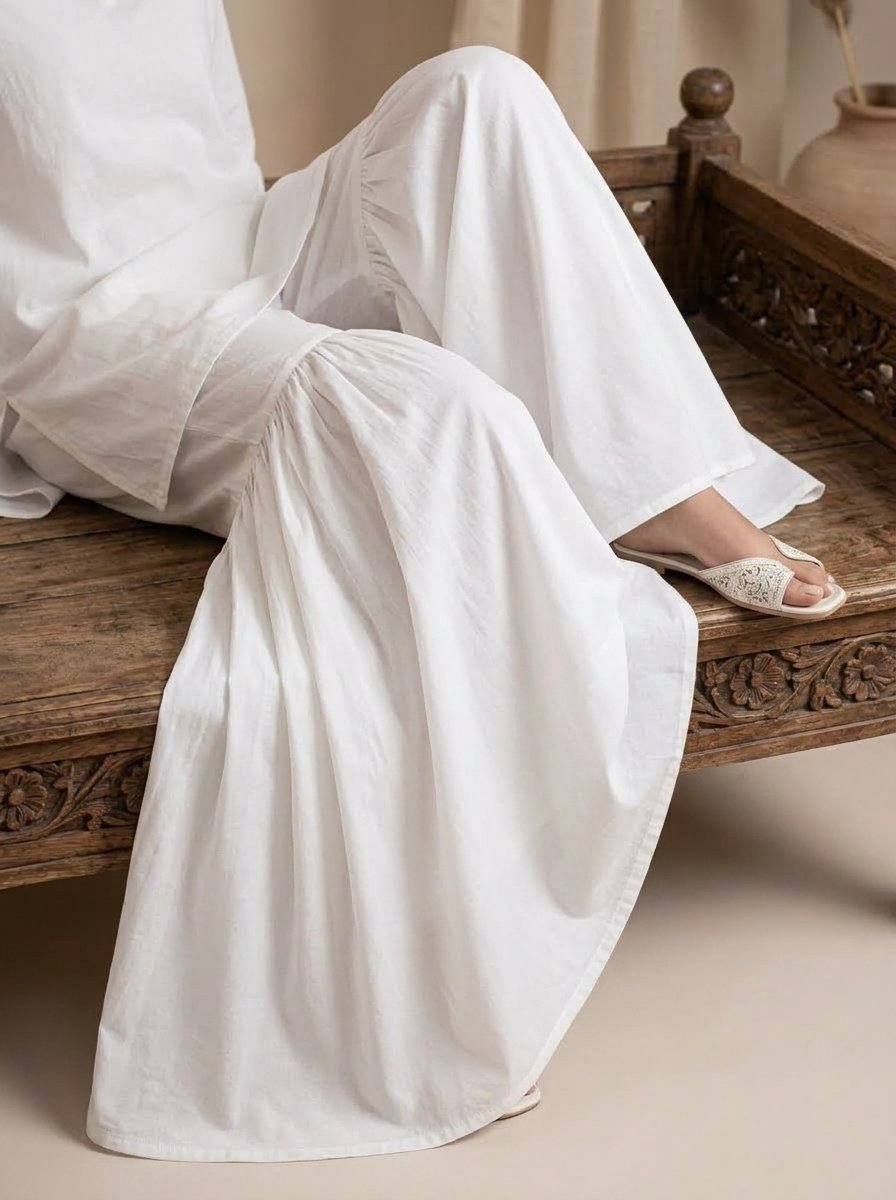
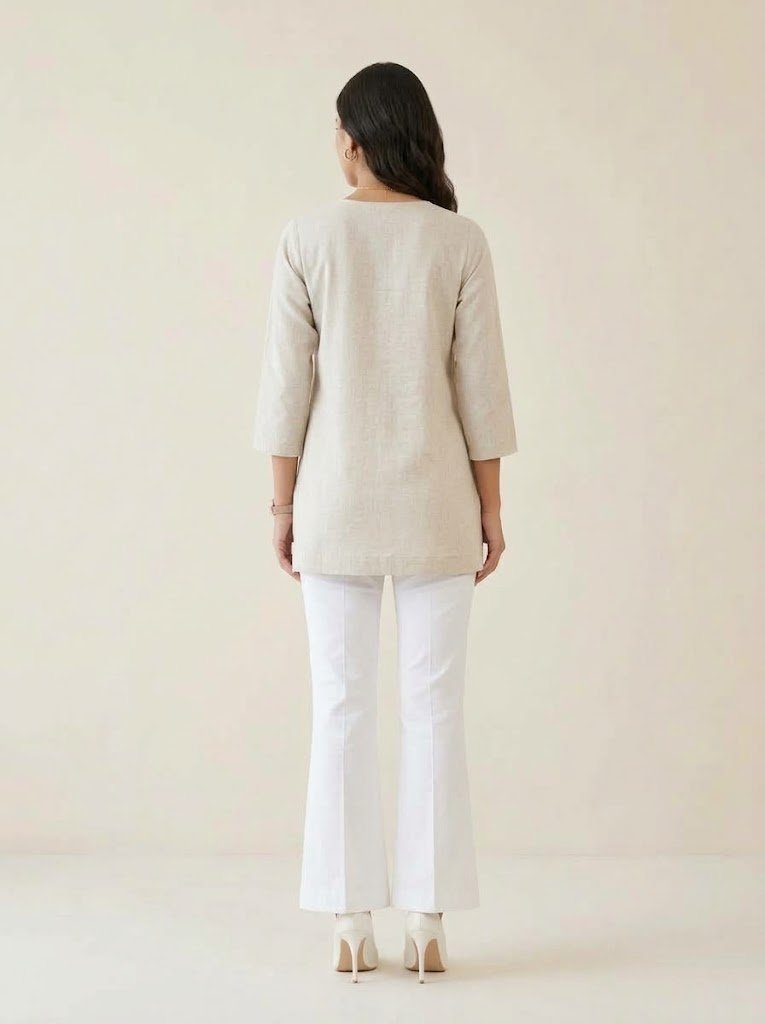
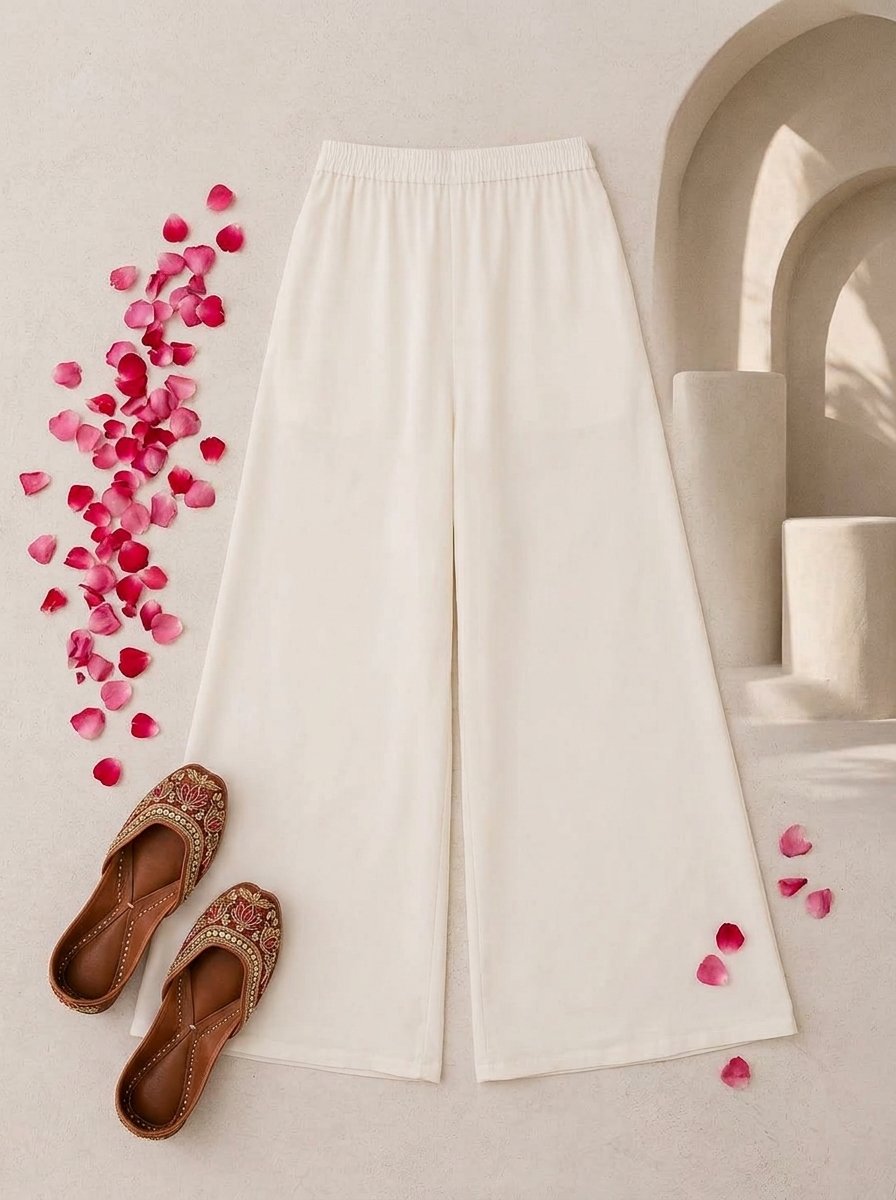
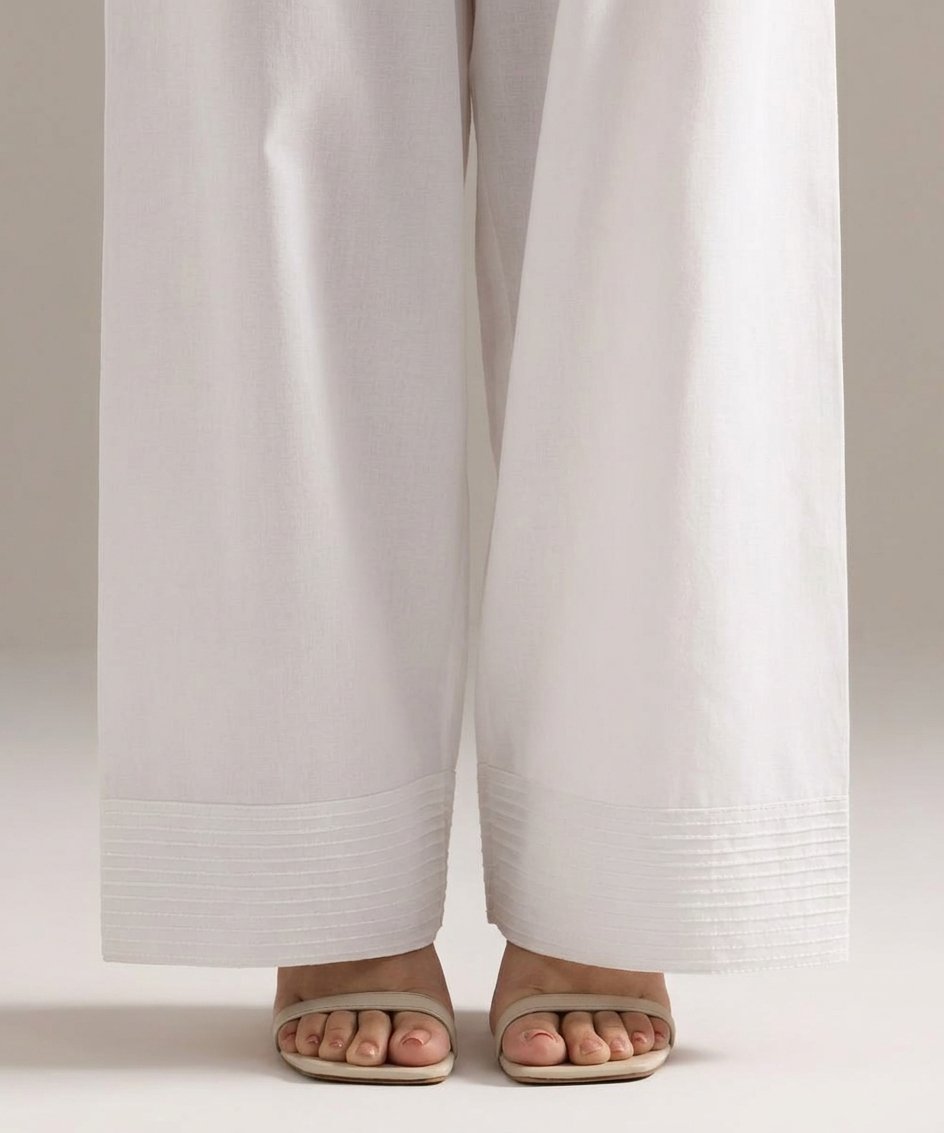
White Farshi Shalwar

Wide, pleated and floor-length. A strong pick for a baraat or a walima.

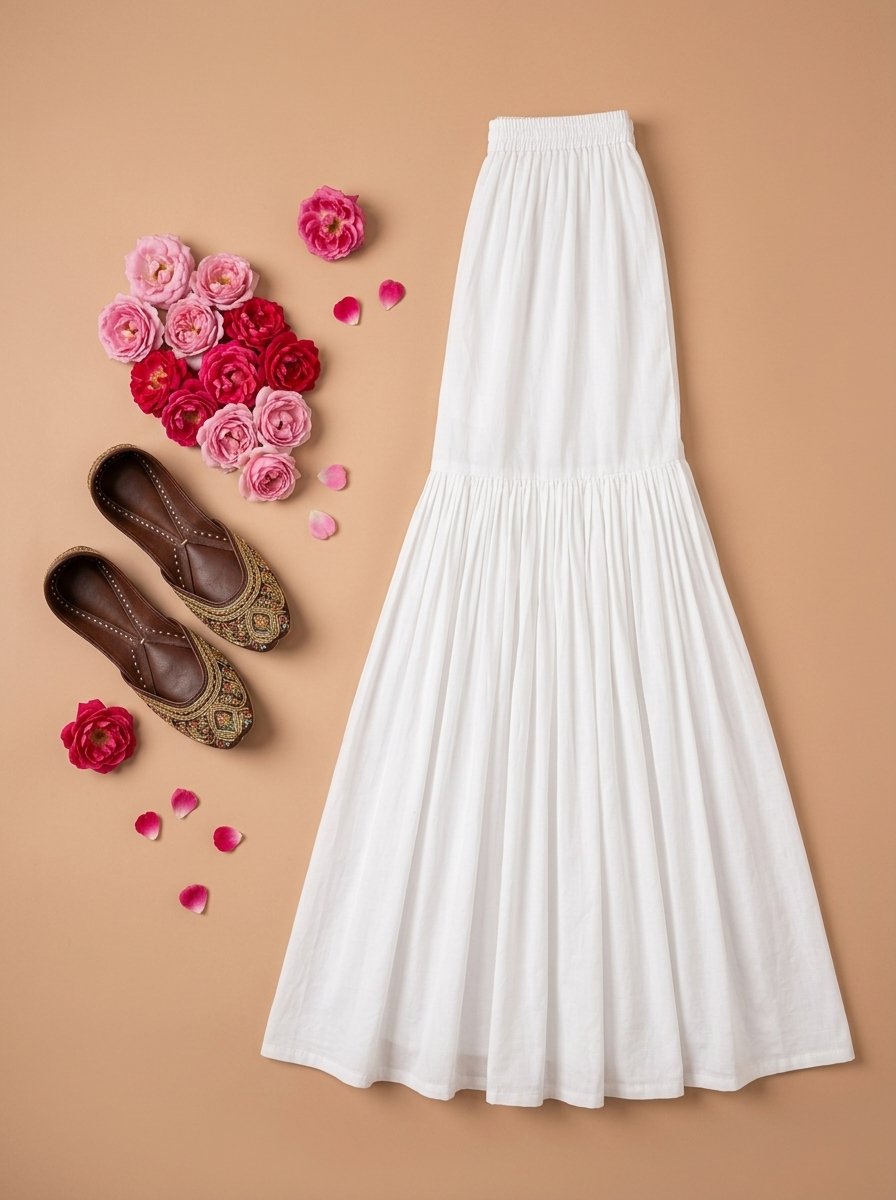
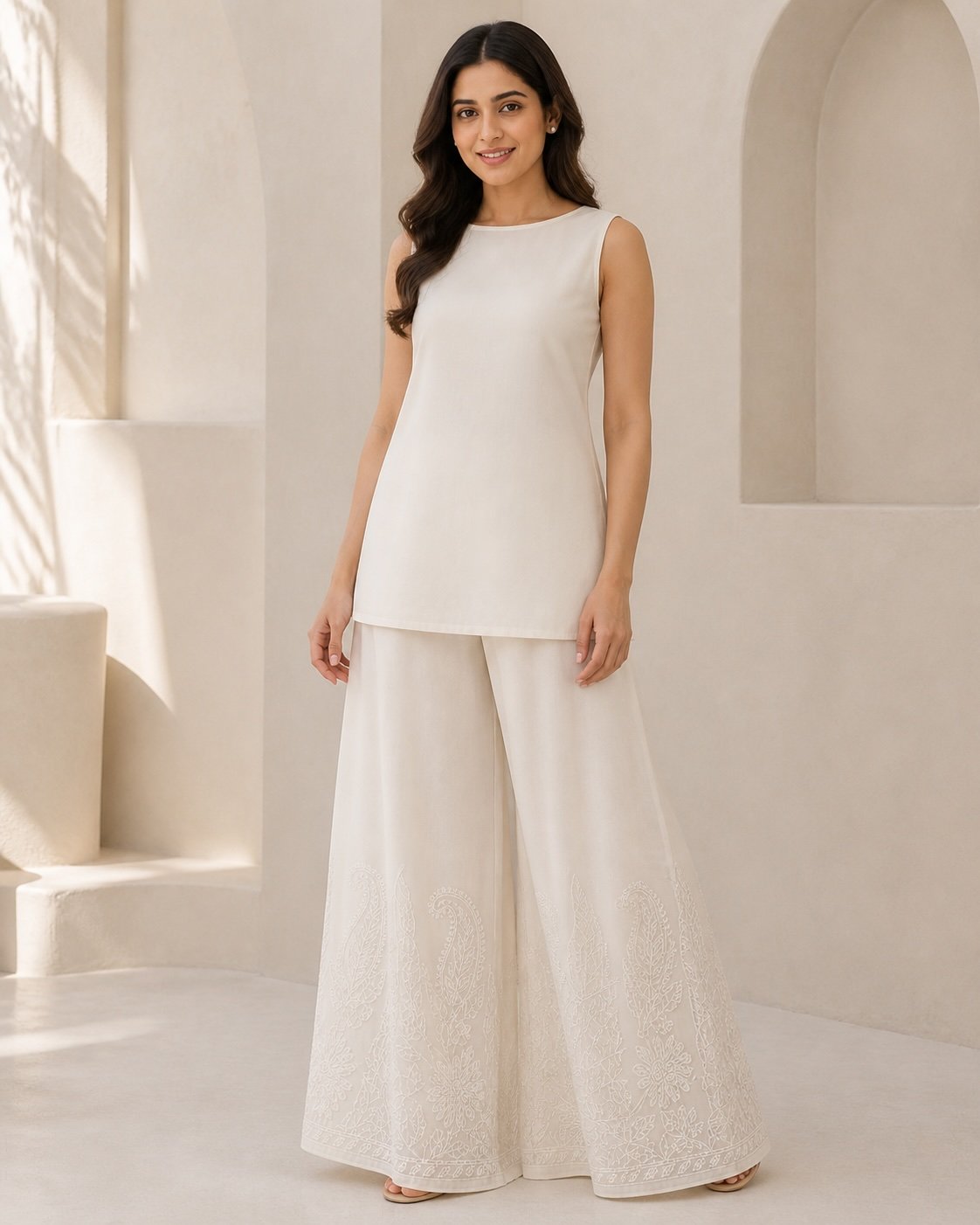
White Gharara Pants

Fitted to the knee, then a wide gathered flare. A formal option for evening events.

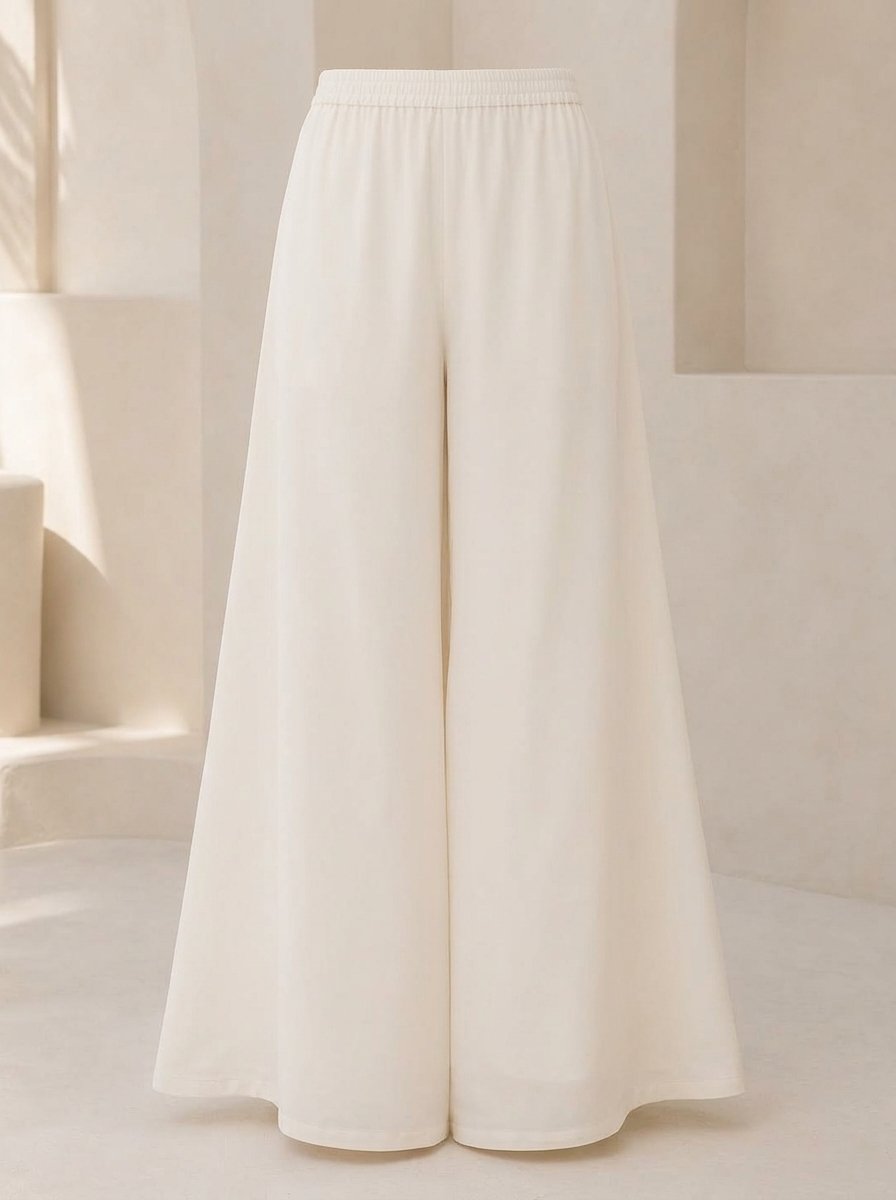
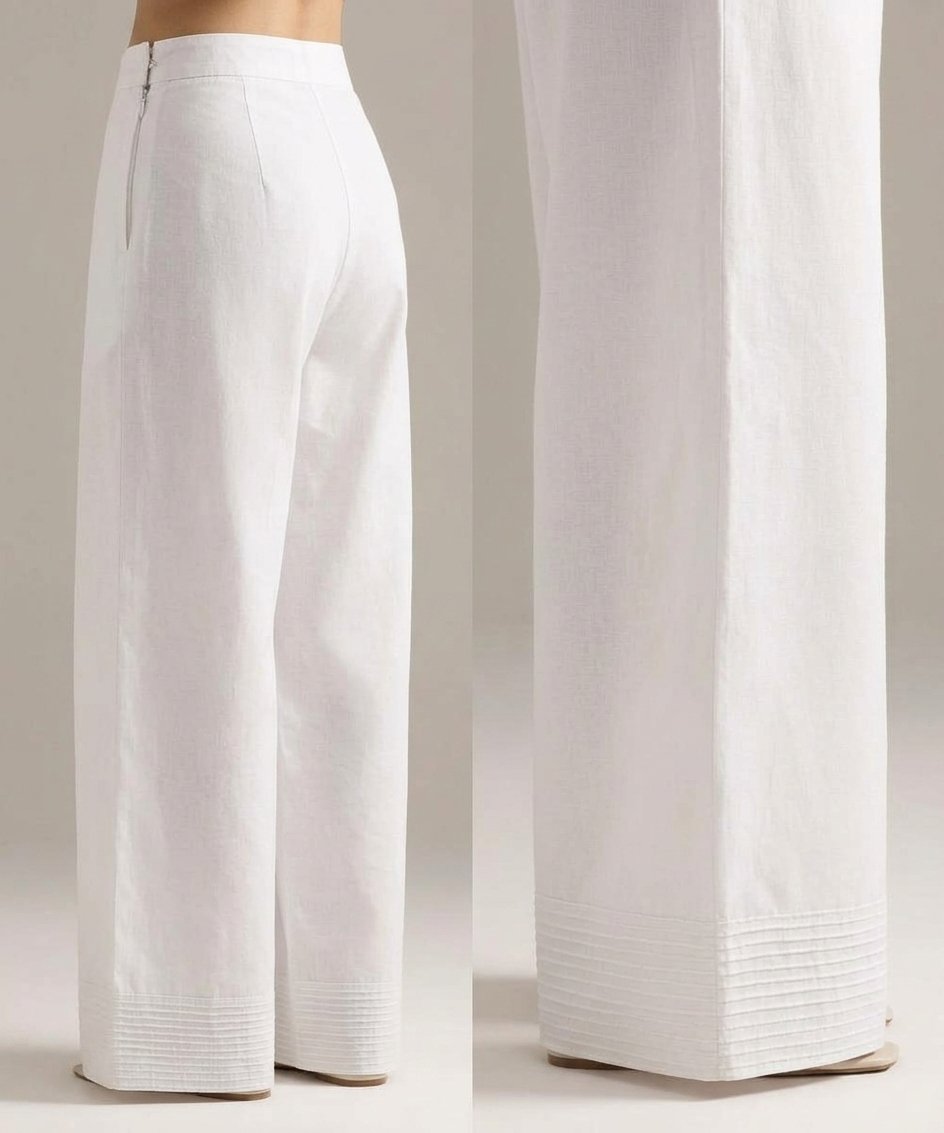
White Sharara Pants

A full-length flare from the waist, with no knee seam. For more ideas, read Sharara Outfit Ideas for Mehndi and Dawat.
Shop Eastern Bottoms

FAQ: Winter Wedding Shalwar Colours

What colours are trending for winter weddings in Pakistan in 2026?

Deep jewel tones such as emerald, maroon, navy and plum lead for evening events. Soft pastels like dusty rose, ice blue and lilac lead for daytime. Same-colour styling, where the whole outfit stays in one colour family, is also popular.

Which bottoms suit a winter wedding: farshi, gharara or sharara?

A farshi or a gharara suits formal evening events, and a sharara suits lighter functions such as a mehndi. PAGE Magazine lists farshi shalwars and ghararas among the strongest wedding picks this year.

Can I dye a white shalwar a deep colour like emerald or maroon?

Yes, if the fabric and thread are dyeable, as ours are. Results depend on the dyer and the dye, so ask for a swatch test and check it under warm light. Also ask whether a deep shade changes the price.

How much does it cost to dye a shalwar for a wedding?

Dyeing usually costs around Rs. 300, but rates vary by dyer and by style. Deep shades and busy wedding weeks may change the quote, so ask for the price and the pickup date first.

What should I avoid wearing as a wedding guest?

Guest guides such as RJS Pret’s advise skipping bridal red at the baraat. It also helps to avoid too many jewel tones at once, so one hero colour leads.

How do I stay warm in a winter wedding outfit?

Layer a shawl or wrap over your kurta and dupatta. A velvet dupatta also adds warmth without hiding your shalwar.

Ready to Plan Your Wedding Look?

Browse Shalwar & Co’s white bottoms and start with a plain white base. Prefer to ask first? Message us on WhatsApp: 03394011360 or visit our contact page. Curious how it started? Read our story.

Your shirt. Your shade.
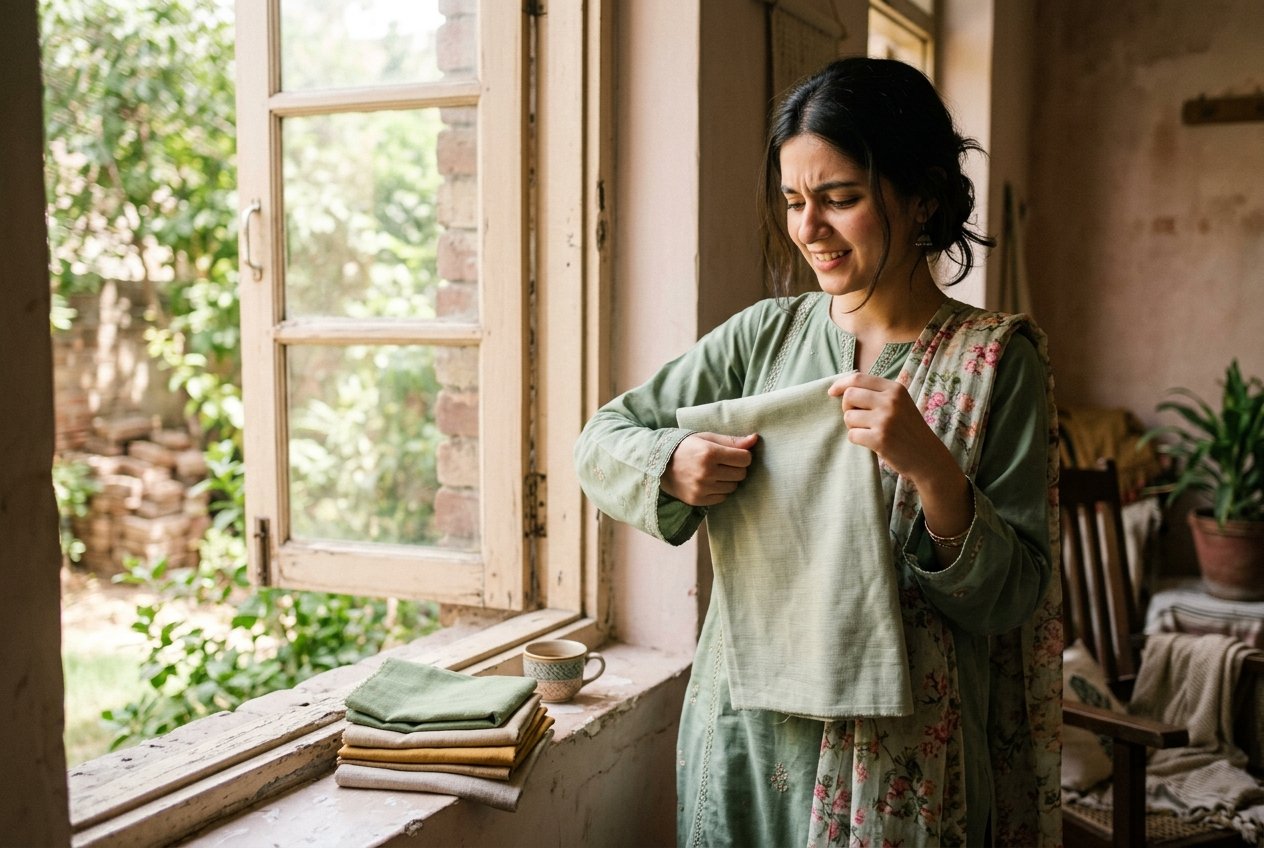
Woman comparing a kameez and shalwar fabric in daylight to check shalwar colour matching

Why Your Shalwar Never Matches Your Kameez (and the Fix)

Shalwar colour matching fails for four main reasons. Fabrics take dye differently, dye batches shift the shade, light changes how colours look, and screens misreport colour. The fix is to match in daylight with the real shirt, or to dye a white shalwar to your kameez.

You bought the perfect kameez, then spent days hunting for a shalwar that matches. Every shade looked close, but none looked right. That is not bad luck. It is how fabric, dye and light work, and once you understand it, you can fix it.

Your shirt. Your shade.

Here is the science in one line: colours can match under one light and fail under another. Colour experts call this metamerism, and RMIT’s colour theory course explains how it catches people out with clothes, buttons and thread. A match that looks perfect in the shop can clash in daylight. That is why we never judge a colour with one look.

Why Does Shalwar Colour Matching Go Wrong?

Five things usually sit behind a mismatch. Most shoppers meet at least two of them at once.

1. Fabrics take dye differently

A cambric shalwar and a lawn kameez can carry the same dye colour and still look different. Fibre, weave and finish change how a colour appears. For example, a smooth fabric reflects light differently from a rough one, so the same shade can look lighter or deeper.

2. Dye batches shift the shade

Mills dye fabric in batches. Small differences in temperature and dyeing time can create different shades of the same colour between batches, according to Apparel Search’s guide to shade lots. So “sage green” from two brands, or two seasons, rarely matches.

3. Light changes colour

Two fabrics can match under shop lights and clash outside. The Society of Dyers and Colourists (SDC) demonstrates this effect with artificial daylight, fluorescent store light and tungsten light, as Fibre2Fashion reports. Your dawat hall has its own lighting too. So check a colour in more than one light before you commit.

4. Screens change colour

Every phone and monitor shows colour differently. Brightness, camera settings and photo editing also change how a product looks. As a result, a shade that looked right online may arrive looking different. That is why we recommend matching against your real shirt, not a photo.

5. Prints and colour names confuse the match

A printed kameez holds many colours, so “match the main colour” becomes guesswork. Colour names do not help either, because brands name shades differently. Always match to the fabric itself.

Which Reason Is Hurting Your Match?

Use this quick diagnosis before you spend more on shalwar colour matching.

  • It matched in the shop but not outside. Light is the culprit. Check the colour in daylight next time.
  • Two items sold as the same colour look different. Blame fabric or dye batch. Skip the colour label and compare the fabrics side by side.
  • It matched online but not in person. Screens and photo editing caused it. Match against the real shirt.
  • Your kameez is printed. Pick one colour from the print, or choose a deliberate contrast instead.

How Do You Fix Shalwar Colour Matching?

You have three realistic options. Each suits a different situation.

Option 1: Match in daylight with the real shirt

Good shalwar colour matching starts with the real kameez in your hand. Hold both fabrics side by side near a window or outside. Then step back to arm’s length, because people see your outfit from a distance. Skip anything that only matches under the shop lights.

Option 2: Dye a white shalwar to your kameez

Instead of searching for a ready-made match, start with plain white and add the colour yourself. You take the white shalwar and your kameez to a dyer, and the dyer matches the shade. Dyeing usually costs around Rs. 300, and the rate varies by dyer and by style. Results depend on the dyer, so we never promise an exact shade. We do recommend a swatch test first.

Our guides cover each step: How to Dye a White Shalwar to Match Your Shirt, Dye to Match Shalwar: How It Works, Step by Step and How Much Does It Cost to Dye a Shalwar in Pakistan?

Option 3: Go deliberately different

Sometimes shalwar colour matching just will not work. In that case, stop chasing a match. A near miss looks like a mistake, while a clear contrast looks like a choice. Try white, ivory or a shade clearly deeper than your kameez.

Our Shade-Match Checklist

Use this list whichever option you choose.

Before you shop or dye

  • Bring the real kameez, not a photo.
  • Check it in daylight first.
  • Pick one colour if your kameez is printed.

At the counter or the dyer

  • Hold the swatch beside your kameez near a window.
  • Let a dyed swatch dry fully, because fabric looks darker when wet.
  • Check it again in the light you will wear the outfit in.

Before you pay

  • Step back to arm’s length.
  • Say what you want in plain words, such as “a shade deeper” or “slightly lighter”.

Shop the Look: Start With a White Base

Every piece below arrives in plain white and is dyeable. Dye it to match your kameez, or wear it white.

White Farshi Shalwar

A wide, floor-length classic. Its simple shape is easy to explain to a dyer.

White Sharara Pants

One continuous flare from the waist. It looks striking when you dye it close to your kameez.

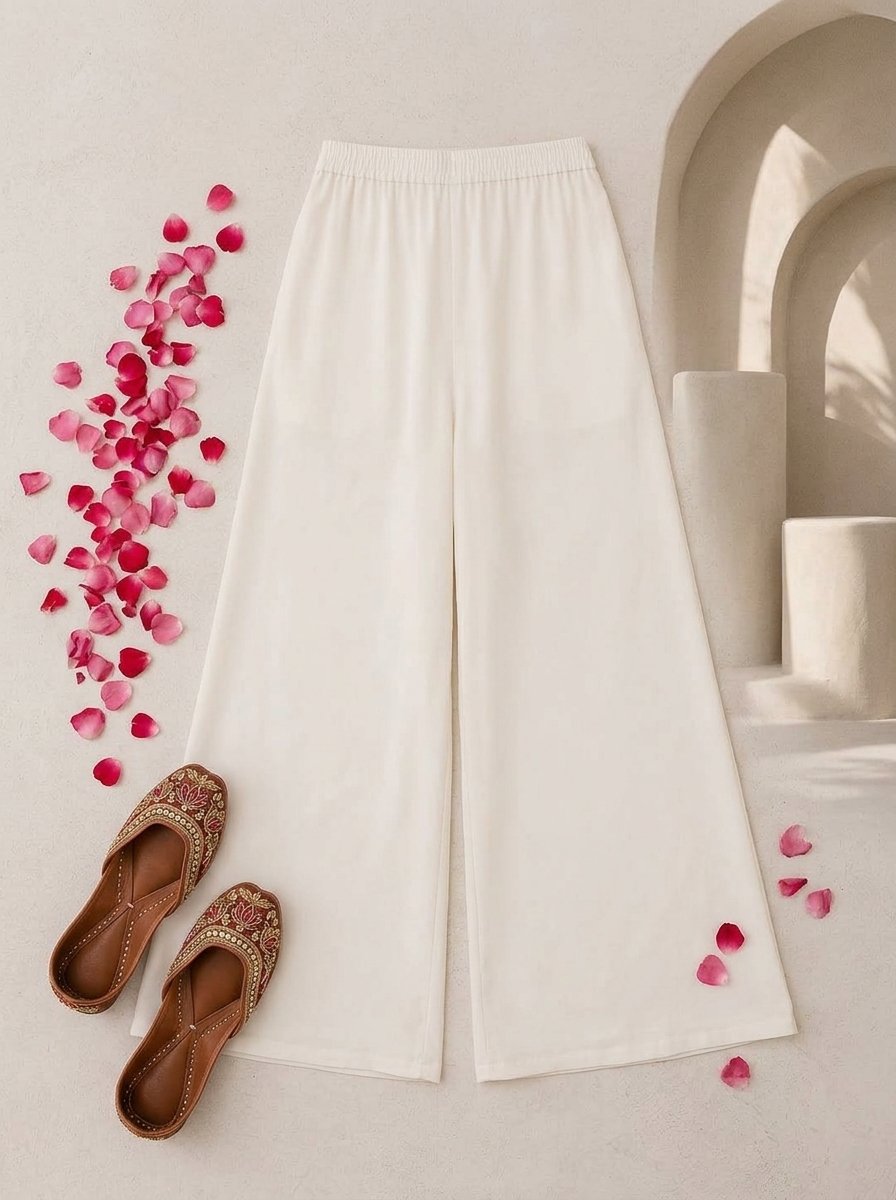
White Bell Bottom Pants

Fitted through the hips and thighs, then flared from the knee. Ask your dyer for a swatch test first, as with every style.

White Culottes Pants

Wide, straight and cropped. A light, everyday shape for university and work.

Shop Eastern Bottoms or Shop Western Bottoms

FAQ: Shalwar Colour Matching

Why does my shalwar never match my kameez?

Fabrics take dye differently, dye batches shift the shade, light changes how colours look, and screens misreport colour. Even two items sold as the same colour can look different side by side.

What is metamerism in clothing?

Metamerism is when two colours match under one light but look different under another. A shalwar and kameez can match under shop lights and clash in daylight.

Does colour look different in daylight and indoor light?

Yes, it can. Check the colour in daylight and in the light you will wear the outfit under, such as an indoor event hall, before you decide.

Why does a shalwar bought online look different on arrival?

Screen settings, photo lighting and editing change how colours appear online, so a photo cannot show the true shade. That is why we recommend matching against your real shirt in daylight.

Can I match my shalwar to my kameez exactly?

You can get a close match, but nobody can promise an exact one. Results depend on the dyer, the dye and the fabric. Dye a white shalwar, ask for a swatch test, let it dry, and compare it with your kameez in daylight.

What if my kameez is printed?

Pick one colour from the print, ideally the one you want to highlight, and bring the kameez so the dyer can see it. Alternatively, choose a deliberate contrast such as white or ivory.

Ready to Match Your Shade?

The simplest way to stop chasing a match is to start with plain white. Browse Shalwar & Co’s white bottoms and choose the shape that fits your outfit. Prefer to ask first? Message us on WhatsApp: 03394011360 or visit our contact page. Curious how it started? Read our story.

Your shirt. Your shade.
Woman checking shalwar dyeing cost at a dyer's counter with a white shalwar and teal kurta

How Much Does It Cost to Dye a Shalwar in Pakistan?

Shalwar dyeing cost in Pakistan usually comes to around Rs. 300. However, the rate varies by dyer and by style. A wide piece such as a gharara or sharara may be priced differently from a slim one. Ask for the price and the pickup date before you hand the shalwar over.

You found a kurta you love, and you want the shalwar to match it. Dyeing makes that possible, but you should know the price before you start. This guide explains what shapes the cost, what to ask your dyer and how to avoid paying twice.

Your shirt. Your shade.

Why do dyers quote different prices? Industry cost sheets, such as Textile Trainer’s dyeing cost guide, add up dyes, chemicals, labour and overheads. A neighbourhood dyer faces the same costs on a smaller scale. That is why one shop may quote Rs. 300 and another may quote more.

What Is the Shalwar Dyeing Cost in Pakistan?

Dyeing usually costs around Rs. 300. Treat that as a reference point, not a fixed price. Dyers set their own rates, so we cannot publish one price list for everyone.

The bottoms dyeing cost also depends on what you hand over. A slim pair of culottes and a wide farshi shalwar are not the same job. For that reason, always ask for a quote for your exact style.

What Changes the Shalwar Dyeing Cost?

Four things usually shape the quote. Ask about each one before you agree.

  1. The dyer’s own rate

Dyers price differently. If you can, compare two quotes before you decide.

  1. The style and the amount of fabric

A wide gharara or sharara holds more fabric than slim culottes. Some dyers may price wide pieces differently, so ask for a quote for your style.

  1. The shade

Deep or bright shades may be priced differently from light ones. Ask whether your shade changes the quote.

  1. The timing

A rush job or a busy festive week may change the price or the pickup date. Ask for both.

How Much Will a Dye-to-Match Shalwar Cost in Total?

Your trouser dyeing cost is only one part of the total. Add the price of the white shalwar to the dyeing charge. At the prices listed on our site today, the sums look like this. Check each product page for the current price.

White Farshi Shalwar: Rs. 1,500 + around Rs. 300 for dyeing = around Rs. 1,800
White Culottes Pants: Rs. 1,500 + around Rs. 300 for dyeing = around Rs. 1,800
White Gharara Pants: Rs. 2,500 + around Rs. 300 for dyeing = around Rs. 2,800
White Sharara Pants: Rs. 2,500 + around Rs. 300 for dyeing = around Rs. 2,800

These totals use the Rs. 300 reference. Wide pieces may land higher if your dyer prices them differently. That is why your dyer’s quote matters more than any average.

What Should You Ask Your Dyer About the Price?

A clear question at the counter saves an argument at pickup. Use this checklist.

Before you hand it over

What will this cost for this style?
Does the quote include a swatch test?
Will my shade change the price?
When will it be ready?
Can you confirm the price and the date on WhatsApp?

At pickup

Check the dry shade in daylight, beside your shirt, before you pay.
Ask how to wash it for the first few times.

How Do You Avoid Paying for Dyeing Twice?

The cheapest dye job is the one you only do once. Re-dyeing doubles your shalwar dyeing cost, and these mistakes lead to it.

Skipping the swatch test. A small test shows the real shade before the whole piece goes in. Our guide How to Dye a White Shalwar to Match Your Shirt shows the steps.
Judging the colour while wet. Fabric looks darker when wet and dries lighter, as Rit’s immersion dyeing guide explains.
Handing over a dirty shalwar. Dharma Trading’s dyeing guide recommends washing first, because dirt, oils and even fingerprints can cause uneven dyeing.
Matching from a phone photo. Screens change colour, so bring the real shirt.
Giving vague instructions. Say “a shade deeper” or “slightly lighter” instead of “a bit different”. Our guide Dye to Match Shalwar: How It Works, Step by Step explains how to describe a shade.

Is Dyeing Worth It Compared With a Ready-Made Match?

We think the real value is not the Rs. 300. It is getting the shade you chose. However, dyeing is not always the smart move, so weigh the shalwar dyeing cost against what you need.

Dye it when

You have the exact shirt in hand.
Want a tone that ready-made shalwars do not offer.
Plan to wear the outfit often.

Skip dyeing when

You want one neutral that goes with many outfits. White already does that.
You cannot get the shirt to the dyer in time.

Our rule is simple: dye for your hero outfit, not for every outfit.

Shop the Look: Choose Your White Base to Dye

Every piece below arrives in plain white and is dyeable.

White Farshi Shalwar

A wide, floor-length classic with soft pleats. The shape is easy to explain to a dyer, so it makes a good first project.

White Culottes Pants

Wide, straight and cropped. The shorter legs use less fabric than a floor-length style, so ask your dyer whether that changes the quote.

White Gharara Pants

Fitted to the knee, then a wide gathered flare. Ask for a quote for the full flare before you dye.

White Sharara Pants

One continuous flare from the waist. It is a wide piece, so confirm the price first.

Shop Eastern Bottoms or Shop Western Bottoms

FAQ: Shalwar Dyeing Cost in Pakistan

What is the average shalwar dyeing cost in Pakistan?

Dyeing usually costs around Rs. 300, but the rate varies by dyer and by style. Ask for a quote for your exact style before you hand the shalwar over.

Why do dyers charge different prices?

Dyers set their own rates. Dyeing involves dye, chemicals, labour and overheads, and the style, shade and timing can also change the quote.

Does the swatch test cost extra?

It depends on the dyer. Ask whether the quote includes a swatch test, and ask for the price in writing or on WhatsApp.

Does a gharara or sharara cost more to dye than culottes?

It may. Wide styles hold more fabric than slim ones, so some dyers price them differently. Ask for a quote for your exact style.

How much does a dye-to-match shalwar cost in total?

Add the white shalwar’s price to the dyeing charge. For example, a farshi shalwar listed at Rs. 1,500 plus dyeing of around Rs. 300 comes to around Rs. 1,800.

Can I dye a shalwar at home to save money?

You can try, but results depend on the dye, the fabric and your method. Dye supplier Dharma Trading stresses washing the fabric first and giving it enough water to move freely, or the colour can turn out uneven. We recommend a dyer and a swatch test for the closest match.

Ready to Match Your Shade?

The easiest way to avoid a costly mismatch is to start with a plain white base. Browse Shalwar & Co’s white bottoms and choose the shape that fits your outfit. Prefer to ask first? Message us on WhatsApp: 03394011360 or visit our contact page. Curious how it started? Read our story.

Your shirt. Your shade.